10 Best Heavy Duty Garden Hoses
From leading brands and best sellers available on the web.By clicking on a link to a third party's website, log data is shared with that third party.
Related Products
Up to 35% off
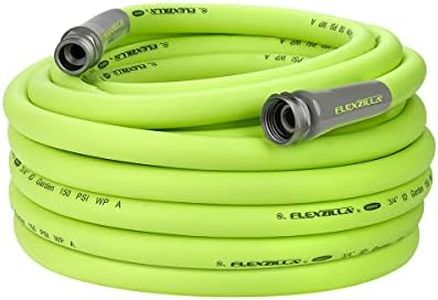
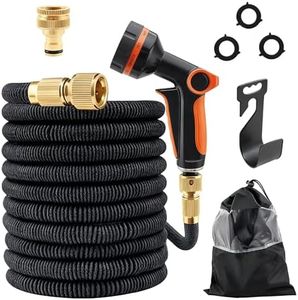
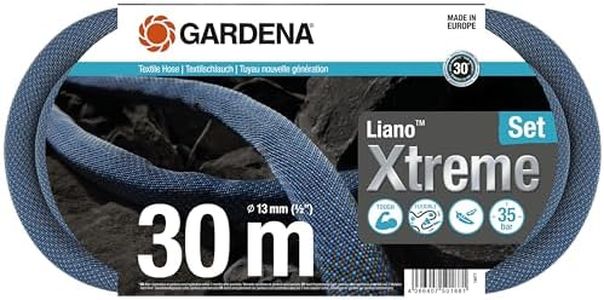
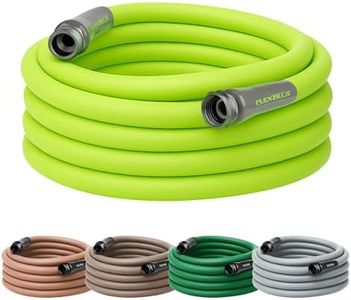
Buying Guide for the Best Heavy Duty Garden Hoses
Choosing the right heavy-duty garden hose makes watering your yard, washing your car, or cleaning around your property much easier and more efficient. A good hose should be durable, suited to your intended use, manageable to handle, and resistant to common problems like kinking or bursting. When selecting a hose, think about how you'll use it: whether it’s for frequent professional use, occasional gardening, or connecting to power washers. Understanding the main features will help ensure you get the hose that fits your everyday needs best.Hose MaterialThe material of a garden hose affects its durability, flexibility, and how it handles varying weather and water pressure. Common materials include rubber, vinyl, and reinforced blends. Rubber hoses are typically the most durable and flexible, great for heavy or frequent use, but they tend to be heavier. Vinyl hoses are lighter and more affordable, but they may be less durable and can kink more easily, making them better for light, occasional tasks. Reinforced or composite hoses combine strength and flexibility, offering a balance between weight and toughness. If you need a hose for demanding outdoor tasks or all-weather use, a reinforced or rubber hose often serves best.
LengthHose length determines how far you can reach—from faucet to the furthest point in your yard. Common lengths range from 25 to 100 feet. Shorter hoses (25-50 feet) are easier to handle and store and are perfect for patios or small gardens. Medium lengths (50-75 feet) work well for average yards, while longer hoses (100 feet or more) are ideal for large or deep properties. Remember, longer hoses can be heavier and have lower water pressure at the end, so only pick the length you really need.
DiameterThe diameter of a garden hose impacts how much water can flow through it at once. Most garden hoses come in 1/2-inch, 5/8-inch, or 3/4-inch diameters. Thicker hoses (like 3/4-inch) deliver more water, which is useful for jobs needing high flow, such as filling pools or heavy watering. The common 5/8-inch size offers a good mix of flow and manageability, making it a versatile choice for most home gardeners. Thinner hoses (1/2-inch) are lighter and easier to coil but may not move enough water for demanding tasks. Think about the type of work you’re doing and pick the diameter that matches your needs.
Burst Pressure RatingThe burst pressure is the maximum water pressure the hose can handle before it breaks. It’s measured in pounds per square inch (PSI). For regular home watering and most outdoor tasks, a hose rated for 250-350 PSI is usually enough. For heavy-duty tasks or if you plan to use the hose with a pressure washer, higher burst pressures (above 400 PSI) provide extra safety and durability. Always make sure you match the hose’s rating to the pressure of your water source and intended use.
Kink ResistanceA hose’s ability to resist kinking is key to easy use. Kinking makes watering frustrating as it stops water flow and may weaken the hose over time. Some hoses are designed with special reinforcements or have a ‘no-kink’ label. In general, thicker, reinforced, or rubber hoses are harder to kink, while thinner vinyl hoses kink more easily. For frequent use or for moving the hose around corners and tight spots, a kink-resistant model helps avoid interruptions.
Coupling MaterialCouplings are the end fittings that connect your hose to the faucet or nozzle. They are usually made from brass, aluminum, or plastic. Brass couplings are durable, less likely to corrode, and create a strong connection, making them a good choice for heavy-duty usage. Aluminum fittings are lighter and less costly but may not be as durable under heavy stress. Plastic couplings are lightweight and won’t corrode, but they can crack or break more easily. Choose a coupling material that matches how often and how roughly you’ll use the hose.
FlexibilityFlexibility determines how easy it is to maneuver, coil, and store your hose. Too stiff, and it’s hard to wind up or drag around; too floppy, and it may tangle or kink. Hoses designed for all-weather or cold conditions stay flexible in winter, while some may become stiff or brittle. If you need to move your hose often, round corners, or store it in tight spaces, prioritize good flexibility in the product.