10 Best High Velocity Fans
From leading brands and best sellers available on the web.By clicking on a link to a third party's website, log data is shared with that third party.

Related Products
Up to 14% off
Buying Guide for the Best High Velocity Fans
When selecting a high-velocity fan, it's important to think about where and how you plan to use it. These fans are designed to move air quickly and are often used for cooling large spaces, providing ventilation, or drying wet areas. Consider the size of the area you need to circulate air in, as well as any noise concerns or special features you might want. Understanding the core specifications will help you choose a fan that's the best fit for your situation.Airflow (CFM)Airflow, measured in cubic feet per minute (CFM), tells you how much air the fan can move in a minute. This is crucial because a higher CFM means the fan can circulate air more efficiently, which is especially important for larger spaces or quick cooling. Fans typically range from a few hundred to several thousand CFM. If you have a small room or need a fan for personal use, a lower CFM is sufficient. For garages, workshops, or larger rooms, aiming for a higher CFM will give better performance. Think about the size of your space and choose a CFM value that matches your needs.
Fan Size (Blade Diameter)The fan size, usually mentioned as blade diameter in inches, affects how much air the fan can move and where it can be placed. Smaller fans (12 to 18 inches) are good for focused airflow on a specific spot or for portable use. Medium fans (around 20 to 24 inches) work well for single rooms or moderate spaces. Large fans (30 inches or more) are better for warehouses or large garages. Your space and portability needs will determine the ideal size—choose smaller for flexibility, larger for maximum coverage.
Speed SettingsSpeed settings allow you to adjust how fast the blades spin, affecting both airflow and noise. Basic fans may have just two or three speeds, while others offer more precise control with multiple settings. If you need a fan that can be versatile—quiet for some moments and powerful at others—look for more speed settings. If you only need straightforward, consistent airflow, simple controls may work fine. Your preference for controlling noise and airflow intensity will guide this choice.
Noise LevelNoise level refers to how loud the fan operates, and it can be an important spec if you're using the fan in a space where people talk, work, or sleep. Some high-velocity fans can be quite loud due to the powerful motor and high-speed airflow. If a lower noise is important, look for models that specify decibel levels or promote quieter operation. Your use case—whether it’s a workshop (where noise matters less) or a bedroom (where quiet is key)—should influence how much attention you pay to this spec.
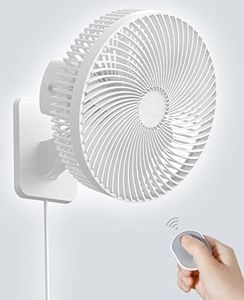
Portability and Mounting OptionsPortability means how easily you can move the fan around, while mounting options indicate whether the fan can be put on the floor, wall, or ceiling. Fans with handles and lightweight frames are easy to move, which is helpful if you need to target different areas. Some fans offer wall or ceiling mounts for permanent placement, saving floor space. Think about whether you need a fixed fan or something you’ll want to relocate often, and choose accordingly.
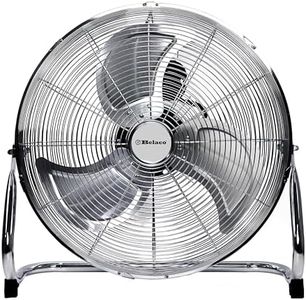
Durability and Build QualityDurability refers to how well the fan is built and whether it can withstand heavy use, impacts, or harsh conditions. High-velocity fans often have metal blades and sturdy frames because they are meant for demanding tasks. If you'll use the fan in an environment like a garage or outdoors, prioritize models known for tough construction. For occasional or gentle use indoors, less rugged designs may suffice. Consider what kind of wear and tear the fan will experience in your intended space.