We Use CookiesWe use cookies to enhance the security, performance,
functionality and for analytical and promotional activities. By continuing to browse this site you
are agreeing to our privacy policy
10 Best Highlighters Markers
From leading brands and best sellers available on the web.By clicking on a link to a third party's website, log data is shared with that third party.
Related Products

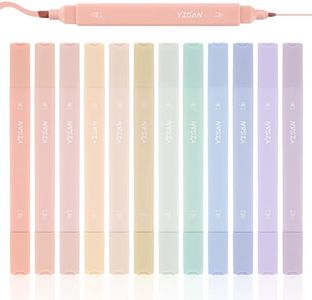
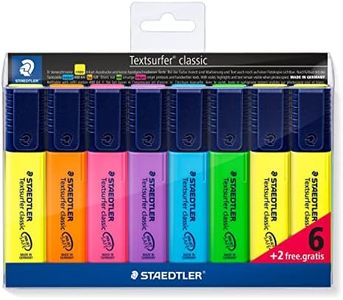
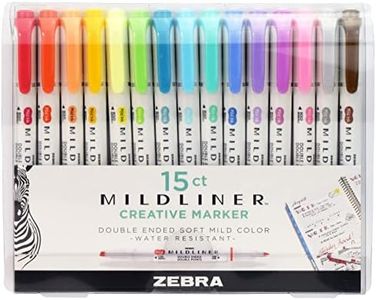
Buying Guide for the Best Highlighters Markers
Choosing the right highlighters or markers depends on how you'll use them, what kind of paper you’re using, and your preferences for color and tip type. Whether you're highlighting text, coloring, or making creative designs, thinking about the use case can help you narrow down your choices. The feel in your hand, how they show up on paper, and whether they bleed through pages are important factors to consider. Knowing a few basic features can make shopping much easier.Tip TypeThe tip type refers to the shape and hardness of the writing part of the highlighter or marker. It matters because it affects the width and style of the lines you can draw. Chisel tips work great for both broad highlighting and fine underlining, bullet tips provide a round and consistent line for writing or coloring, while fine tips are ideal for detailed work. Wide or brush tips allow for sweeping strokes and creative art. To pick the right one for you, think about what you’ll mostly do: highlighting large chunks of text, making notes, or drawing. If you’re unsure, chisel tips are a versatile starting point.
Ink TypeInk type refers to what the marker or highlighter is filled with, such as water-based, alcohol-based, or gel-based ink. This spec is important because it affects drying time, smudge-resistance, bleed-through, and how vibrant the color appears. Water-based ink is less likely to bleed through most papers and is easy to wash off skin, alcohol-based ink dries quickly and is often more permanent, while gel-based offers vivid color but may smudge on glossy paper. It’s best to consider the type of paper you’ll use, how quickly you need it to dry, and if you need it to be easily removable (like for kids).
Color RangeColor range is the variety of colors available in the pack or line. This matters because it affects how much you can organize, decorate, or emphasize different information. Some sets offer just a few basic colors—perfect for simple organization—while others come with a wide range of shades for creative projects or color-coding complex notes. If you just need to highlight or underline key points, a few standard colors may be sufficient. For planners, art, or bullet journaling, broader color ranges are more useful.
Bleed-ThroughBleed-through is how much the ink soaks through the page and becomes visible on the other side. This is important because heavy bleed-through can ruin your notes or art, especially with thin paper. Light to no bleed-through is best for most notebooks and textbooks, while heavier markers might be fine for thick sketchbooks but not for everyday paper. If you often use thin or double-sided paper, look for markers labeled as 'no bleed' or 'low bleed.'
Dry TimeDry time is how long the ink takes to set on the page. It matters because slow-drying ink can smudge and transfer to your hands or other pages. Fast-drying highlighters and markers are ideal for left-handed users or when working quickly, while slower drying options could work if you are careful or using more absorbent paper. Knowing how fast you work and which hand you use can help guide you here.
OdorOdor refers to how strongly the marker smells when in use. Some markers, especially those with alcohol-based ink, can have a noticeable scent which might be bothersome in small or poorly ventilated spaces. If you’re sensitive to smells, using these for long periods, or buying for kids, look for low-odor or odorless alternatives. For occasional or outdoor use, this may be less of an issue.