10 Best Humidity Absorbers
From leading brands and best sellers available on the web.By clicking on a link to a third party's website, log data is shared with that third party.
Related Products
Up to 15% off
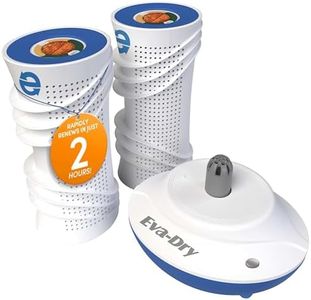
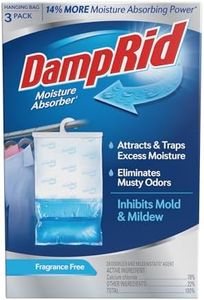
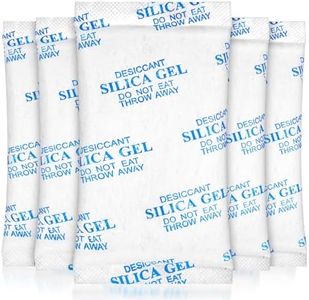
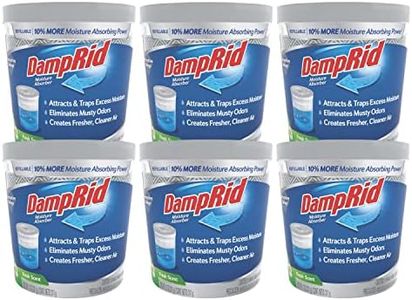
Buying Guide for the Best Humidity Absorbers
Choosing the right humidity absorber is all about understanding your specific space, how damp it gets, and how quickly you want to address moisture problems. Humidity absorbers can help prevent mold, musty smells, and damage to belongings. Begin by noticing the area you want to treat, the type of humidity (constant or seasonal), and whether you need a reusable or disposable solution. A carefully selected product can make your home feel fresher and protect your property from moisture-related issues.Absorption CapacityAbsorption capacity refers to how much moisture the absorber can take in before it needs to be replaced or recharged. This value is important because it tells you how long the product will last in your given space. Low capacity options (under 500ml) are great for small areas like drawers, closets, and cabinets. Medium capacities (500ml to 1.5L) suit bedrooms, bathrooms, or cupboards, while high capacities (2L or more) are needed for basements or garages. To choose the right one, think about the size of your space and how humid it tends to get. Larger or constantly humid spaces need products with higher absorption capacities.
Type of AbsorberHumidity absorbers come in several types: disposable moisture absorbers, refillable containers with crystals, and electric dehumidifiers. Disposable varieties are easy, mess-free, and good for areas you don't frequent often. Refillable options save money and are more eco-friendly but require maintenance. Electric dehumidifiers are powerful and suitable for very damp or large areas but need electricity to operate. Consider your willingness to do regular upkeep and the dampness of your environment when picking a type.
Coverage AreaCoverage area tells you how much space a humidity absorber can effectively treat, usually measured in square feet or meters. Small units (up to 10m²) handle tiny rooms, storage bins, or wardrobes. Medium-sized units (10–30m²) are designed for bathrooms, bedrooms, or kitchens. Large units (above 30m²) target basements, laundry rooms, or garages. Match the coverage area to your room size by measuring your space first—using a unit that’s too small will make little impact, while an oversized option can be unnecessarily cumbersome.
Refill/ReusabilitySome absorbers are single-use, while others can be refilled or recharged. Refillable options are beneficial if you want to reduce waste and costs in the long run but need some ongoing effort to maintain. Single-use versions are convenient if you want to set it and forget it but require regular replacement. Think about your personal preference for convenience versus sustainability to guide your choice.
Safety and Odor ControlSome humidity absorbers include added features, like odor control or non-toxic composition. Odor-trapping crystals or scented versions help freshen the air, which is helpful in musty areas like closets or bathrooms. Products labeled non-toxic or child/pet-friendly are crucial if you have young children or animals. Prioritize this specification if you have sensitive noses or need added peace of mind about safety.