10 Best Humidity Controllers
From leading brands and best sellers available on the web.By clicking on a link to a third party's website, log data is shared with that third party.
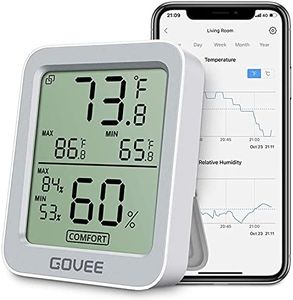
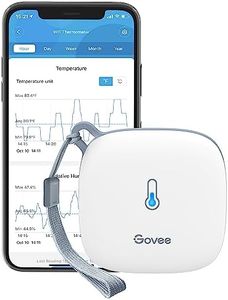
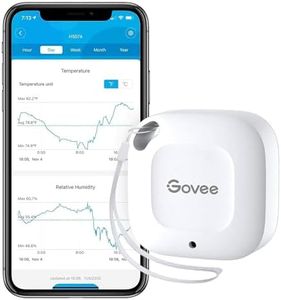
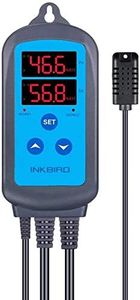
Related Products




Buying Guide for the Best Humidity Controllers
Choosing a humidity controller is important for maintaining the desired moisture level in an environment, whether it's for personal comfort, plant growth, or storage protection. The right humidity controller helps automate the process, sensing the current humidity and adjusting connected humidifiers or dehumidifiers accordingly. Before choosing, consider where you will use it (like a greenhouse, bedroom, cigar box, or storage room) and the level of control you need. Focus on the features most relevant to your situation for best results.Humidity RangeHumidity range refers to the minimum and maximum relative humidity levels the controller can manage. This matters because different applications demand different humidity levels—for example, plants may need higher humidity than electronics storage. Humidity controllers might support a narrow range (say, 40%-60%) or a wide one (like 10%-90%). If your purpose requires specific humidity, make sure the controller's range covers your target. For most home uses, a mid-range model is sufficient, but specialty uses like laboratories or greenhouses might need a broader range.
AccuracyAccuracy describes how closely the controller can read and maintain the true humidity level. Controllers with lower margins of error (such as ±1% to ±3%) provide more precise control, which is crucial for sensitive situations like incubators or musical instrument storage. Less accurate controllers (with ±5% or higher) are often suitable for general air quality or comfort. If your application is sensitive to humidity shifts, prioritize high accuracy.
Control TypeControl type refers to how you set and adjust the desired humidity—manual dials, digital buttons, or sometimes remote or app-based controls. Manual controls are simple and reliable for basic needs. Digital controls allow more precise settings and often include extra features. Many users find digital or app-based controls easier and more convenient, especially if adjustments need to be fine-tuned or changed often.
Display and AlertsThe display shows current readings and set points, while alerts let you know if the humidity drifts out of range. Some controllers have simple indicator lights, while others offer full digital readouts and even sound or app alerts. If you need to keep a close eye on humidity (for example, in greenhouses or medical storage), a clear display and alert system are valuable. For hands-off or infrequent monitoring, a basic display will suffice.
Sensor Type and PlacementControllers measure humidity using sensors, which may be built into the unit or external on a cord. External sensors offer flexibility, letting you measure humidity in a specific spot away from the controller. This is crucial for large spaces or areas where the controller can't be placed exactly where you want to measure. Choose a built-in sensor for small, simple spaces; opt for external sensors if you need precise control in a bigger or more complex area.
Output CompatibilityOutput compatibility means what devices the controller can operate—usually humidifiers and/or dehumidifiers, sometimes both. Some controllers have outlets or relays for either one or both devices, so you must match this to what you want to control. If you only need to turn one device on and off, a single output is enough. For spaces that need both humidification and dehumidification, look for dual-control capability.