10 Best Hunting E Collars
From leading brands and best sellers available on the web.By clicking on a link to a third party's website, log data is shared with that third party.
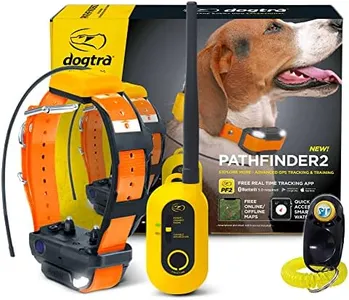
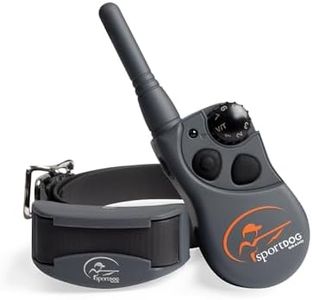
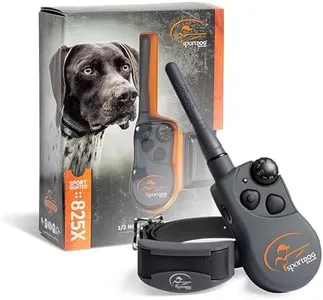
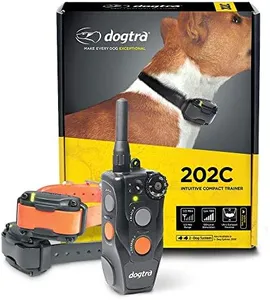
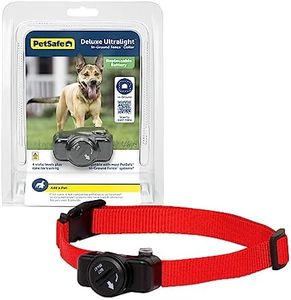
Related Products
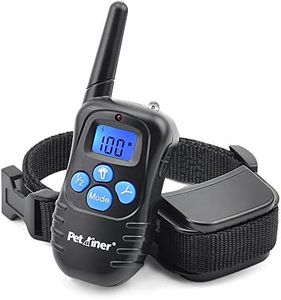
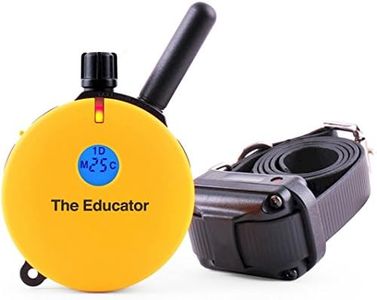
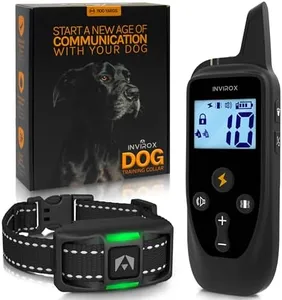
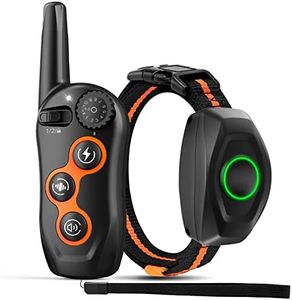
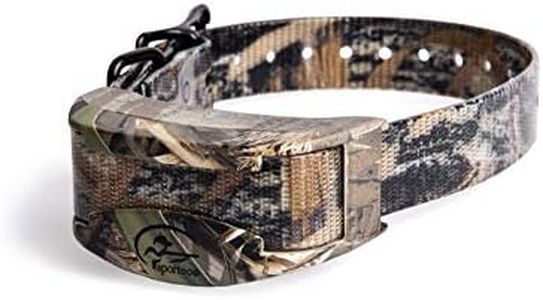
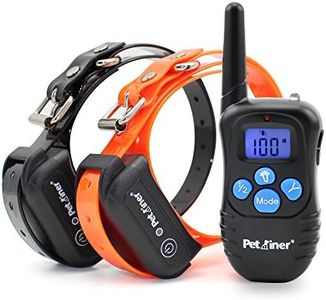
Buying Guide for the Best Hunting E Collars
Choosing a hunting e-collar is about finding the right balance between tools and comfort for both you and your dog. Since these collars are used for remote training and controlling a dog’s behavior during hunts, it’s important to focus on features that help you train effectively, keep your dog safe, and suit the environment you typically hunt in. Consider your dog’s temperament, the type of hunting you do, and how much range and control you’ll realistically need. Always prioritize humane features and make sure the collar fits your dog well.RangeRange refers to how far the remote can send a signal to the collar, which determines how far from you the dog can be while still responding to commands. This matters because hunting can take you and your dog over large distances, and you always want to maintain control. Short-range models usually offer up to a half-mile, which is fine for training in yards or small fields. Medium-range covers about a mile, good for most field and upland hunting conditions. Long-range collars may go two miles or more and are best for open terrain or if you have a dog that hunts at a distance. Choose a range that matches the terrain and the working distance of your dog.
Stimulation Types and LevelsThis refers to the kinds of signals (usually vibration, tone/beep, and static) and how many intensity levels the collar provides. It matters because different dogs respond better to different stimuli and levels—some need just a tone or vibration, while others may require gentle static correction. Lower-level stimulation with fine adjustments is helpful for sensitive or well-trained dogs, while broader options help if you need more correction. Pick a collar that gives you enough range to communicate effectively with your dog without overdoing correction.
Waterproofing and DurabilityThis describes how well the collar and remote handle water, mud, and rough use, which is crucial since hunting places both you and your dog in environments with water, brush, and unpredictable weather. Basic water-resistant models handle light splashes, but true waterproof ones can go underwater for retrieval work or in rainy conditions. Tougher, durable construction also means the collar will last through thick brush and running. If your hunting involves wet, rugged areas, always go for a waterproof and shock-resistant collar.
Battery LifeBattery life tells you how long the collar and remote will last before recharging or needing new batteries. It’s important so you don’t lose control partway through a hunt. Collars with short battery life may only last a day, while others can run for a week or more on a single charge. If you’re out for long hunts or don’t want to recharge after every trip, pick a collar with long battery life and possibly quick-charging features.
Size and ComfortThis means how adjustable and comfortable the e-collar is for your dog. A properly sized, lightweight collar is essential to avoid discomfort or interference with the dog’s actions. Small, lightweight collars are best for small breeds or sensitive dogs, while sturdier collars fit larger or more active breeds. Pay attention to collar adjustability so it fits snugly but not too tight, and always check how your dog reacts when wearing it.
Number of Dogs SupportedSome transmitters can control more than one collar, which is useful if you have several hunting dogs. This spec tells you how many dogs you can manage with a single remote, usually ranging from one to three or more. If you run more than one dog, pick a model that lets you easily switch and control collars without confusion.