10 Best Industrial Commercial Vacuums
From leading brands and best sellers available on the web.By clicking on a link to a third party's website, log data is shared with that third party.
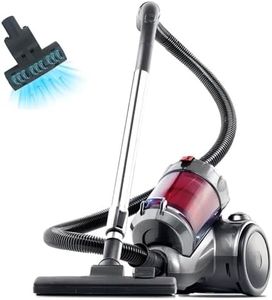
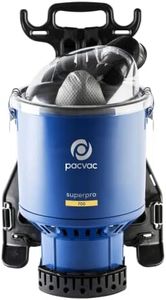
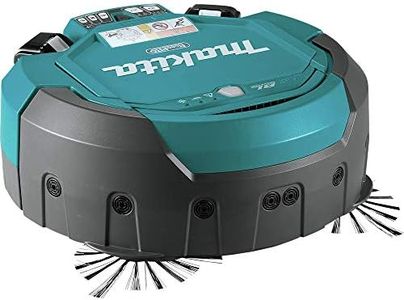
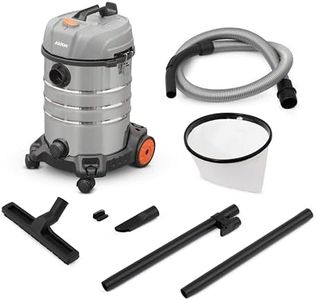
Related Products
Up to 5% off

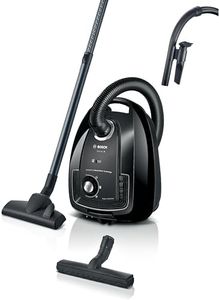
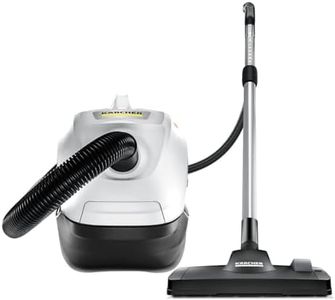
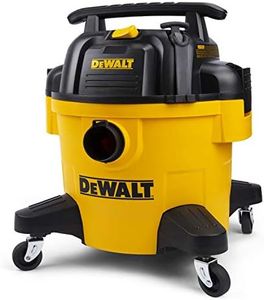
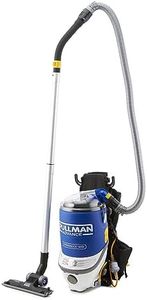

Buying Guide for the Best Industrial Commercial Vacuums
Choosing the right industrial or commercial vacuum is all about matching the machine to the jobs you'll face. Unlike household vacuums, these are designed for larger spaces, heavier-duty cleaning, and often need to handle different types of debris and surfaces. Before you choose, clearly think about where you’ll be cleaning — is it a warehouse, hotel, office space, factory floor, or workshop? Considering the type of debris, space size, and frequency of use will help you focus on the features that really make a difference for your situation.Suction Power (CFM and Water Lift)Suction power in industrial and commercial vacuums is often measured in CFM (cubic feet per minute) and water lift. CFM refers to how much air the vacuum moves, while water lift measures the strength the vacuum uses to lift debris or liquid. Higher CFM is generally better for picking up fine dust over wide areas, while higher water lift is needed for heavier debris or wet materials. If you are mostly cleaning dust or small debris over large floors, prioritize strong CFM. If you expect to deal with heavy or wet waste, look for higher water lift. Choosing the right balance depends on the types of materials you need to clean most.
Capacity (Tank Size)Tank size means how much debris or liquid your vacuum can hold before you have to empty it. Large tanks reduce the need for frequent emptying in big spaces, which helps productivity, but they make the machine heavier and sometimes harder to handle. Smaller tanks are lighter and better for tight spaces or jobs that need frequent mobility. Think about the size of the area you clean, the amount of debris created, and how long you want to work without stopping to empty the tank.
Filtration SystemThe filtration system traps dust and particles before they escape back into the air. Industrial vacuums can use basic filters, HEPA filters (which capture very fine particles), or multi-stage systems. HEPA or advanced multi-stage filters are important for settings where air quality is critical, such as hospitals or food production. In most industrial applications, a robust but standard filter may be enough. Focus on filtration if you’re dealing with fine dust or working where clean air is a priority; otherwise, make sure filters are tough and easy to maintain.
Type (Dry, Wet/Dry, Backpack, Upright, Canister, Ride-On)Industrial vacuums come in several types, including dry vacuums, wet/dry vacuums (which can handle both liquids and solids), and different forms such as backpack, upright, canister, and ride-on machines. Dry vacuums are best for dust and debris, while wet/dry versions give flexibility if you need to pick up liquids. Backpack vacuums are good for mobility, canister models offer larger tanks, uprights are easier to maneuver in open spaces, and ride-on vacuums suit very large spaces. The best type depends on the specific messes you expect and how your cleaning team prefers to work.
Durability and Build QualityBuild quality reflects how well the vacuum stands up to frequent and demanding use. Industrial and commercial vacuums are designed to last longer, often using stronger plastics, metal parts, and reinforced hoses. If your job site is particularly rough or equipment is heavily used, focus on models with reviews or specs highlighting sturdy construction. Lighter-duty models might be suitable for less intensive environments where the machine isn’t pushed to its limits.
Mobility and ManeuverabilityMobility means how easy it is to move the vacuum around your space in terms of wheels, weight, and design. Large wheels and ergonomic handles help with movement across big spaces or uneven floors, while more compact models are better for tight quarters. Consider the layout of your site — if you need to clean multiple rooms or diverse surfaces, mobility becomes even more critical. Choose a style that fits both the space and the physical job of moving the equipment during cleaning.
Noise LevelIndustrial vacuums can be very loud, which may not matter in some environments, but in offices, hotels, or during daylight operations, quieter machines are better. Noise levels are measured in decibels (dB); lower numbers are quieter. If night shifts or sound-sensitive areas are part of your routine, look for machines labeled as 'quiet' or with lower decibel ratings.