10 Best Inflatable Dock
From leading brands and best sellers available on the web.By clicking on a link to a third party's website, log data is shared with that third party.

Related Products
Buying Guide for the Best Inflatable Dock
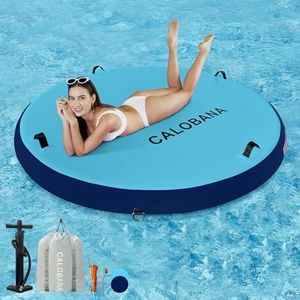
Choosing the right inflatable dock is all about understanding your intended use and the environment in which you'll deploy it. Inflatable docks are portable, easy to store, and provide a stable platform for relaxation, recreation, or water activities. The key is to balance size, material strength, weight capacity, and accessory compatibility with your specific needs to ensure safety and maximum enjoyment.Size and DimensionsSize and dimensions refer to how long, wide, and thick the inflatable dock is when fully inflated. This is important because the dock needs to fit in your available water space and offer enough surface area for people, chairs, or gear. Smaller docks (6-8 feet) are suitable for a few people and lighter use, while medium docks (9-12 feet) work well for families or groups. Larger docks (over 12 feet) are great for entertaining, yoga, or lots of activities. Think about how many people you want to accommodate at once—choosing too small leads to crowding, while too large makes it harder to store or transport.
Weight CapacityWeight capacity is the total amount of weight (people and gear) the dock can support without becoming unstable or starting to sink. This is a critical safety feature. Weight capacities often range from 600 pounds for smaller docks to 2,000 pounds or more for larger ones. To pick the right one, add up the total weight of all users and equipment you plan to have on the dock at once, and always choose a dock with a capacity comfortably above that total for safety.
Material and DurabilityMaterial and durability indicate what the dock is made out of and how tough it is. Most inflatable docks use reinforced PVC or drop-stitch material, which determine how well the dock withstands rough use, sun exposure, and sharp objects. Lighter docks are easier to handle but may be less robust, while heavier, thicker materials give more stability and durability but require more effort to move. If you plan to use your dock in busy, rocky, or sunny places, prioritize higher durability and strong seams.
Setup and Inflation MethodThis spec covers how the dock is inflated and set up, including the types of valves and pumps used. Some docks inflate faster using high-pressure pumps, while others with low-pressure valves take longer. Time and effort for inflation matter—look for docks with efficient valves and included pumps for convenience. If you'll be inflating and deflating often, an easy, quick setup saves time and keeps the process stress-free.
Stability and ThicknessStability and thickness refer to how steady the dock feels in the water and how much it 'flexes' under weight. Thicker docks (usually 6 inches or more) provide better stability, especially in choppy water or with several people on board. Thinner docks might feel wobbly and are better for lighter use or calmer water. If you want to use the dock for activities like yoga, fitness, or gatherings, go for greater thickness and stability.
Anchor and Attachment PointsAnchor and attachment points are the built-in spots where you can tie down ropes, attach ladders, or connect to boats and other docks. More and stronger attachment points allow you to secure your dock tightly and add accessories. If you plan to anchor your dock or connect multiple units, look for reinforced D-rings or handles spread around the perimeter.
Portability and StoragePortability and storage describe how easily the dock can be transported and stored when not in use. Lightweight designs, compact deflation, and included carry bags make moving and storing simpler, especially if you do not have much storage space at home. Choose a dock that you can handle solo if portability is important for your situation.