10 Best Interior Primer
From leading brands and best sellers available on the web.By clicking on a link to a third party's website, log data is shared with that third party.
Related Products
Recommended lists

Top rated
Exterior Primers
Buying Guide for the Best Interior Primer
Choosing the right interior primer is a crucial first step in painting your walls, ceilings, or other surfaces inside your home. The primer acts as a foundation for your topcoat, helping the paint adhere better and enhancing its durability and appearance. Picking the right primer involves knowing what surface you’re working with and what you want to achieve—whether you need to cover up stains, block odors, or just create a smooth base. Knowing the key specifications will help you select a primer that suits your specific project.Base TypeThe base type of an interior primer refers to its main ingredient, usually water-based (latex), oil-based, or shellac-based. This matters because each type has different properties and works best on particular surfaces. Water-based primers are easy to clean and quick to dry, making them ideal for most drywall and plaster. Oil-based primers are great for blocking stains, sealing in odors, and adhering to tough surfaces like wood or previously painted areas. Shellac-based primers are powerful for blocking severe stains and odors but are best reserved for special cases. To pick the right one, think about your surface and whether you need stain or odor blocking—most everyday walls are best with water-based, but for tough jobs like smoke-damaged walls, oil or shellac might be the answer.
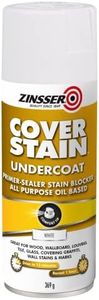
Stain-Blocking AbilityStain-blocking ability refers to how well a primer can prevent stains (water, smoke, crayon, etc.) from bleeding through the topcoat of paint. Some primers are labeled as high stain-blockers and are meant for problem areas, while others are more general-purpose. If you’re painting over new, clean drywall, a standard primer is fine. If you have walls with stains, look for a primer that explicitly says it has strong stain-blocking power. Consider your space: if kids, pets, or prior smokers have left marks, this will guide you to a higher-grade stain-blocking primer.
Adhesion QualityAdhesion quality refers to how well the primer sticks to the surface and allows the paint to grip it. Not all surfaces are the same: glossy surfaces, paneling, or previously painted areas can be tricky for regular paint. Some primers specify high-adhesion or bonding properties, meaning they’re made to stick on tough, slick areas. For standard walls, a regular primer will usually work, but if you’re painting over tile, glass, or glossy finishes, make sure to choose a bonding or high-adhesion primer to avoid peeling.
Dry TimeDry time indicates how long it takes after application before you can paint over the primer. This can range from under an hour to several hours. Faster dry times are convenient if you want to complete the project in a day, but sometimes slower-drying primers offer deeper penetration or stronger performance, especially on difficult surfaces. If speed is your priority, check for a quick-dry primer, but if you want the best foundation, be willing to wait for a slower-drying, stronger option depending on your project needs.
Odor and Low-VOC FormulaOdor and low-VOC (Volatile Organic Compounds) formulas are about the smell the primer gives off and its environmental impact. Low or zero-VOC primers are healthier for indoor air, which is especially important if you’re sensitive to smells or working in a poorly ventilated area. If you need to use the room soon after painting or have health concerns, choose a low-odor, low-VOC primer to ensure a safer environment during and after the job.
Coverage Per GallonCoverage per gallon measures how much surface area you can expect one gallon of primer to cover. This matters for estimating how much product you’ll need. Coverage can depend on the surface texture and how porous it is; rough or unpainted surfaces soak up more primer, requiring more product. For large areas or textured walls, look for primers with higher coverage ratings. To decide, estimate your room's square footage and compare it to the listed coverage; always consider a bit extra for touch-ups.