10 Best Laser Printer
From leading brands and best sellers available on the web.By clicking on a link to a third party's website, log data is shared with that third party.
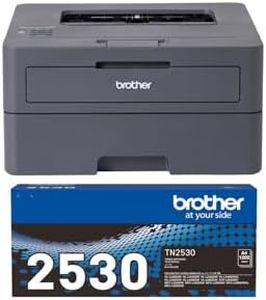
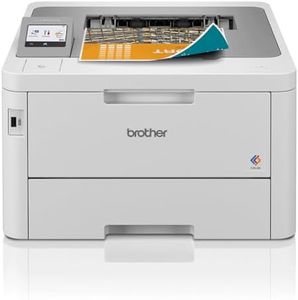
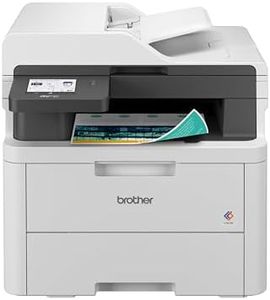
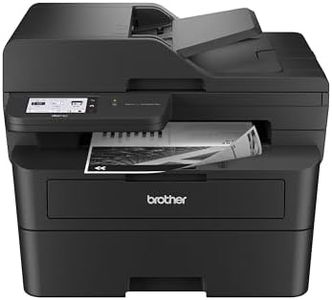
Related Products
Up to 10% off

Buying Guide for the Best Laser Printer
Choosing the right laser printer can be straightforward if you focus on your printing needs and understand some key specifications. Think about how often you print, the kind of documents you handle (like photos or just text), and whether you need extras such as scanning or wireless printing. By learning what the main specs mean and how they affect your experience, you’ll be able to match a printer to your daily habits more easily.Print Speed (Pages Per Minute, PPM)Print speed refers to how many pages a printer can produce in one minute. This is important if you often print large documents or multiple copies, as a higher speed means less waiting. Generally, lower speeds (up to 20 PPM) are sufficient for occasional or home use, while medium speeds (20–40 PPM) fit in busy home offices or small businesses. If your environment sees heavy, frequent printing, seeking a printer with 40 PPM or more might be best. Consider your patience level and print routine—casual users might not mind slower models, but high-volume situations call for faster printers.
Print Resolution (DPI)Print resolution, measured in dots per inch (DPI), describes how sharp and detailed your printed pages will look. A higher DPI means finer and clearer prints, which matters if your documents have small text or intricate graphics. Basic text printing is perfectly fine with resolutions around 600 x 600 DPI. If you want to print images or charts, look for higher resolutions like 1200 x 1200 DPI or more. Match your typical print jobs—plain documents are less demanding for resolution, but image-heavy jobs benefit from a higher DPI.
Paper Handling and CapacityThis specification covers how many sheets the printer can hold at once and what paper sizes it supports. It matters if you frequently print in high volumes or use special paper, since fewer reloads save you time and specialized trays help with convenience. Small or home use is fine with basic paper trays holding about 150–250 sheets. Offices with regular big print jobs may want printers with trays of 350–500+ sheets and multiple paper source options. Consider your print volume and whether you ever need to print on different paper types or sizes.
Connectivity OptionsConnectivity describes how your printer plugs into devices or networks. Some options include USB, wired Ethernet, and wireless (Wi-Fi) connections. If you want to print from a single computer, USB might be enough. Households with multiple devices or workplaces benefit from wireless or Ethernet for easy sharing. Look for features like mobile printing or cloud support if you often print from smartphones or cloud services, and pick based on your preferred way to connect and how many people or devices need access.
Duplex PrintingDuplex means the printer can automatically print on both sides of a sheet. This saves paper, is more eco-friendly, and can give a professional feel to your documents. Simple home use can get by without duplex, but if you print reports, manuals, or want to save on paper costs, automatic duplexing is very helpful. Decide based on your routine—if you print long documents frequently, this feature is well worth having.
Monthly Duty CycleThe duty cycle measures how many pages a printer is designed to handle each month without reliability problems. It ranges from a few thousand to tens of thousands of prints. Home users and single professionals do well with lower duty cycles (1,000–5,000 pages monthly), while a small office or shared environment needs higher numbers. Match your monthly estimated print volume to this spec for longer printer life and fewer issues.
Color vs. MonochromeLaser printers come in color or monochrome (black and white) models. Monochrome models are great for text-heavy jobs, simple documents, and cost-efficient printing, while color models are best when you need graphics, colored charts, or occasional color photos. Think about the types of documents you print most—choose monochrome for mostly text, or color for more versatility in charts, graphics, or marketing material.