We Use CookiesWe use cookies to enhance the security, performance,
functionality and for analytical and promotional activities. By continuing to browse this site you
are agreeing to our privacy policy
10 Best Lithium Deep Cycle Batteries
From leading brands and best sellers available on the web.By clicking on a link to a third party's website, log data is shared with that third party.
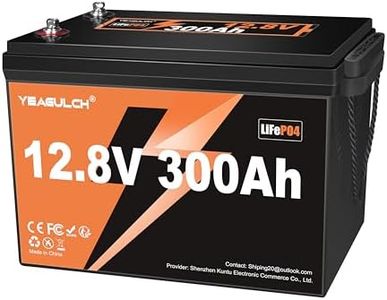
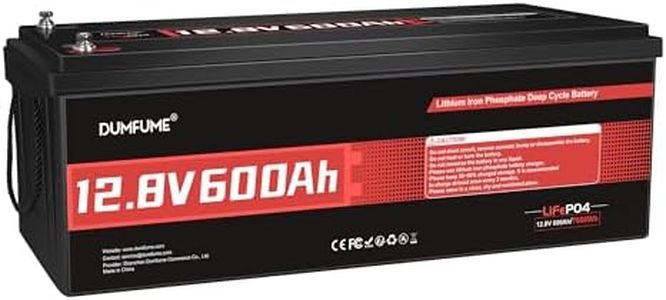
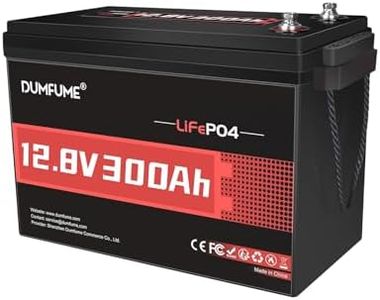
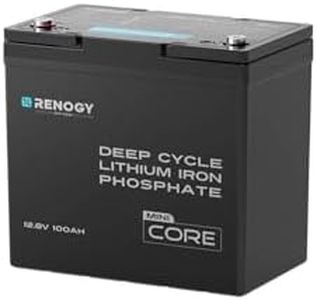
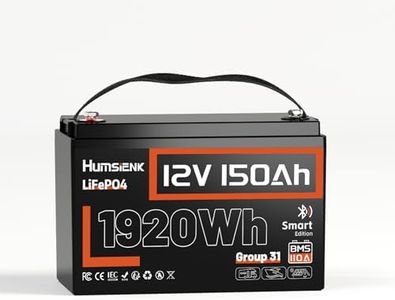
Related Products
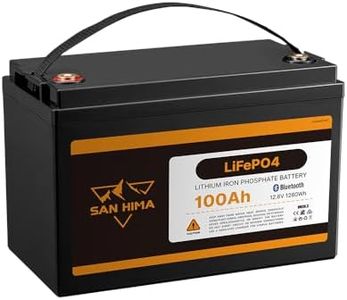
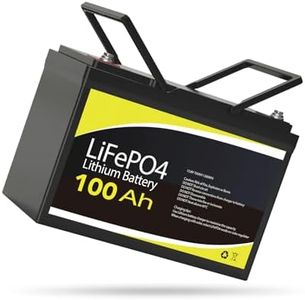
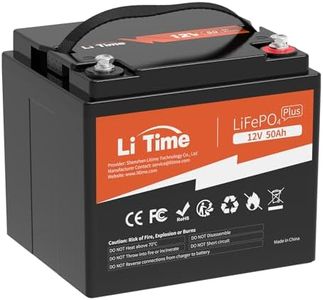
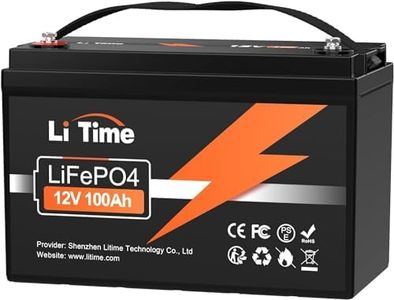


Buying Guide for the Best Lithium Deep Cycle Batteries
Choosing the right lithium deep cycle battery is about matching the battery’s capabilities to the way you plan to use it. These batteries are commonly used for solar energy storage, RVs, boats, electric vehicles, and backup power systems because they can provide steady power over long periods and recharge efficiently. Understanding the main specifications will help you ensure your battery lasts longer, performs well, and suits your particular application.Capacity (Ah)Capacity, measured in amp-hours (Ah), tells you how much energy the battery can store and supply. Higher capacity means the battery can power your devices for longer before needing a recharge. For example, a battery with 100Ah can deliver 1 ampere of current for 100 hours, or 10 amperes for 10 hours. Smaller capacities (under 50Ah) are good for light use like small electronics or fish finders, mid-range (50–150Ah) fits most RV, small boat, or backup power setups, and high capacities (over 150Ah) are ideal for larger solar storage or off-grid living. Think about how much energy you use in a typical day and choose a capacity that comfortably covers your needs with a margin for extra demand.
VoltageVoltage, usually 12V, 24V, or 48V, determines the compatibility of the battery with your system. Most portable systems and small RV setups use 12V batteries, while larger solar setups might use 24V or 48V to reduce losses and handle higher power demands. Always match your battery’s voltage to your system for safety and performance. If you need more voltage, batteries can often be linked in series, but it’s best to start with the right voltage for your device or system.
Cycle LifeCycle life is the number of full charge and discharge cycles a battery can complete before its capacity significantly drops. It reflects the battery's durability and expected lifespan. Lithium batteries commonly offer between 2,000 and 5,000 cycles, much more than lead-acid types. Lower-cycle batteries may be fine for occasional or seasonal use; higher-cycle counts are better for daily or heavy use such as off-grid homes or regular boating. Match the cycle life to how often you plan to charge and discharge the battery.
Maximum Discharge CurrentThis spec tells you how much current the battery can safely supply at once. It’s important if you run high-powered devices (like inverters or trolling motors) that demand a burst of power. Lower maximums (under 50A) suit low-draw gadgets, while higher values (100A or more) are necessary for heavy appliances or power tools. Check what your equipment requires and make sure your battery can meet the demand without overloading.
Weight and DimensionsLithium batteries are lighter and more compact than traditional batteries, but they still come in different sizes. Consider the physical space you have for installation and whether you need to move the battery often. Lighter and smaller models are easier to manage in portable or tight spaces, while larger sizes are fine if you don’t need to move them and have plenty of room.
Built-in Battery Management System (BMS)A BMS protects the battery from issues like overcharging, deep discharging, overheating, or short-circuiting. Most quality lithium batteries come with a BMS for safety and longer life. If you are not using an external protection system, make sure your battery has a reliable built-in BMS, especially for demanding environments or when safety is a priority.
Operating Temperature RangeThis tells you what temperatures the battery can be safely used and charged in. Extreme temperatures affect battery performance; some models include built-in heating for cold climates. If you’ll be using the battery in very hot or cold weather, pick one designed for those conditions to avoid reduced capacity or damage.