10 Best Manual Espresso Machine
From leading brands and best sellers available on the web.By clicking on a link to a third party's website, log data is shared with that third party.

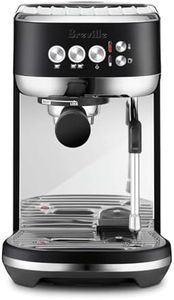
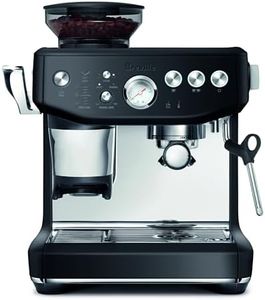
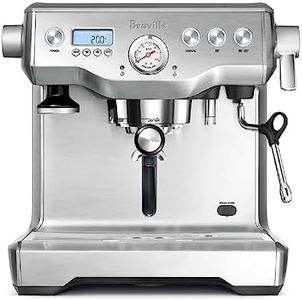
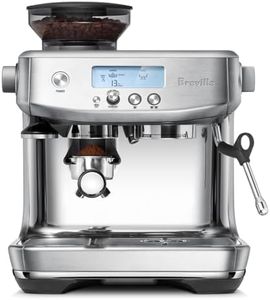
Related Products
Up to 43% off
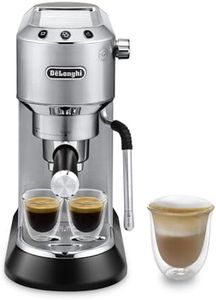
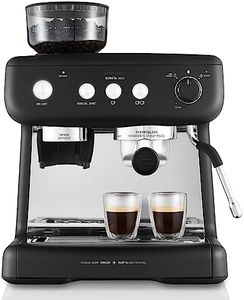
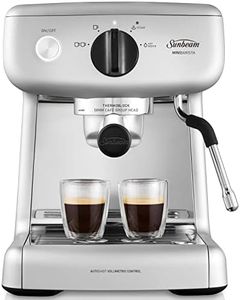
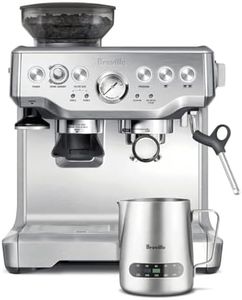
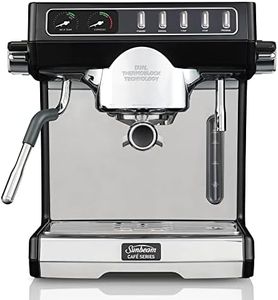
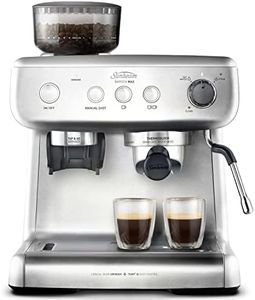

Buying Guide for the Best Manual Espresso Machine
Choosing the right manual espresso machine can truly enhance your coffee experience, allowing hands-on control and the satisfaction of crafting café-quality espresso at home. To find the best fit for you, consider how involved you want to be in the coffee-making process, how much space you have, and what sort of drinks you plan to make. Knowing the main features will help you navigate the options and make an informed decision that matches your needs and enjoyment level.Pressure SystemThe pressure system in a manual espresso machine is essential because it determines how much force is used to brew your coffee. Typically measured in bars, this pressure extracts the rich flavors and crema from the coffee grounds. Home machines usually range from 6 to 15 bars, but true espresso is technically made at around 9 bars. If you like experimenting and adjusting your pressure for different results, look for machines where you can control this more closely. For beginners, a consistent 9-bar system is usually a reliable, user-friendly choice.
Boiler Type and CapacityThe boiler heats the water that brews your espresso, and its type—such as single, dual, or heat-exchange—affects how quickly and efficiently your machine works. Single boilers only allow you to brew or steam at one time, dual boilers can do both simultaneously, and heat-exchange models fall in between. If you only make a single cup occasionally, a single boiler is simple and compact, but for frequent entertaining or making milk drinks, dual boilers or heat-exchange types offer speed and convenience. Boiler capacity also matters: smaller boilers heat faster but produce less steam, larger ones are better for back-to-back shots.
Portafilter SizeThe portafilter is the handle that holds your coffee grounds for brewing. Common sizes are 49mm, 51mm, and 58mm, with the 58mm size most common in commercial machines and offering a more forgiving, nuanced extraction for enthusiasts. Smaller sizes are easier to handle for beginners and still make excellent coffee. If you aim for barista-level skills or want to use accessories, opt for a standard 58mm size; for convenience and easier use, smaller portafilters can be perfectly suitable.
Steam WandThe steam wand is used to froth milk for drinks like lattes and cappuccinos. Some machines have basic wands that are easier for beginners but less flexible for fancy milk art, while others have pro-style wands for more manual control. If you like milk-based drinks or want to try latte art, make sure the machine has a good-quality steam wand. If you mostly drink espresso, this may not be as important.
Temperature ControlEspresso needs consistent, precise water temperature—usually between 90-96°C (194-205°F)—for the best taste. Some machines manage temperature automatically, while others let you adjust it. Advanced users might want manual controls to experiment with flavor profiles, while most people will appreciate the simplicity of a machine that keeps things stable automatically, ensuring consistently tasty espresso.
Ease of Use and CleaningManual espresso machines require more effort, but design can make a big difference in how easy a machine is to use and clean. Machines with removable water tanks, accessible portafilters, and non-stick steam wands save time and hassle. If you value a smooth, daily routine, look for machines designed with straightforward assembly and cleaning in mind.
Build Quality and MaterialManual espresso machines are often made from stainless steel, aluminum, or durable plastics. Metal machines tend to last longer and hold heat better but can be heavier and more expensive. Plastics are lightweight and often cheaper but may not have the longevity or thermal stability. If you expect to use the machine daily for years, investing in sturdier materials can be wise; for light, occasional use, lighter materials might be adequate.