10 Best Manual Meat Slicers
From leading brands and best sellers available on the web.By clicking on a link to a third party's website, log data is shared with that third party.
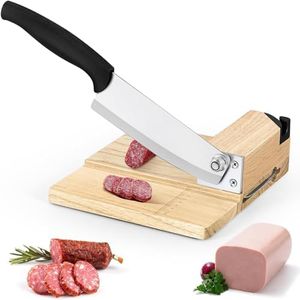
Related Products
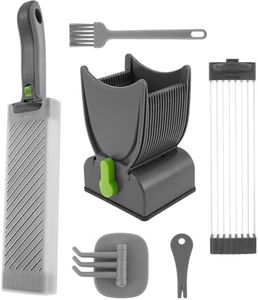
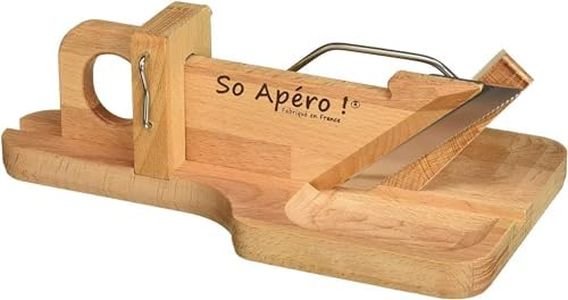
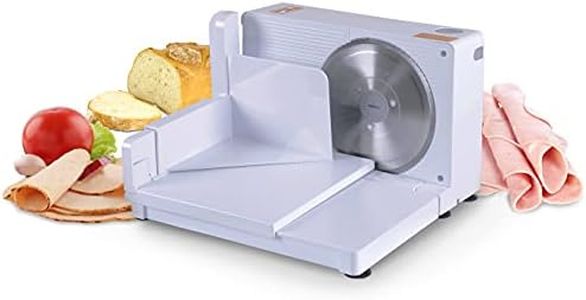
Buying Guide for the Best Manual Meat Slicers
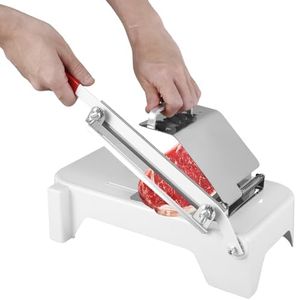
Choosing a manual meat slicer can make a big difference in how efficiently and neatly you prepare sliced meats and other foods at home. The right slicer will save you time, provide consistent results, and make the slicing process safer and more enjoyable. To find the best fit, you should understand the main features and how they relate to your needs—such as what, how often, and how much you intend to slice. Here’s what to look out for when picking a manual meat slicer.Blade SizeThe blade size is simply the diameter of the slicer's cutting blade. This is important because it dictates both the thickness of slices and the size of food you can process. Smaller blades—usually around 7 to 9 inches—work well for softer or smaller foods and are easier to handle and store. Larger blades—10 inches or more—handle larger pieces of meat and tougher foods more efficiently. Pick a blade size based on the type and volume of food you plan to slice most often; if you mostly slice small cuts or only cook for a few people, a smaller blade could be ideal, while frequent users or those prepping large cuts will benefit from a bigger blade.
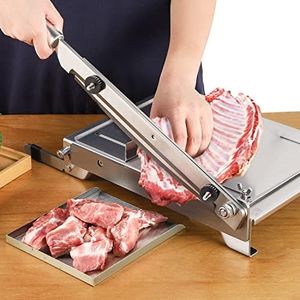
Material ConstructionMaterial construction refers to the type of materials used to make the slicer, especially for the blade and the frame. Stainless steel blades are preferred for their sharpness and rust resistance, while aluminum or stainless steel bodies are more durable and easier to keep clean. Plastic bodies are lighter and may cost less but can be less sturdy over time. Choose sturdy materials if you value longevity and safety, especially if you’ll be using the slicer often or with tough foods.
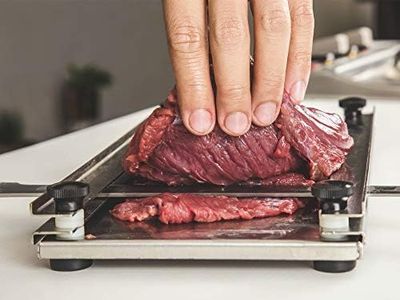
Adjustable Slice ThicknessAdjustable slice thickness is a feature that allows you to change how thick or thin your slices are. This matters because different recipes or preferences require specific thicknesses—think paper-thin prosciutto versus thicker sandwich meats. Slicers typically offer a knob or dial that lets you set your preferred thickness, often ranging from very thin (about 1mm) up to 15mm or more. Decide what types of food and thicknesses you plan to slice most often, and pick a slicer that can cover that range easily.
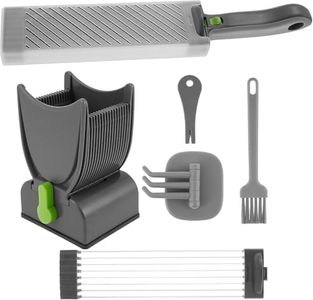
Ease of CleaningEase of cleaning refers to how easily you can take the slicer apart and wash its individual parts. Since raw meat can carry bacteria, being able to clean every part thoroughly is crucial for food safety. Some slicers have removable blades and trays, while others are more complex. If you'll use your slicer often, look for one with simple assembly and disassembly so that cleaning after each use isn’t a hassle.
Safety FeaturesSafety features include things like blade guards, non-slip feet, and secure food holders that protect your fingers. These are important because meat slicers have sharp blades and can be hazardous if not used properly. Typical features might include hand guards, locking mechanisms, and suction feet to keep the slicer steady. Pick a model with several safety features if you’re new to using slicers or will often be working quickly or with children nearby.
Size and StorageThe size and overall footprint of the meat slicer is about how much counter or storage space it will need. Larger slicers can handle bigger food items but require more space both in use and when stored. If your kitchen is small or you plan to use the slicer infrequently, consider a compact, lighter model that’s easy to move and store. For dedicated spaces, size is less of a concern, so focus more on capability.