10 Best Marine Fiberglass Repair Kits
From leading brands and best sellers available on the web.By clicking on a link to a third party's website, log data is shared with that third party.
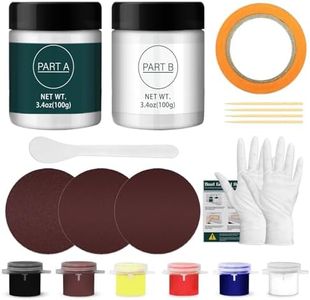
Related Products
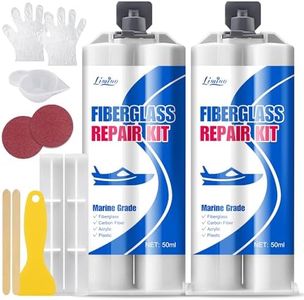
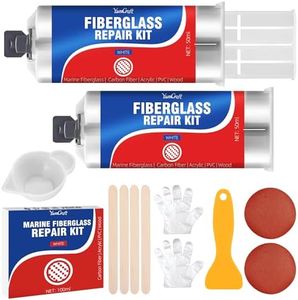
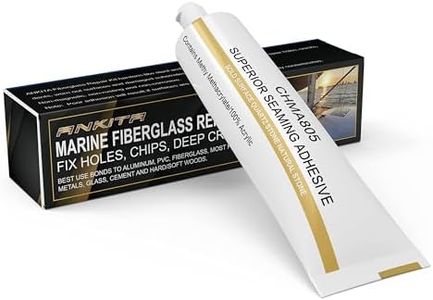
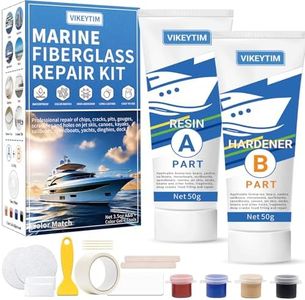
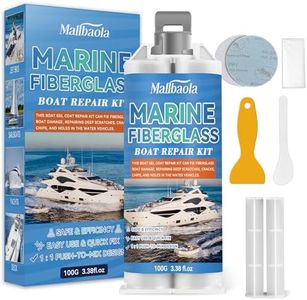
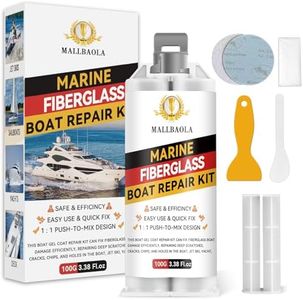
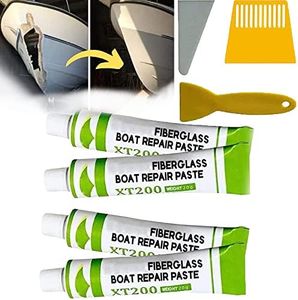
Buying Guide for the Best Marine Fiberglass Repair Kits
When it comes to repairing fiberglass surfaces on boats or other marine equipment, choosing the right marine fiberglass repair kit is crucial for durability, safety, and the longevity of your repair. The kit you select should match the type of repair you need to do, the environment your vessel is used in, and your own experience level. Taking a careful look at the specs of different kits will help ensure you get a result that’s strong, long-lasting, and smooth.Resin TypeThe resin in a marine fiberglass repair kit is the substance that bonds the fiberglass matting together and to the surface being fixed. The two most common types are polyester and epoxy. Polyester resin is traditional, cures quickly, and is easier to sand, making it good for less critical repairs above the waterline. Epoxy resin is stronger, more versatile, and bonds better to various surfaces, including wood and metals, so it’s preferred for structural repairs and any part exposed to water. For casual repairs to cosmetic or minor dings, polyester may be enough; if you’re facing a more critical repair, or if the area sees a lot of stress or is regularly submerged, epoxy is generally a safer bet.
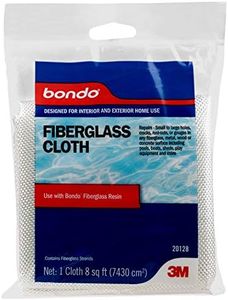
Included Fiberglass MaterialKits will typically come with either chopped strand mat, woven cloth, or both. Chopped strand mat is best for building up thickness or filling holes; it’s easy to use but less strong. Woven cloth provides greater strength and flexibility, making it better for repairs that need to withstand bending or vibration. If your repair is a small cosmetic crack, chopped mat is easier to use and will suffice; for anything larger or structural, look for kits with a good amount of woven cloth.
Kit Size (Coverage Area)Repair kits are available in various sizes, typically described by how many square feet or inches they can cover. Small kits are sufficient for repairing minor cracks or small holes, while larger kits are needed for patches or bigger restorations. It’s important to estimate the total area you need to repair and select a kit that covers a bit more than you think you’ll need to ensure you don’t run out in the middle of your project.
Curing TimeCuring time is the period the resin mixture takes to harden fully after application. Some resins cure quickly, allowing fast repairs, while others take longer but may be easier to work with and produce a stronger result. Shorter curing times are helpful if you want to use your boat soon, but slower-curing resins are less likely to trap bubbles or errors. Consider your own patience and schedule, and also the weather—cure times can change with temperature.
Water ResistanceBecause marine repairs are constantly exposed to water, it’s vital that the cured material is fully waterproof. Most marine kits are, but water resistance can vary with resin type and kit quality. If your repair area is below the waterline or regularly submerged, make sure the kit advertises strong waterproofing and is rated for underwater or continuous wet use.
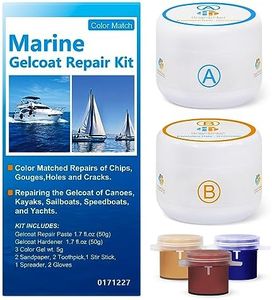
Ease of UseSome kits are packaged for beginners, featuring clear instructions, pre-measured containers, and easy mixing solutions, while others assume more experience. If you’re new to fiberglass repair, look for kits that are specifically labeled as easy to use or beginner-friendly. More advanced kits may offer greater flexibility or performance, but require following more complicated preparation or application steps.