3 Best Marine Stereo Head Unit
From leading brands and best sellers available on the web.By clicking on a link to a third party's website, log data is shared with that third party.
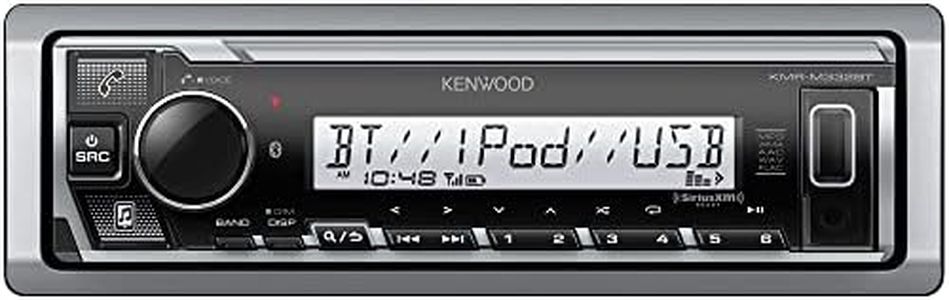
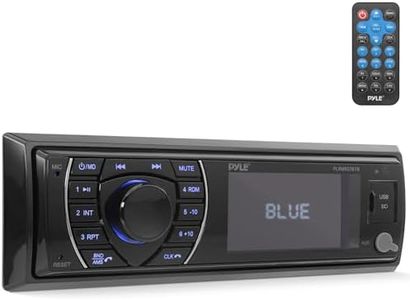
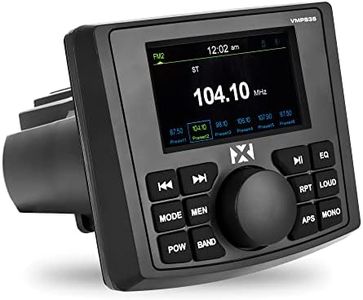
Buying Guide for the Best Marine Stereo Head Unit
Choosing the right marine stereo head unit can make your boating experience much more enjoyable, whether you love entertaining friends on the water or simply want some music while cruising solo. The key is to find a device that balances durability, sound quality, and the type of connectivity you need. Because marine environments are harsh, with lots of moisture, salt, and sun, not every stereo is up to the job. Instead of focusing on features you might never use, think about how, where, and when you'll be using your stereo, and pick the specs that match your boating lifestyle.Waterproof and Weather Resistance (IP Rating)This specification tells you how well the head unit can handle splashes, rain, and even submersion. It's usually measured using an IP (Ingress Protection) rating, where a higher number means more protection. In a marine environment, marine stereos will often have at least an IPX5 or IPX6 rating, which means they can handle water jets from all directions; higher numbers mean better protection. If your stereo will be out in the open, without much cover, a higher waterproof rating is important. If it’s installed in a more protected spot, you might afford to go a little lower.
UV ProtectionSun exposure can cause plastics and screens to fade and crack over time. UV protection in a marine stereo means it's built to resist damage from direct sunlight. Some units are specifically rated for UV resistance, which is helpful for open boats or if your head unit is exposed most of the time. If your boat is usually covered or the stereo is installed in a shaded area, UV protection is less critical, but still good to have for longevity.
Power Output (Watts per Channel)Power output tells you how loud and clear your music will be, especially over noisy engines and waves. It's measured in watts per channel, usually given as peak or RMS (continuous) power. Lower-powered stereos (e.g., 20W RMS per channel) are fine for quiet or enclosed spaces, while higher-powered units (40W RMS or above) are better for larger boats or open decks where you'll want more volume and clarity. Think about whether you’ll be mostly listening at low, background levels or if you want to entertain a crowd.
Audio Source Compatibility (Bluetooth, USB, AUX, CD, Radio, etc.)This tells you what kind of devices or music sources you can connect to your stereo. Bluetooth lets you stream wirelessly from a phone, USB ports allow you to play music from flash drives, AUX inputs are good for older devices, and some units still offer CD players or enhanced AM/FM radio tuners. If you want wireless control and streaming, look for strong Bluetooth support. If you have older music libraries or want radio reception in remote areas, make sure the head unit covers those needs.
Control Options (Wired/Wireless Remotes, App Control, Display Type)Control options are about how you manage your music and settings. Some units offer basic buttons, while others have LCD screens or even touchscreen interfaces. Many marine stereos can be controlled remotely—either with a wired remote mounted elsewhere on the boat, a wireless remote, or a smartphone app. Touchscreens and app control make things easier, but basic physical controls can be more durable and easier to operate with wet hands. Choose what matches your expectations for convenience and durability.
Expandability (Pre-outs, Additional Zones, Satellite Radio, etc.)Expandability means the stereo is ready to connect to other sound systems, amps, or speakers, or add features like satellite radio. Units with multiple pre-outs allow you to install amplifiers or add speakers in different parts of your boat, great for bigger boats or if you want high-quality sound everywhere. If you don’t plan to upgrade or expand your sound system, simpler models will do, but it’s wise to consider potential upgrades in the future.
Build Quality and Marine CertificationThis is all about overall toughness—using rustproof screws, sealed circuit boards, and durable faceplates built for constant exposure to marine conditions. Some head units are certified to industry standards for marine use, which can give you peace of mind about their long-term reliability. If you use your boat in saltwater or rough environments, prioritize marine-certified components for maximum lifespan. For more casual, freshwater use, you may not need the highest ruggedness.