10 Best Meat Slicing Knife
From leading brands and best sellers available on the web.By clicking on a link to a third party's website, log data is shared with that third party.


Related Products
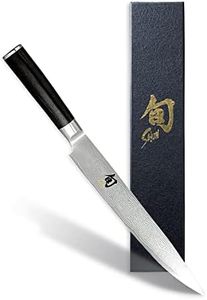
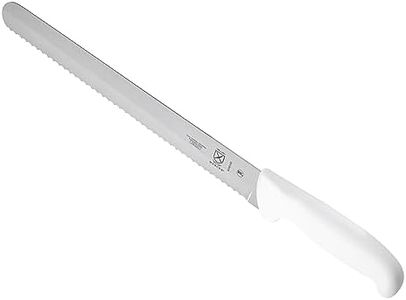

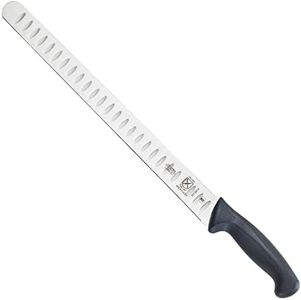
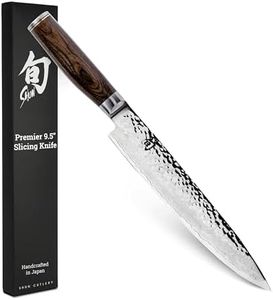
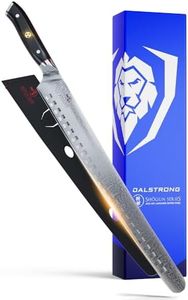
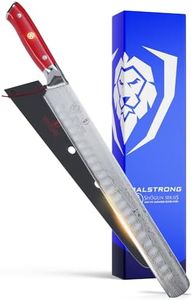
Recommended lists

Top rated
Folding Meat Slicer
Buying Guide for the Best Meat Slicing Knife
Selecting the ideal meat-slicing knife can make a tremendous difference in how easily and effectively you prepare meals. A good knife should feel comfortable, be suited to the types and sizes of meat you often slice, and make the slicing process smooth and safe. When considering which knife is best for you, focus on crucial features that determine how the knife will perform for different needs, such as home cooking, entertaining, or handling specific meats like brisket, ham, or turkey.Blade LengthBlade length refers to how long the cutting edge of the knife is. It's important because it determines how easily you can slice through large cuts of meat in a single motion, without sawing back and forth. Shorter blades (around 7-9 inches) offer better control and are suitable for smaller cuts like roast beef or medium-sized poultry, while longer blades (10-14 inches) are better for handling brisket, hams, or large turkeys because they can slice through wide pieces in one smooth movement. Consider the size of meat you usually slice—choose shorter blades for smaller portions and longer ones for bigger cuts.
Blade FlexibilityBlade flexibility is a measure of how much the blade bends during use. Flexible blades allow for thinner, more precise slices and are ideal for boneless meats and delicate cuts. Stiff blades provide more stability and control, making them better for tougher meats or when you need straight, uniform slices. If your primary purpose is thin-slicing roasts, fish, or cooked meats, a flexible blade is great. For large, dense cuts or meats with a crust, a stiffer blade will serve you better.
Blade MaterialThe material the blade is made from affects sharpness, durability, rust resistance, and ease of maintenance. Stainless steel is the most common choice because it resists rust and staining and retains its edge well with regular use. High-carbon steel can hold a sharper edge for longer but may require more care to prevent rust. If you prefer low maintenance, go for stainless steel blades. If you’re comfortable with a bit more upkeep and want exceptional sharpness, high-carbon steel is an option.
Blade EdgeThe blade edge refers to whether the knife is straight-edged, scalloped, or serrated. Straight edges produce clean slices and are perfect for smooth, even cutting of cooked meats. Scalloped and serrated edges grip tougher exteriors and can help slice through crusts without crushing tender interiors. Choose a straight edge if you want precise, presentation-quality slices and mostly work with boneless meats. If you often slice breaded, crusted, or tougher meats, serrated or scalloped may be more appropriate.
Handle Comfort and GripThe handle is crucial for control and safety. A comfortable, non-slip handle reduces fatigue during repetitive slicing and ensures you maintain a firm grip even if your hands are wet or greasy. Handle shapes and materials vary—some are wood, others are synthetic or rubberized for extra grip. Test how the handle feels in your hand and make sure it isn’t too large or small for your palm. If you often slice large quantities or value ergonomics, prioritize a handle that feels natural and secure.
Knife Balance and WeightBalance and weight determine how easy the knife is to maneuver and how much control you have. A well-balanced knife (where the weight is evenly distributed between the blade and handle) feels more stable and easier to guide. Heavier knives may help with slicing through dense meats with less effort, but lighter knives offer more control for thin, precise slices. Consider whether you prefer the heft for power or the lightness for finesse, and pick accordingly based on what feels best in your hand.