10 Best Metallic Watercolor Paints
From leading brands and best sellers available on the web.By clicking on a link to a third party's website, log data is shared with that third party.

Related Products
Up to 8% off
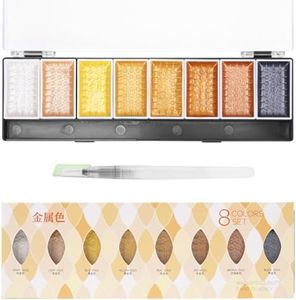
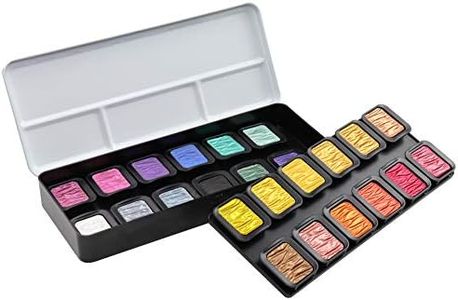
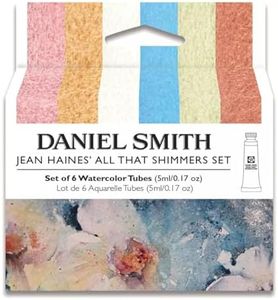
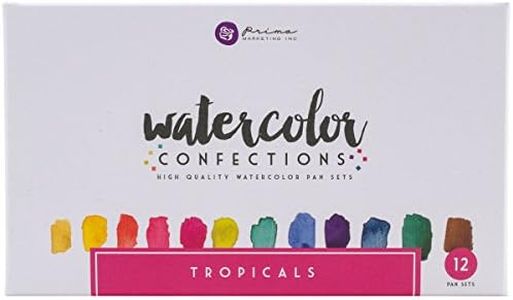
Buying Guide for the Best Metallic Watercolor Paints
Choosing metallic watercolor paints can be a fun and creative process, but it's important to understand what makes one set different from another. Metallic watercolors give your paintings a shimmering or pearlescent effect, making them ideal for decorative pieces, highlighting, or adding special accents. When selecting metallic watercolor paints, focusing on a few key characteristics will help you find the right set for your artistic style and needs.Pigment QualityPigment quality refers to how rich and vibrant the color appears both when it's wet and after it dries. In metallic watercolors, high-quality pigments will deliver a brighter, more reflective shine and maintain the shimmer after drying. Less quality pigments may look dull or patchy. Sets with professional-grade or artist-grade pigments generally give the best results for paintings you want to keep or display, while student-grade pigments work well for experimenting or casual projects. Consider what level of vibrancy or permanence you need for your work—if you're aiming for eye-catching details or archival pieces, prioritize superior pigment quality.
LightfastnessLightfastness is about how well the color resists fading when exposed to light over time. This is particularly important if you're creating artwork for display or sale, as poor lightfastness means colors will fade faster. Watercolors usually indicate lightfastness ratings on packaging. For pieces that might be exposed to sunlight or if you want your art to last for years, look for high lightfastness; for practice or crafts where longevity isn't important, this may matter less.
Opacity and CoverageOpacity tells you how well the paint covers the area it’s applied to, meaning whether the background shows through. Metallic watercolors can range from very transparent (letting lots of paper show through) to quite opaque (covering underlying layers more fully). If you want bold, standout metallic highlights, more opacity is better. For subtle shimmers or layering on top of other paints, a more transparent paint may be ideal. Think about how you plan to use the metallic paints—heavy accents or delicate overlays—and choose the level of opacity that matches your preference.
Color RangeThe color range is the number and variety of shades available in a set. Some sets include basic gold and silver, while others feature a broader selection like bronze, copper, or iridescent hues. If you’re just starting or only need accents, a smaller set may suit you, but for more variety and detailed artwork, a bigger range provides more options. Consider your usual palette and whether you prefer classic metallics or want to experiment with different shades.
Binder and TextureThe binder is the ingredient that holds the pigment together and helps it stick to the paper once dry—typically gum arabic in watercolor paints. A good binder ensures smooth consistency and easy mixing. Metal flakes or mica pigments in metallic watercolors can sometimes settle or clump, affecting how the paint glides on the paper. If you prefer a paint that’s ready to use and easy to blend, look for sets that are praised for their smoothness and even finish. Try testing a small amount in-store if possible, or read user feedback regarding texture.
Compatibility with PaperNot all metallic watercolors behave the same on every type of paper. Some may sink in or disperse differently on rough, cold-pressed, or hot-pressed watercolor papers. Ideally, choose paints that perform well on the paper types you already use so you can get consistent results. If you’re trying a new brand, it can help to test it on a small area of your favorite paper to see how the shimmer and color lay down.