9 Best Mirrorless Cameras For Beginners
From leading brands and best sellers available on the web.By clicking on a link to a third party's website, log data is shared with that third party.
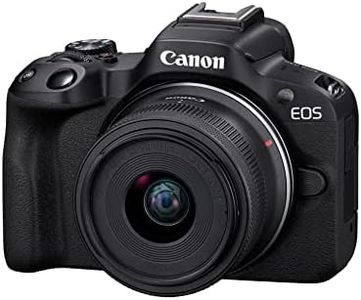
Buying Guide for the Best Mirrorless Cameras For Beginners
When shopping for your first mirrorless camera, it's important to think about what you'll use it for and how comfortable you'll feel using the camera's features. Mirrorless cameras are great for beginners because they offer excellent image quality, the flexibility to change lenses, and user-friendly controls. Focusing on a few key specifications will help you find a camera that feels just right for learning and capturing the moments that matter to you.Sensor SizeSensor size refers to the physical dimensions of the camera's image sensor, which captures light to form a photograph. This matters because bigger sensors can capture more detail and perform better in low light, but they also make cameras and lenses larger and heavier. For beginners, smaller sensors like Micro Four Thirds are portable and easy to handle, while APS-C sensors offer a nice balance between quality and size. Full-frame sensors, the biggest in common use, provide the best performance but tend to be pricier and bulkier. If you're new to photography or want something light and easy to carry, a Micro Four Thirds or APS-C camera is a great starting point.
MegapixelsMegapixels measure how many million pixels your camera's sensor uses to create images. More megapixels mean you can print larger photos or crop into pictures without losing quality. However, extremely high megapixel counts aren't always necessary for beginners. Most cameras offer between 16 and 24 megapixels, which is plenty for everyday photos, sharing online, and making standard-sized prints. Unless you plan to make huge prints or crop your images a lot, picking something within this common range will suit most needs.
Autofocus SystemThe autofocus system determines how quickly and accurately the camera can focus on your subject. Beginner-friendly cameras usually offer several focusing points and the option to use automatic face or eye detection, which helps keep people and pets sharp in your photos. Some cameras have more advanced systems with lots of focus points; this can be helpful for action or sports, but it can also be more complicated to use. If you're starting out, a camera with easy-to-use autofocus and face or eye detection features is both convenient and enjoyable.
Ease of Use and ControlsHow easy a camera is to use can make a big difference, especially for beginners. Look for a camera with a clear menu system, buttons and dials that are well-labeled, and helpful automatic shooting modes. Touchscreen controls and tilting screens also make learning and shooting more comfortable. If you feel comfortable holding and navigating a camera, you're more likely to confidently explore its manual features as you learn.
Size and WeightMirrorless cameras are known for being lighter and more compact than traditional DSLRs, which can make them less intimidating for beginners. However, there are still differences in how small or heavy they feel, depending on the sensor size and features. If you'll carry your camera all day, travel, or just like something light, consider a smaller model. If handling or balance feels more important, or if you'll use it mainly at home, a slightly larger camera may feel more comfortable.
Interchangeable Lenses and AccessoriesOne of the big advantages of mirrorless cameras is the ability to change lenses and use accessories like flashes, microphones, or tripods. Not all systems have the same variety of lenses, so check what kinds are available for the camera you're considering. As a beginner, you might start with just one lens (often called a 'kit lens') that covers general photography, and expand later as you discover what you like to shoot.