10 Best Monocular Telescopes
From leading brands and best sellers available on the web.By clicking on a link to a third party's website, log data is shared with that third party.
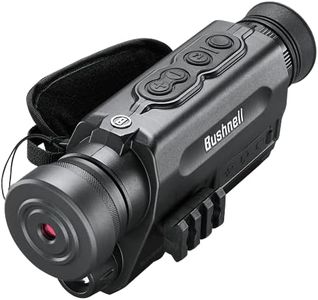
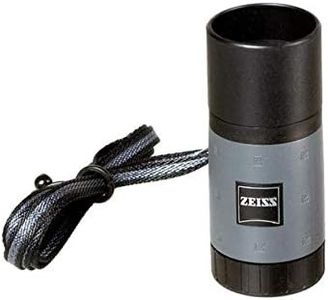
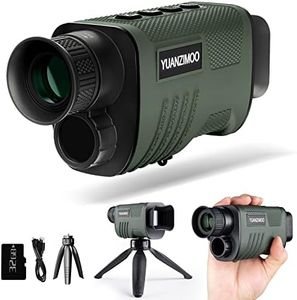
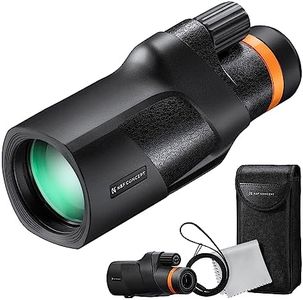
Related Products
Up to 18% off
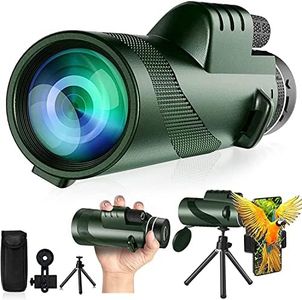
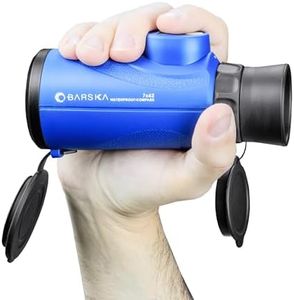
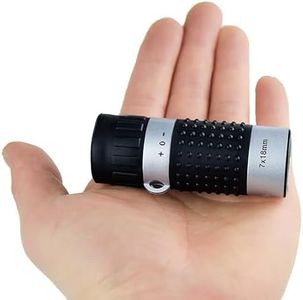
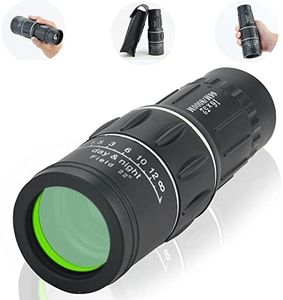
Buying Guide for the Best Monocular Telescopes
Choosing the right monocular telescope can be a rewarding experience, whether you’re interested in bird-watching, hiking, sporting events, or casual stargazing. The key is to understand what features matter most for your needs and where to find a balance between magnification, portability, and image quality. Focus on matching the specifications to how and where you’ll use the monocular - do you need something lightweight for travel, or are you looking for better detail at a distance? By learning the main specs and what they mean for real-world use, you can confidently select the best monocular for your adventures.MagnificationMagnification in monoculars is the number that shows how much closer an object appears compared to the naked eye. It’s usually represented as the first number in a format like 8x42, where 8 means 8 times closer. Higher magnification lets you see distant details better, which is great for observing wildlife or stars. However, too much magnification can be hard to hold steady and may narrow your field of view. For general use outdoors, 6x to 8x is good for portability and ease, while 10x to 12x is better suited if you prioritize distant detail and don't mind a slightly bulkier setup or plan to use a tripod.
Objective Lens DiameterThe objective lens diameter, often the second number in specs like 8x42, is the width of the main lens in millimeters. A larger lens allows more light in, making the image brighter and clearer, especially in low light conditions such as dawn or dusk. However, bigger lenses mean a heavier and larger monocular. If you need a compact and lightweight monocular for daytime activities, something around 25-32mm should work. For low-light or more detailed viewing, like stargazing, 40mm and above can be beneficial, though they are bulkier.
Field of ViewField of view tells you how wide an area you can see through the monocular at a certain distance, usually listed in feet at 1000 yards or meters at 1000 meters. A wider field of view is helpful for tracking moving subjects or scanning landscapes, while a narrow field is better when you want to focus on fine detail. Generally, higher magnification results in a narrower field of view. For birdwatching and sports, a wider field is often more enjoyable, while for looking at stationary or distant objects, a narrower, more focused view might be preferable.
Close Focus DistanceClose focus distance is the shortest distance at which you can clearly see an object through the monocular. This is important if you plan to observe things up close, like insects or flowers. Monoculars with a close focus of 2 meters or less are ideal for close-up viewing, while a longer close focus is fine if your primary interest is observing distant subjects.
Weight and SizeWeight and size dictate how easy it is to carry and hold the monocular for extended periods. Lightweight and compact models are best if you need something to slip into your pocket or take on long hikes, compromising a bit on brightness. Heavier models, which often have larger lenses, can provide better image quality but may require a case or strap and might be tiring to use for long periods without support. Think about how and where you'll use your monocular to decide which matters more to you.
Waterproofing and DurabilityWaterproofing and durability features ensure that your monocular can withstand harsh weather and rough handling. Many are sealed to prevent moisture or dust from getting inside, with rubberized exteriors that provide a better grip and shock resistance. If you expect to use your monocular in rain, near water, or on tough hikes, prioritize these features. If your use will be mostly indoors or in dry conditions, you might not need advanced protection.
Eye ReliefEye relief refers to the distance you can hold the monocular from your eye and still see the full image. This is especially important if you wear glasses. Longer eye relief (typically above 15mm) is more comfortable and allows you to see the whole view even with glasses on. If you don’t wear glasses, shorter eye relief isn’t an issue, but if comfort and convenience matter, especially for long sessions, prioritize greater eye relief.