10 Best Most Powerful Compact Binoculars
From leading brands and best sellers available on the web.By clicking on a link to a third party's website, log data is shared with that third party.
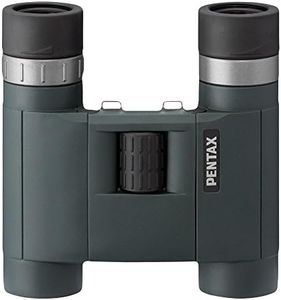
Related Products
Up to 22% off
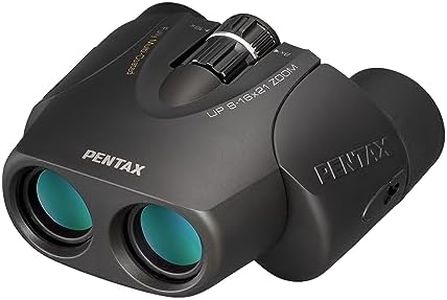
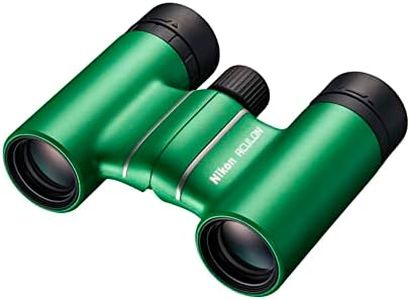
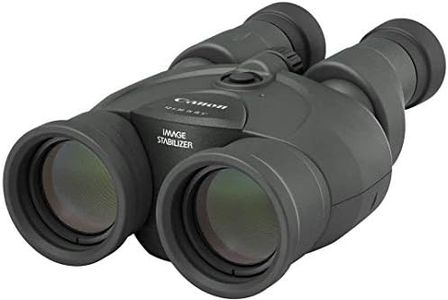

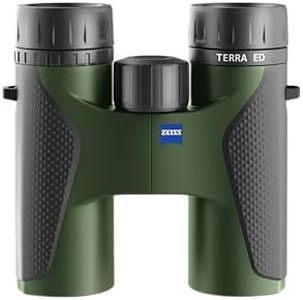
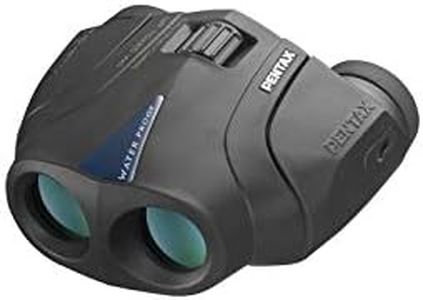
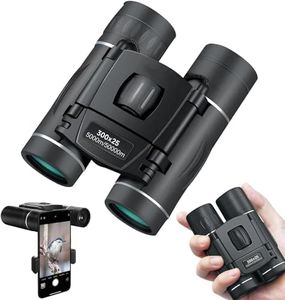
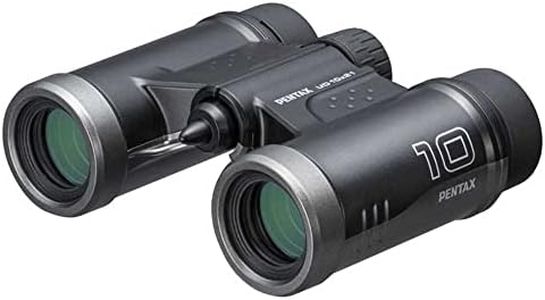
Recommended lists

Top rated
Compact Binoculars
Buying Guide for the Best Most Powerful Compact Binoculars
When choosing the most powerful compact binoculars, it's essential to balance portability with optical power. Compact binoculars are designed for ease of transport, making them great for travel, hiking, birdwatching, or sporting events. However, the 'most powerful' feature usually refers to their ability to magnify distant objects, and power comes with trade-offs like stability and light-gathering ability. Understanding key specifications will help you select a pair that fits your specific needs, whether it's wildlife observation, concerts, or casual use.MagnificationMagnification describes how much closer an object will appear compared to the naked eye. For example, 8x means the object appears eight times closer. In compact models, typical magnification ranges from 8x to 12x. Lower values (like 8x) provide a wider view and steadier image, making them better for activities like birdwatching or sporting events. Higher magnification (like 10x-12x) lets you see more detail at great distances but makes the view shakier and may be harder to use without a steady hand. Think about what you'll mostly be viewing: for general or fast-moving activities, lower magnification is often better; for long-distance detail, opt for higher values.
Objective Lens DiameterThis is the size, in millimeters, of the front lenses. Larger diameters let in more light, making images brighter—important in low-light conditions. Compact binoculars typically range from 20mm to 30mm. Smaller lenses (20-25mm) make for tiny, lightweight binoculars, perfect for daytime or casual use. Larger lenses (26-30mm) gather more light, offering brighter views in dawn, dusk, or shaded areas, but are a bit bulkier. Consider where you'll use your binoculars: bright daylight needs less diameter, while early morning or evening benefits from a larger lens.
Field of ViewField of view tells you how wide an area you can see at a glance, typically measured in feet at 1,000 yards or meters at 1,000 meters. A wider field helps you spot and follow moving subjects more easily, while a narrower view zooms in more but may make it harder to find your target. In compact binoculars, values can range from narrow (less than 300 feet/1000 yards) to wide (above 350 feet/1000 yards). Choose a wider field for birdwatching or sporting events, and a narrower field if you're focused on distant, stationary objects.
Eye ReliefEye relief tells you how far your eye can be from the eyepiece and still see a full image. This is important if you wear glasses. Short eye relief (under 13mm) can be uncomfortable for glasses-wearers because the view gets cut off. Longer eye relief (14mm or more) offers more comfortable viewing for everyone. If you wear glasses, opt for longer eye relief; if not, you have more flexibility.
Weight and SizeSince compact binoculars are all about portability, weight and size matter. Lightweight pairs (under 10 oz) are easy to carry all day in your pocket or bag, while heavier ones (up to 20 oz) may offer better image quality but can be tiring to hold for long. Think about how and where you’ll carry your binoculars, and how long you'll hold them up—frequent travelers and hikers usually prefer the lightest options, while stationary observers might not mind extra weight.
Prism TypeBinoculars use prisms to correct the orientation of the image. The most common types are roof prisms and Porro prisms. Roof prisms allow for a slim, straight-barrel design, making binoculars more compact and durable, but sometimes a bit more expensive. Porro prisms create a wider, zigzag shape with potentially better depth perception and brightness, but are less compact. Compact binoculars usually use roof prisms for portability. Choose roof prisms for space-saving and discreteness; Porro if you prefer a wider grip and don't mind the bulk.