10 Best Motion Sensor Switches
From leading brands and best sellers available on the web.By clicking on a link to a third party's website, log data is shared with that third party.

Related Products
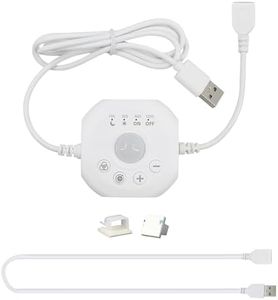
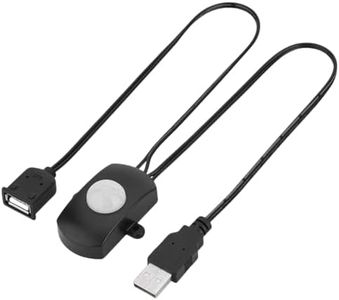
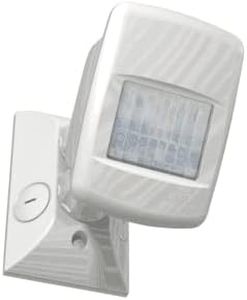
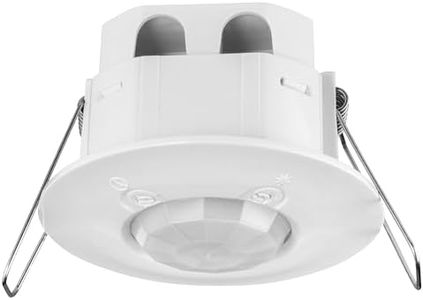
Buying Guide for the Best Motion Sensor Switches
When choosing a motion sensor switch, it's important to understand how these devices can help automate lighting or appliances in your home or workspace. They detect movement and automatically turn lights or equipment on or off depending on occupancy, which adds convenience, increases safety, and helps save energy. However, choosing the right one depends on your particular needs—such as the size and layout of your space, the types of lights or appliances you have, and how you want the system to behave in different scenarios.Detection RangeDetection range refers to how far the motion sensor can sense movement from its position. This factor is important because it determines how much area the sensor will cover. Short ranges are typically up to 10 feet and are best for small rooms, closets, or single-door entryways. Medium ranges span roughly 10 to 20 feet, suitable for most living spaces or hallways. Long ranges, over 20 feet, are ideal for larger areas like garages, open-plan offices, or outdoor entryways. To choose the right range, consider the size of your room and where the sensor will be installed so coverage aligns with actual movement paths.
Field of ViewThe field of view is the angle at which the sensor can detect movement, usually measured in degrees. A narrow field (under 90°) is great for watching a focused spot like a doorway. Medium fields (90°–180°) are good for wider coverage along a wall or hallway. Wide fields (over 180°, sometimes up to 360°) work well in the center of a ceiling for full room coverage. Think about the orientation of your space—choose a wide field for open areas or a narrow one if you only need to monitor a specific entry point.
Sensor TypeCommon sensor types include Passive Infrared (PIR), Ultrasonic, and Dual-Technology. PIR sensors detect heat given off by moving bodies and are the most common—great for basic indoor use. Ultrasonic sensors emit sound waves and pick up motion from changes in echo, which makes them better at detecting subtle motion or through obstructions. Dual-technology combines both for reliability, reducing false triggers. If you want simple, effective performance, PIR is usually enough for indoor spaces. For rooms where you want precise sensing or have tricky layouts, consider dual or ultrasonic sensors.
Time Delay AdjustmentTime delay determines how long the light or appliance stays on after motion is last detected. This setting is important for balancing convenience with energy savings—you don’t want lights turning off too quickly while the room is still occupied, nor staying on too long unnecessarily. Short delays (under 1 minute) work for hallways or brief passage areas, medium (1–10 minutes) suit most living spaces and bathrooms, and longer delays (over 10 minutes) are good for spaces where people might pause frequently. Pick a time that matches how the room is typically used to avoid frustration.
Load Type and CapacityThis refers to the kinds and amounts of electrical devices the switch can safely control. Some switches are made for standard light bulbs, while others handle LEDs, CFLs, or even small appliances. Total load capacity is measured in amps or watts—make sure the sum of all connected fixture wattages doesn’t exceed the switch’s rated capacity. For typical residential use, most switches are fine, but for high-power lights or multiple fixtures, check the numbers carefully.
Mounting StyleMotion sensor switches can be wall-mounted in place of a regular light switch, ceiling-mounted for central room coverage, or even surface-mounted for flexible placement. Wall-mount is good for replacing switches in typical rooms, while ceiling-mount is useful for larger or multi-entrance areas. Think about your room layout and where people enter or move to select the mounting style that will detect the most movement with the least effort.