10 Best Motorcycle Tie Down Straps
From leading brands and best sellers available on the web.By clicking on a link to a third party's website, log data is shared with that third party.
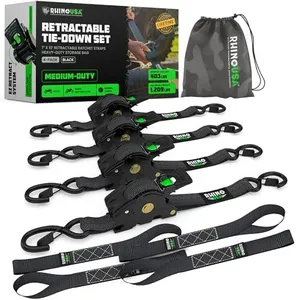
Related Products
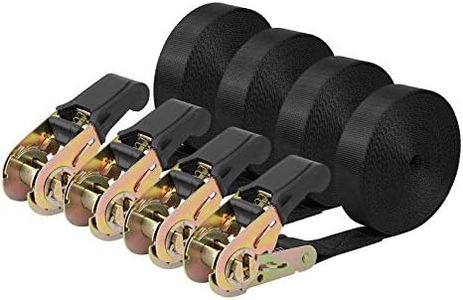
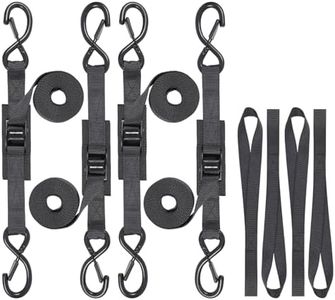
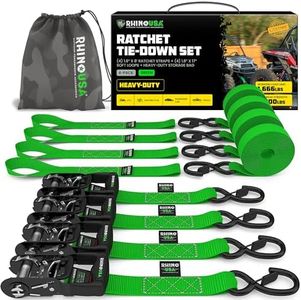
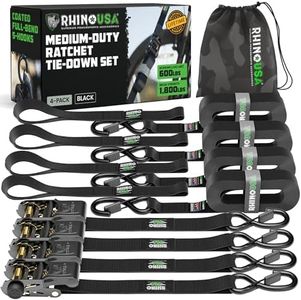
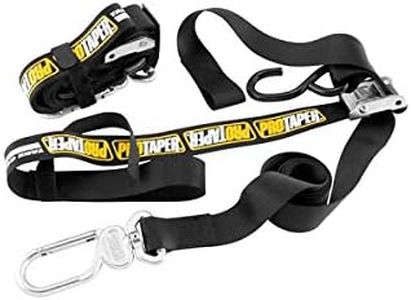
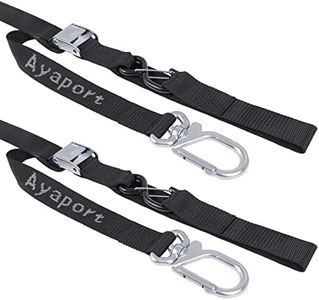
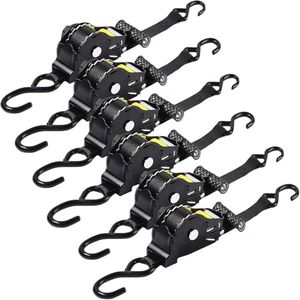
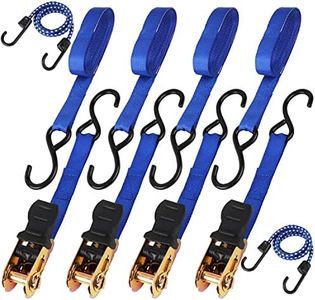
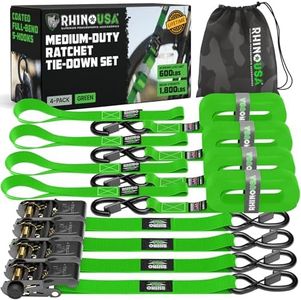
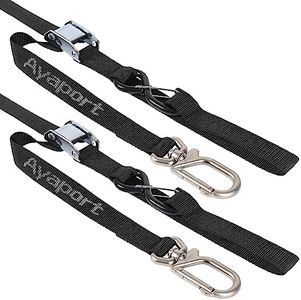
Buying Guide for the Best Motorcycle Tie Down Straps
Choosing the right motorcycle tie-down straps is crucial for safely transporting your bike. The main goal is to securely hold your motorcycle in place during transport, avoiding any shifting or damage. When picking a set of straps, focus on the main specifications that directly impact how well the straps will protect your motorcycle and how easy they are to use. Understanding these specs will help you select the best match for your bike, your typical travel distances, and your available securing points.Weight Capacity (Working Load Limit and Break Strength)Weight capacity, often shown as Working Load Limit (WLL) and Break Strength, tells you how much force the straps can safely handle when securing your motorcycle. This is important because choosing straps with too low a capacity can lead to breakage, risking your bike during transit. Generally, WLL is what you need to focus on, as it is a safe-use rating much lower than the strap’s absolute breaking point. For small motorcycles or scooters, lower capacity straps may work, while heavier bikes like cruisers or adventure motorcycles require sturdier straps. Always pick straps rated above the total weight of your bike to ensure safety and reliability.
Strap MaterialStrap material affects strength, stretch, and durability. Most motorcycle straps are made from polyester or nylon. Polyester is favored because it resists stretching under load, holds up well against weather, and has good resistance to abrasion. Nylon can stretch more, which might not keep your bike quite as steady, though it is still strong. If you want maximum security and long life, especially if you transport your motorcycle often or in varying weather, polyester is usually the preferred option.
Width and LengthThe width of the strap relates directly to its strength, while the length determines how versatile it will be for different tie-down scenarios. Narrower straps (like 1-inch wide) suit lighter bikes or when you’re working with tight spaces, while wider straps (1.5-2 inches) offer more security for heavier motorcycles. Length is typically between 4 and 8 feet, with longer straps providing more flexibility to reach awkward anchor points but possibly being more cumbersome. Consider your bike size and typical transport setup: bigger bikes and larger trailers benefit from wider and longer straps, while small motorcycles or compact haulers may only need shorter, thinner types.
Hook Type and CoatingHooks are what anchor the straps to your motorcycle and the trailer or truck. They come as S-hooks or snap hooks, and should have a protective coating like rubber or vinyl to prevent scratching your bike’s finish. S-hooks are simple and easy to use, but can slip free if tension loosens; snap hooks offer an extra security latch to prevent accidental unhooking. If you want peace of mind transporting a valuable or heavy bike, choose coated snap hooks, but S-hooks work for quick and frequent use.
Fastening Mechanism (Ratchet or Cam Buckle)Motorcycle straps generally fasten using either ratchets or cam buckles. Ratchet straps allow you to tighten down with more force, ensuring the bike is extremely secure, but overtightening can damage softer parts of the frame. Cam buckle straps are faster to use and less likely to cause damage, but they don’t tighten as much as ratchets. If you have a heavy motorcycle or are worried about long journeys on bumpy roads, ratchet straps are a strong choice. For lighter bikes or to avoid overtightening, cam buckles offer a simpler, quicker method.
Soft LoopsSoft loops aren’t always part of the main strap, but they’re important for wrapping around handlebars or frames to create a non-scratching attachment point. They protect your bike’s finish and create a better hold for hooks. If your motorcycle has delicate paint or limited tie-down points, always look for straps that come with soft loops or buy a set separately to add extra protection.