5 Best Multi Zone Receivers
From leading brands and best sellers available on the web.By clicking on a link to a third party's website, log data is shared with that third party.
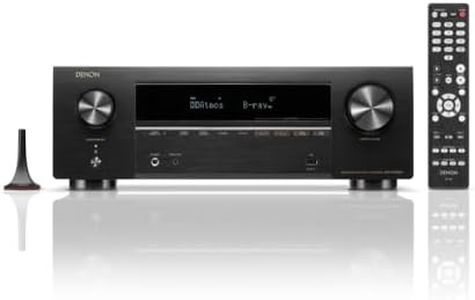
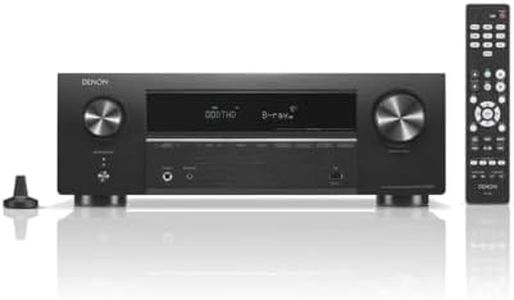
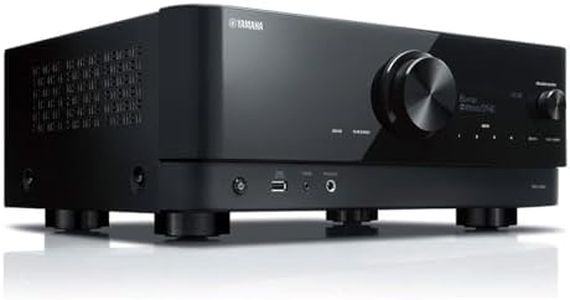
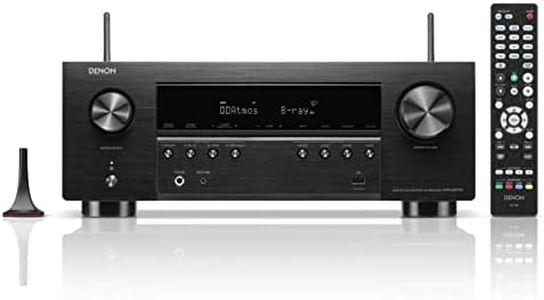
Buying Guide for the Best Multi Zone Receivers
When shopping for a multi-zone receiver, you want a device that distributes audio (and sometimes video) to several rooms or 'zones' in your home at the same time. Multi-zone receivers are great for those who want different entertainment experiences in different areas without buying multiple systems. Picking the best fit depends on your living space, how you use audio and video in various rooms, and how much control or customization you want. Understanding key features helps you match the receiver to your lifestyle and needs.Number of ZonesThe number of zones tells you how many separate spaces you can play different audio (or sometimes video) content in at once. Some receivers have just two zones, while advanced models can support three, four, or even more. If you just want audio in a second room like a patio or bedroom, two zones may be enough. If you have a large home with many rooms or outdoor areas that need different audio simultaneously, a receiver with three or four zones is ideal. Think about how many distinct areas you want to control independently and pick a receiver that matches that count.
Power Output (per channel)This spec shows how much power the receiver provides to each speaker in every zone, which affects loudness and audio quality. Power is usually given in watts per channel, and it can vary from one receiver to another. Lower power (for example, 50–70 watts per channel) works fine for background music or small rooms. Medium power (70–100 watts per channel) is better for more lively listening or average-sized spaces. Higher power (over 100 watts per channel) suits larger rooms or those who want to listen at higher volumes without distortion. Think about your room size, speaker type, and how loud you like your music, then pick accordingly.
Zone Control OptionsZone control covers how you adjust what plays in each area. Some receivers require you to physically switch inputs or adjust settings at the main unit, while others allow remote control through smartphone apps, remotes, or wall panels. More advanced receivers let you customize volume and content in each zone easily, often from wherever you are in your home. If you want maximum convenience and expect to change settings often, look for models with app support or smart home integration. For simpler setups, basic manual controls may be enough.
Audio and Video Output CapabilitiesSome receivers can send only audio to extra zones, while others can send both audio and video signals. Audio-only is common, but if you plan to have a TV or projector in a second zone, check for video zone support. The type of outputs (like speaker wire, HDMI, RCA) can also affect what devices and cables you can use. Think about how you’ll use your remote zones: if it’s just for music, audio output is enough. But if you wish to watch movies or shows in another part of your home, seek a receiver that supports video output for extra zones.
Input Source FlexibilityThis tells you whether each zone can play a different source (for example, streaming music in one room and TV audio in another) at the same time or if all zones share the same input. Some receivers only let you duplicate one source across all zones, while more advanced ones let you select different inputs for each zone. If your household has different entertainment needs in different rooms, you'll want a receiver with more flexible input options. If everyone enjoys the same content throughout the house, you won’t need as much flexibility.
Wireless and Streaming SupportMany modern receivers can connect to Wi-Fi or Bluetooth for streaming music directly from phones or online services. Some can even integrate with whole-home audio platforms. Wireless connectivity makes it much easier to play different content in different zones without running extra cables or using multiple devices. If you want the convenience of streaming from your phone or using voice assistants, prioritize receivers with solid wireless and streaming compatibility.