4 Best Nikon Macro Lenses
From leading brands and best sellers available on the web.By clicking on a link to a third party's website, log data is shared with that third party.
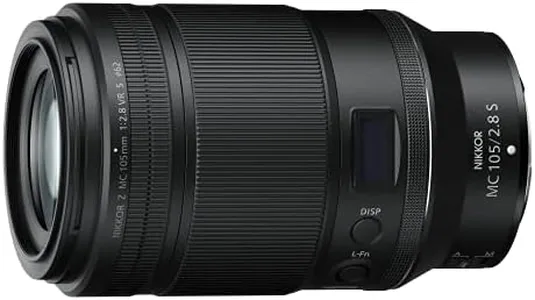
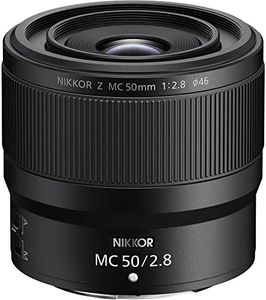
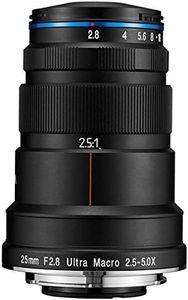
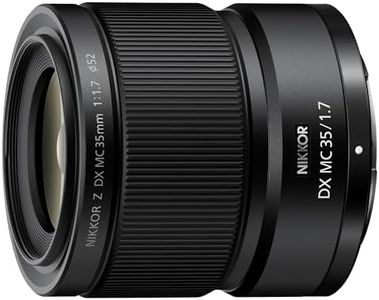
Buying Guide for the Best Nikon Macro Lenses
Choosing the right macro lens for your Nikon camera is all about matching the lens's capabilities to the subjects you want to photograph and how you plan to use the lens. Macro lenses are designed to let you capture tiny details in things like flowers, insects, jewelry, and textures. While all macro lenses are made for close-up photography, they vary in important ways that affect how, what, and how easily you can shoot. Taking time to think about these differences will help you pick a lens that not only delivers sharp images, but also makes the shooting experience enjoyable and efficient for your needs.Focal LengthFocal length tells you how close or far you can be from your subject and still focus sharply. Macro lenses come in different focal lengths, commonly around 40mm, 60mm, 85mm, 100mm, or even 200mm. Shorter focal lengths (like 40mm-60mm) mean you need to be very close to your subject to get the most magnified shots, which works well for flat objects or if you’re indoors. Longer focal lengths (90mm-200mm) let you shoot from farther away, making them better for skittish insects or other subjects where you can’t get so close. Think about what you'll photograph most: living things typically call for longer focal lengths, while stationary subjects can often be captured well with shorter ones.
Maximum ApertureThis is the widest opening the lens can achieve, commonly marked as f/2.8, f/3.5, etc. A wider maximum aperture (lower f-number, like f/2.8) allows more light into the camera and makes it easier to shoot in dim conditions or achieve a blurry background. If you plan to shoot handheld or indoors, or want creamy backgrounds, a lens with a larger aperture is helpful. If you’ll mostly use a tripod or work in good light, you may not need as large an aperture.
Magnification RatioThe magnification ratio, often listed as 1:1, 1:2, or similar, tells you how large your subject will appear on your camera's sensor compared to real life. A 1:1 ratio means the subject's real size matches its size on the sensor—this is considered 'true macro.' Lenses with lower ratios (like 1:2) can still get close, but won’t show as much detail at the same subject size. If you want to capture very tiny details and textures, look for a 1:1 lens. If your subjects are a bit larger, a lower ratio might work fine.
Autofocus vs. Manual FocusMacro lenses can have either fast or slow autofocus, and some are designed more for manual focus. Precise focusing is crucial in macro photography because depth of field is very shallow at high magnifications. If you’ll photograph moving insects or prefer speed, a lens with reliable autofocus is useful. For very precise work on stationary subjects, manual focus allows more control. Some lenses offer both, so think about what balance you need between speed and precision.
Image StabilizationImage stabilization helps reduce blur from hand movement, especially at slower shutter speeds or with longer focal lengths. This is especially helpful if you often shoot handheld instead of using a tripod. If most of your macro photography is outside or requires flexibility in movement, a lens with image stabilization is helpful. If you always use a tripod, this feature is less important.
Minimum Focusing DistanceThis is the closest you can get to your subject while still being able to focus. A shorter minimum focusing distance allows for more dramatic close-ups, but remember—focal length also affects how close you need to be. If you want extreme close-ups or shoot in tight spaces, look for a lens with a small minimum focusing distance. If you prefer to be further back, make sure the minimum focusing distance works with your intended subjects and style.
Size and WeightMacro lenses can range from compact and lightweight to larger, heavier options. If you plan to travel, hike, or handhold your camera for long periods, lighter lenses are easier to manage. If you mostly shoot in a studio or with a tripod, a heavier lens may not be an issue. Consider how portability fits with your shooting style.