10 Best No Smear Gel Pens
From leading brands and best sellers available on the web.By clicking on a link to a third party's website, log data is shared with that third party.
Related Products
Up to 12% off
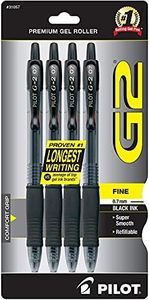
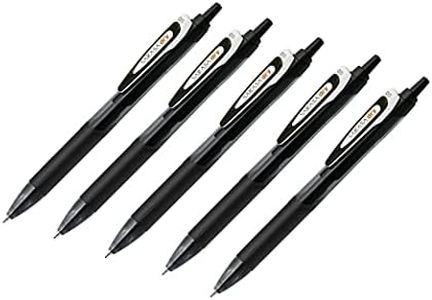
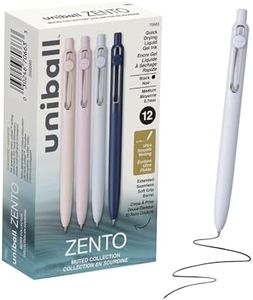
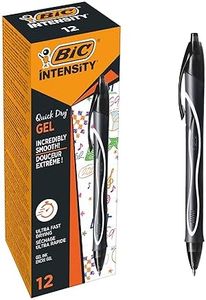
Recommended lists
Top rated
Gel Pens
Buying Guide for the Best No Smear Gel Pens
Choosing the perfect no-smear gel pen can really enhance your writing or drawing experience, keeping your work tidy and your hands free from ink smudges. To get the best fit, it's important to understand what features affect smearing, comfort, and overall writing satisfaction. By paying attention to a few key details, you can find a gel pen that aligns beautifully with how, where, and why you use it.Ink Drying TimeInk drying time refers to how quickly the gel ink sets on the paper after you write. This is the most important factor in preventing smearing, especially for left-handed writers or anyone fast at taking notes. Pens with faster-drying ink tend to minimize or eliminate the chance of your hand brushing over still-wet words and spreading the ink. Drying speeds generally fall into slow, average, and fast; if you often see smudges, focus on fast-drying pens. Test the ink, if possible, or try to see demos to match the drying speed to your personal writing style.
Ink FormulationInk formulation is about the chemical makeup of the gel ink, which influences its glide, color intensity, and smudge resistance. Some inks are specifically developed for quick drying and reduced smearing. Others might be more fluid for smooth writing but take longer to set. When your main concern is smearing, choose inks promoted as 'no-smear' or 'quick-drying.' If you want bold, vibrant colors and don’t mind waiting an extra second or two, you might accept other types, but for clean, smudge-free results, stick with proven anti-smear formulas.
Tip SizeThe tip size, usually measured in millimeters, determines how much ink the pen deposits on the paper with each stroke. Finer tips (like 0.3–0.5 mm) produce thinner lines and dispense less ink, which generally dries faster than broader tips (0.7 mm or above). If you write very small or need quick-drying lines, a finer tip helps avoid pooling and smearing. Those preferring a bolder, smoother flow may lean toward broader tips, but should be aware this can increase smudge risk.
Paper CompatibilityNot all paper surfaces react the same way to gel ink. Some absorb ink quickly, helping it dry faster, while others leave ink sitting on the surface longer, increasing the chance of smudging. If you use glossy, smooth, or coated papers, be prepared for longer drying times regardless of the pen’s claims. For best smear resistance, pair your gel pen with paper that absorbs well, or test pen and paper combinations to find what truly works in your routine.
Grip and ComfortGrip and comfort aren’t directly tied to smearing, but a pen that feels good and is easy to control reduces the chances of accidental smudges caused by awkward hand positions or fatigue. Softer, ergonomic grips and balanced pens can help maintain a steady hand, especially during long writing sessions. Choose a pen that feels secure, not slippery, and matches the way you hold and move your pen.