10 Best Non Toxic Cookie Sheets
From leading brands and best sellers available on the web.By clicking on a link to a third party's website, log data is shared with that third party.
Related Products
Up to 33% off

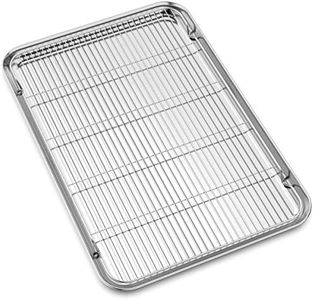
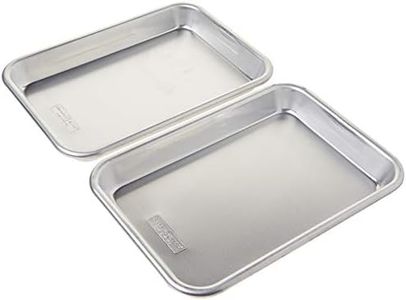
Buying Guide for the Best Non Toxic Cookie Sheets
Choosing the right non-toxic cookie sheet is important for both your health and your baking results. When shopping for a cookie sheet, you'll want to focus on materials that are safe, avoid potentially harmful coatings, and understand how different choices affect cooking and cleaning. Consider what kind of baking you do most—whether it's cookies, roasting vegetables, or making sheet pan meals—so you select a pan that fits your habits, is easy to clean, and lasts a long time.MaterialThe material of a cookie sheet determines its safety, heat distribution, durability, and how easy it is to clean. Non-toxic options generally include stainless steel, uncoated aluminum, and ceramic-coated sheets. Stainless steel is non-reactive, does not leach chemicals, and is highly durable, making it a great fit for most home bakers looking for peace of mind. Uncoated aluminum also heats evenly but may react with acidic foods, which could slightly affect taste or appearance, so it’s best if you mostly bake cookies or use parchment paper. Ceramic-coated pans provide a naturally non-stick, non-toxic surface, though the coating may wear over time, so they’re ideal for those who want easy cleanup and mostly bake low-abrasion items.
CoatingCoating refers to any added layer on top of the basic pan that helps prevent sticking. With non-toxic baking, it’s important to avoid pans coated with chemicals such as PFAS, PFOA, or Teflon, as these can release harmful substances at high temperatures. Instead, look for uncoated pans or those labeled as PFAS-free or ceramic-coated for a safer option. If you want a non-stick surface but also long-term safety, ceramic coatings are a good choice for gentle baking needs, while uncoated pans work well if you're comfortable using parchment paper or a bit of oil.
Thickness (Gauge)The thickness of a cookie sheet, often discussed in terms of gauge or millimeters, affects how evenly it heats and how resistant it is to warping. Thicker sheets (lower gauge numbers) resist bending, provide more even baking, and last longer, which is helpful for heavy-duty or repeated use in busy kitchens. Thinner sheets heat up quickly but can warp in the oven, especially at higher temperatures, and are better suited for occasional, lightweight baking. If you value perfectly even results and plan to use the pan often, a thicker sheet is worth considering.
Ease of CleaningHow easy it is to clean a cookie sheet can depend on its material and whether it has a coating. Uncoated and stainless steel pans might require a little more scrubbing or soaking, but they’re very durable and can handle tougher cleaning jobs, even dishwasher cycles. Ceramic-coated pans and non-stick pans can usually be wiped clean easily, but they need gentle handling and non-abrasive cleaners to avoid scratching or wearing off the coating over time. Consider a pan that's easy to clean in a way that matches your routine—if you dislike scrubbing, a ceramic-coated option may suit you best, while those comfortable with a bit of effort might prefer uncoated for their long-lasting safety.
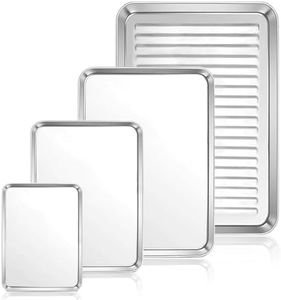
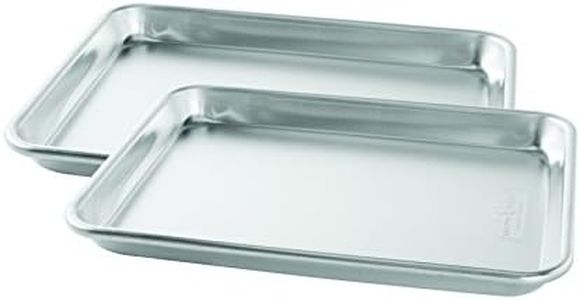
Size and Rim StyleCookie sheets come in various sizes (like half sheet, quarter sheet, or full sheet) and with different rim styles (rimmed or rimless). The size will affect what you can bake at once and how much space the pan takes up during storage, so choose based on your oven size and typical batch sizes. Rimmed sheets catch drips and are versatile enough for roasting as well as baking cookies, while rimless sheets make it easier to slide cookies off but are more specialized for baking only. Assess your most common baking projects and available storage for the best fit.