10 Best Office Chair Mats
From leading brands and best sellers available on the web.By clicking on a link to a third party's website, log data is shared with that third party.
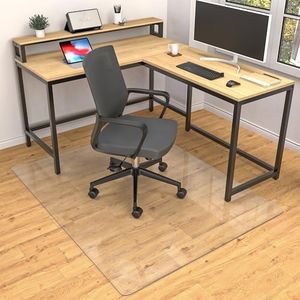
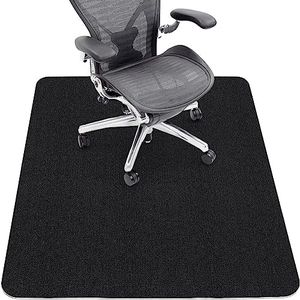
Buying Guide for the Best Office Chair Mats
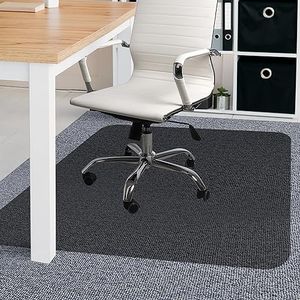
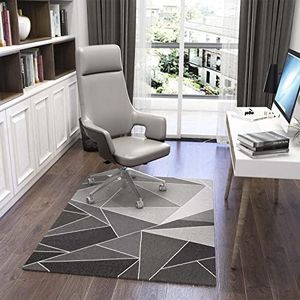
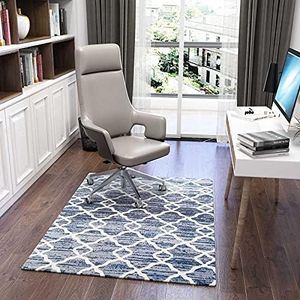
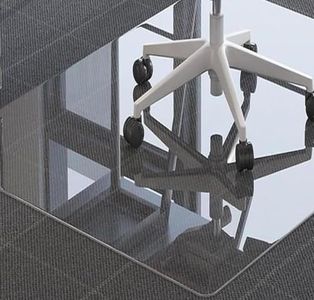
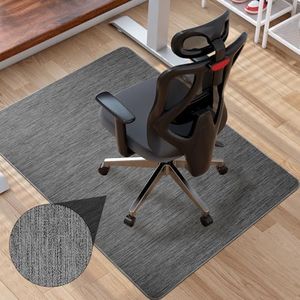
Choosing the right office chair mat is important for both protecting your flooring and making it easier to move your chair around your workspace. The right mat can prevent scratches, reduce wear on carpet or hard floors, and minimize fatigue from rolling your chair across resistant surfaces. By understanding the key features, you can find a mat that matches your flooring type, workspace size, and personal needs.MaterialThe material of a chair mat affects its durability, appearance, and how it interacts with your flooring. Common materials include plastic (like PVC or polycarbonate), glass, and rubber. Plastic mats are lightweight and flexible, making them easy to move, though they may crack over time. Polycarbonate is a tougher plastic that resists curling and denting. Glass mats offer modern looks and long-lasting durability, being scratch-resistant and very strong. Rubber mats are softer and may be better for certain floors. To choose the right material, consider the type of chair casters you use, how often you roll, and whether you need something lightweight and portable or heavy-duty and long-lasting.
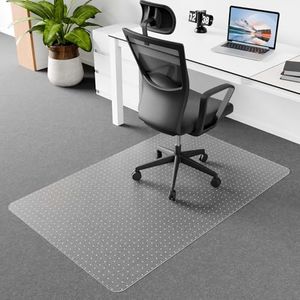
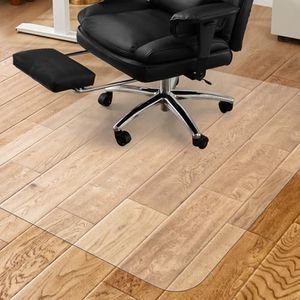
Floor Type CompatibilityChair mats are designed for specific flooring types, such as carpet, hardwood, tile, or laminate. Mats for carpeted floors usually have small cleats or grippers underneath to keep them in place, while mats for hard floors have smooth undersides to prevent slipping without damaging the surface. It's essential to match the mat to your floor type; using a hard-floor mat on carpet may cause sliding, and using a carpet mat on hard floors can scratch or scuff. Choose a mat that is specifically labeled for your floor type to ensure the best grip and to protect your flooring.
ThicknessThe thickness of the chair mat determines how well it supports the weight of the chair and user, and how it handles the texture of the floor underneath. Thin mats are suitable for hard floors or low-pile carpets, while thicker mats are necessary for high-pile or plush carpets, where extra support is needed to prevent cracking and to provide a smooth rolling surface. To pick the right thickness, first assess your floor's softness; the deeper or softer the carpet, the thicker the mat should be. For flat, hard surfaces, a thinner mat suffices.
Size and ShapeChair mats come in various sizes and shapes, such as rectangles, squares, or mats with a 'lip' that extends under the desk. The right size should cover the area in which you move your chair but not be so large it interferes with other furniture. Measure the space where you intend to use your chair and think about your movement patterns—if you roll back far frequently, a larger mat may help. Shapes with a 'lip' help protect the floor under your desk, while a straight-edge mat is ideal for open areas.
Edge DesignThe edges of a chair mat can be beveled (sloped) or straight. Beveled edges make it easier for the chair or feet to roll onto and off the mat without tripping or getting stuck, which is particularly helpful if you move your chair a lot. Straight edges may be sufficient if your mat remains stationary or if your chair rarely leaves the mat. Think about your workspace habits: if you frequently move off and onto the mat, opt for a mat with beveled edges for a smoother transition.