10 Best Outdoor Led Light Strips
From leading brands and best sellers available on the web.By clicking on a link to a third party's website, log data is shared with that third party.
Related Products
Up to 44% off
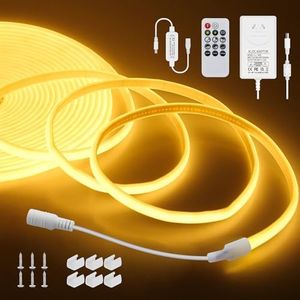
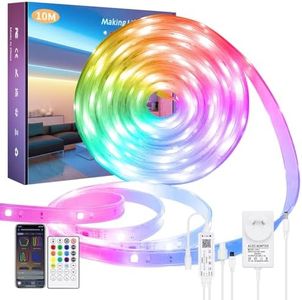
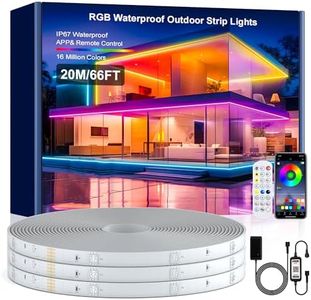

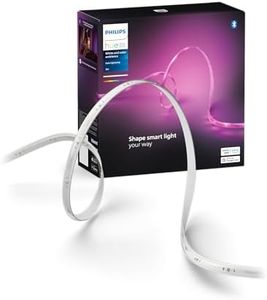
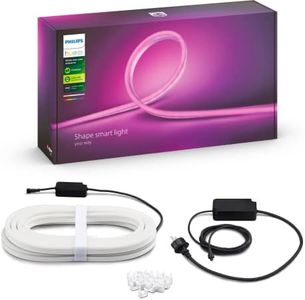
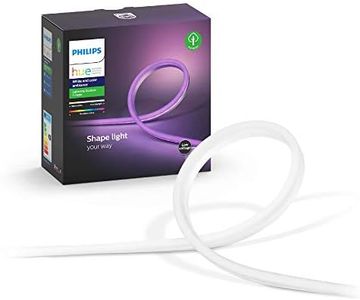
Buying Guide for the Best Outdoor Led Light Strips
Choosing outdoor LED light strips can really enhance the atmosphere and usefulness of your patio, backyard, garden or other exterior spaces. The best way to pick the right LED light strip is to think about where and how you plan to use it—whether it’s for accent lighting, pathway illumination, holiday decoration, or mood lighting. Start by considering the outdoor environment, the weather conditions in your area, and the type of control you want over your lighting. Understanding the core features that matter will help you get LED strips that last longer, shine brighter, and fit your specific needs.Waterproof Rating (IP Rating)The waterproof or IP (Ingress Protection) rating tells you how well the LED strip can resist water and dust. This is important because outdoor lights are exposed to rain, humidity, and sometimes direct water jets. The typical ratings are IP65, IP67, and IP68. IP65 means it's protected against low-pressure water jets and dust, which is enough for covered outdoor areas. IP67 protects against immersion in water up to about 1 meter for a short time, making it good for places that might get splashed or flooded. IP68 is for longer submersion and offers the highest level of waterproofing. Choose the rating based on how exposed the strip will be: for open, unsheltered areas, aim for the highest IP rating you can find.
Brightness (Lumens and LED density)Brightness is measured in lumens and often affected by how many LEDs are packed per meter of strip. This matters because too dim lights might not give you the visibility or effect you want, while too bright ones can be harsh or use excess power. Lower ranges (about 150-300 lumens/meter) are good for ambiance or accent lighting around railings or steps. Mid-range (300-700 lumens/meter) suits general pathway or patio lighting. Higher lumens (above 700 lumens/meter) are for areas where you need strong illumination, like workspaces or security lighting. Consider what mood or function you need: soft for atmosphere, stronger for visibility.
Color Options (Single Color vs. RGB/RGBW)Color options refer to whether the strip emits just one color (like warm or cool white) or can change colors (RGB or RGBW). This is important for customizing your outdoor atmosphere. Single color strips are simpler—choose warm white for a cozy feel or cool white for a modern, bright look. RGB strips offer the option of thousands of colors, while RGBW includes a separate white LED for more natural white tones. If you want flexibility for events or seasons, choose RGB or RGBW. If you want steady, classic lighting, single-color is often easier.
Power Supply and VoltageThe power supply and voltage indicate how the light strip gets power and how safe it is to use outdoors. Most outdoor LED strips run on low voltage (12V or 24V) for safety and energy efficiency. Some may use higher voltages, but these can be less safe without proper installation. Decide based on distance and installation: 24V can carry power across longer strips with less brightness loss, while 12V is typically enough for shorter runs. Also, make sure the power supply is weatherproof if you’ll install it outside.
Control Options (Remote, App, Voice Control, Timer)Control options affect how you turn the lights on/off, change colors, or set timers. You might have a basic remote, an app for your phone, or even the ability to use your voice assistant. Think about convenience: if you enjoy automation or want to sync lights with music or schedules, go for smart strips with app or voice control. For simple setups where you just want on/off and brightness, a remote may suffice.
Length and FlexibilityLength and flexibility refer to how much strip you get per package and how easily it bends around corners or surfaces. This matters because you want to avoid gaps or excess waste when installing along patios, furniture, or landscape features. Strips are usually sold in lengths like 5m or 10m rolls, and can often be cut to size at marked points. Flexible designs allow you to wrap or bend them around tricky spots. Measure your intended area before buying, and ensure the strip is flexible enough for your setup.
Mounting MethodThe mounting method is about how you attach the strip to outdoor surfaces. Some strips have adhesive backing, others use clips or channels. Outdoor conditions may weaken adhesive over time, especially on rough or wet surfaces, so mounting brackets or channels are often sturdier. Think about where you’ll install: smooth, dry surfaces may be fine with adhesive, while exposed areas or complex shapes benefit from mechanical brackets.