10 Best Paints For Miniatures
From leading brands and best sellers available on the web.By clicking on a link to a third party's website, log data is shared with that third party.
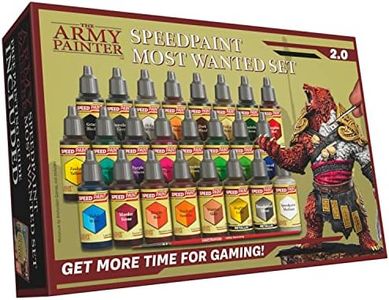
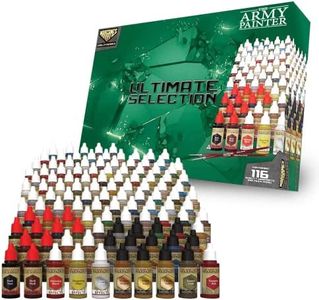
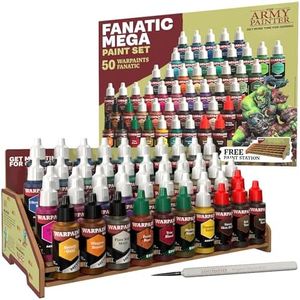
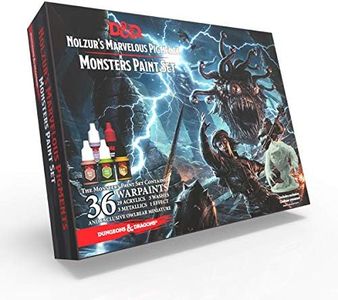
Related Products
Recommended lists


Buying Guide for the Best Paints For Miniatures
Choosing paints for miniatures is an important part of the hobby, whether you're a beginner or an experienced modeler. The right paints can make detailing easier, help your models stand out, and ensure your finished pieces last a long time. Before buying, think about what kinds of models you'll be painting, your personal painting style, and how much time you want to spend on painting and finishing your miniatures.Type of PaintThe type of paint refers to the kind of base used in the paint, commonly acrylic, enamel, or oil. Acrylic paints are the most popular for miniatures because they are water-based, easy to clean up, dry quickly, and offer vibrant colors. Enamels and oils are solvent-based, take longer to dry, and require specific cleaners, but can provide specific effects or finishes. If you like fast sessions and less mess, acrylics are likely best. If you prefer slower drying time for blending or need a particular finish, consider enamels or oils.
ConsistencyConsistency refers to how thick or thin the paint is straight out of the container. Thicker paints provide more coverage but might cover up fine details, while thinner paints flow easily into details but might need more coats for full color. Many miniature painters prefer paints that can be thinned with water or medium, allowing more control. If you paint detailed models or want smooth blending, choose a paint line known for its controllable consistency. If you want speed and solid coverage, thicker paints may suit you.
Color RangeColor range is about how many different shades and tones a paint line offers. A wide range gives you more creative choices and allows for more precise color matching to your vision or references. If you enjoy painting a big variety of models or like to experiment with complex color schemes, a larger color range helps. If you’re painting a certain kind of model (like historical or fantasy), look for paint lines tailored to matching those styles.
FinishFinish means how the dried paint looks—matte, satin, or glossy. Matte finishes reduce shine and are great for realism and detail, while gloss finishes are brighter and can make colors pop, especially for features like gems or armor. Satin is a middle ground. Decide what look you want for your miniatures—realistic or vibrant—and use that to guide your choice of finish.
OpacityOpacity measures how well the paint covers the color underneath. High opacity is useful if you want to quickly cover primer or previous colors, while lower opacity paints are good for effects like glazes and blending. For beginners or those who value faster coverage, higher opacity is usually more forgiving. If you want to layer and blend for more advanced effects, more transparent paints are useful.
Drying TimeDrying time is how quickly the paint sets after you apply it. Faster drying times mean you can quickly add more layers, but it might be harder to blend colors. Longer drying times allow for more blending and adjusting but require patience. If you like quick sessions with fast results, go for quick-drying paints. If you are patient and enjoy blending or wet effects, slower drying paints might fit you.
Compatibility with Primers and SealersNot all paints stick well to all primers or accept all sealers, which are used to prepare and protect your miniatures. It’s important to check if your paint matches your surface preparation and finishing plans. If you already use certain brands or products to prime or protect your miniatures, make sure the paint you choose works well with them to avoid issues like flaking or poor coverage.