10 Best Pex Manifold System
From leading brands and best sellers available on the web.By clicking on a link to a third party's website, log data is shared with that third party.
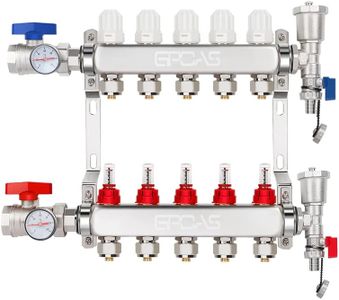
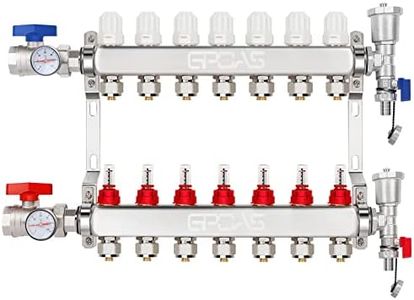
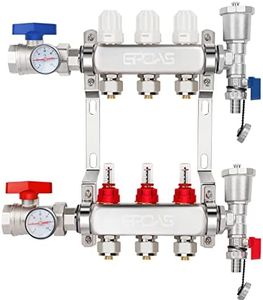
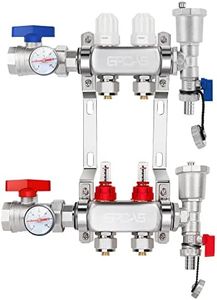
Related Products
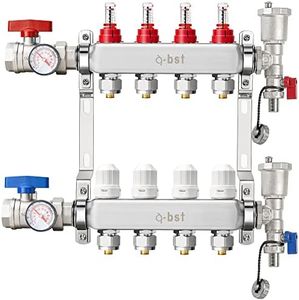
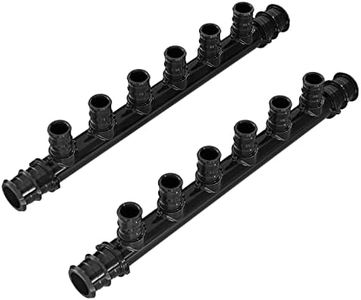
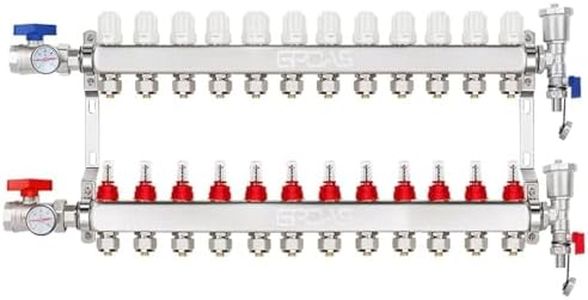
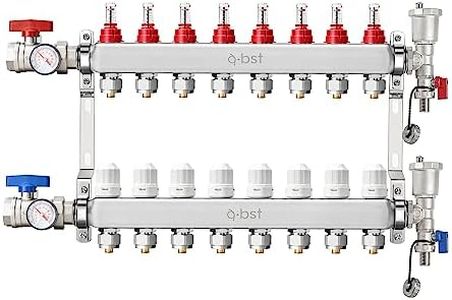
Buying Guide for the Best Pex Manifold System
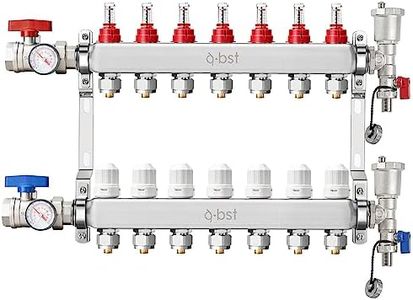
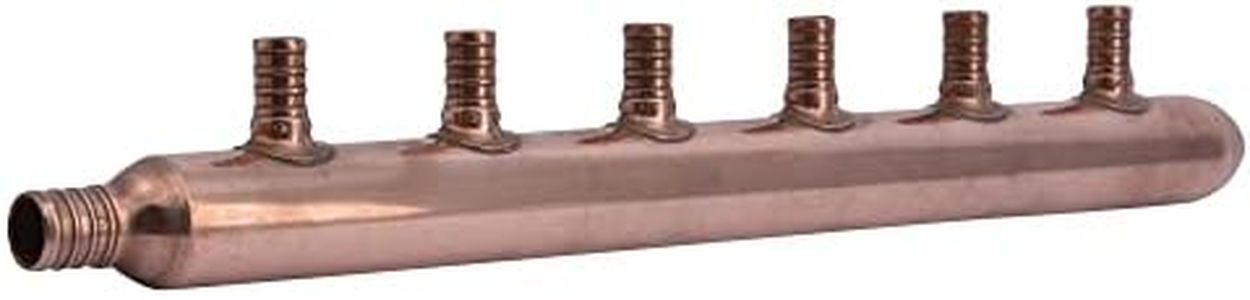
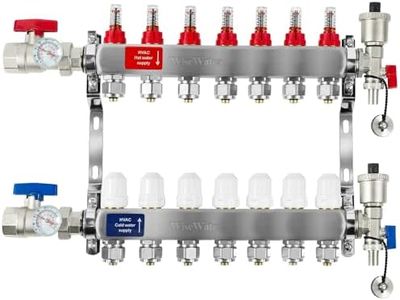
A PEX manifold system is a modern plumbing distribution setup that helps deliver hot and cold water to the various fixtures throughout your home efficiently and with greater control. Choosing the right manifold ensures that your water supply is reliable, well-organized, and easy to maintain or upgrade in the future. When picking a PEX manifold system, you need to consider how it will fit into your current plumbing layout, the needs of your household, and the kind of installation you’re comfortable with or your plumber recommends. The key specifications to focus on will help you select a system that offers both performance and convenience for your unique home requirements.Number of PortsThe number of ports on a manifold refers to how many individual water lines it can supply, essentially how many fixtures (sinks, toilets, showers, etc.) you can run from the system. This is important because it dictates how many appliances or taps you can serve directly from the manifold, providing individual shutoff control for each. Manifolds often come in configurations from as few as 2 ports up to 20 or more. For smaller homes, a 4-8 port manifold might be enough, while larger houses with multiple bathrooms and lots of water-use points may require 12 ports or more. To pick the right number, count your current fixtures and add a few more for future expansion or remodeling plans.
MaterialPEX manifolds are most commonly made from either plastic (polymer) or metal (usually brass or stainless steel). The choice of material matters because it affects durability, corrosion resistance, and sometimes compatibility with different PEX piping types. Plastic manifolds tend to be lightweight, non-corrosive, and easy to handle, making them suitable for most typical residential installations. Metal manifolds are more robust, offering higher durability and pressure tolerance, which is ideal for larger or long-term installations. To decide, think about your home's water quality (e.g., if you have hard or aggressive water, plastic may be better), and whether your installation might need extra toughness.
Valve Type and IntegrationValves are included on manifolds to allow you to turn off water to any individual line without shutting off water to the whole house. Some manifolds come with integrated shutoff valves for each port, while others require you to add valves separately. Integrated valves save installation time and guarantee compatibility, and they're great for DIYers. External or add-on valves bring flexibility and may allow for easier replacement if they ever wear out. Consider whether you value the convenience of built-in controls, or if you’d prefer the customization of adding your own valves based on the fixtures or the plumber’s advice.
Connection Type and SizeManifolds are designed with various connection types such as crimp, clamp, push-fit, or threaded, and sizes typically range from 3/8 inch to 1 inch. The connection type dictates how you’ll attach the PEX tubing, determining ease of installation, tool requirements, and the system's long-term reliability. Smaller sizes are suited for fixtures with low to moderate demand, while larger sizes allow more flow for high-demand appliances or main runs. When choosing, consider both the type of PEX pipe system you’re using (A, B, or C) and the flow needs of your fixtures. Always match the manifold’s size and connection style to your home’s plumbing standards and your comfort with the installation process.
Mounting Style and FootprintSome manifolds are intended to be mounted on a wall, inside a utility closet, or even inside a recessed cabinet. The overall size and shape affect where and how easily the system can be installed, particularly in compact or already crowded spaces. Larger manifolds may provide more ports, but need more room, while compact models fit into tight areas but might have fewer expansion options. Evaluate where you plan to install your system and ensure the chosen manifold fits both physically and aesthetically within the space.