10 Best Pistol Grip Grease Guns
From leading brands and best sellers available on the web.By clicking on a link to a third party's website, log data is shared with that third party.

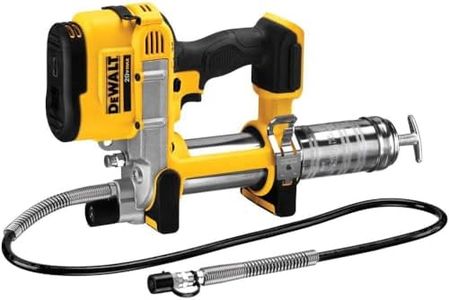

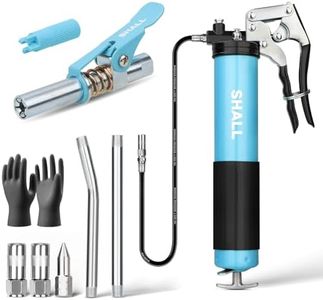
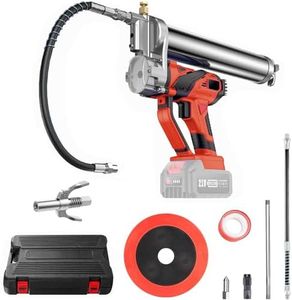
Related Products
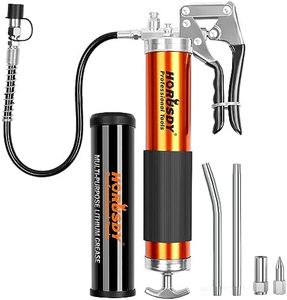

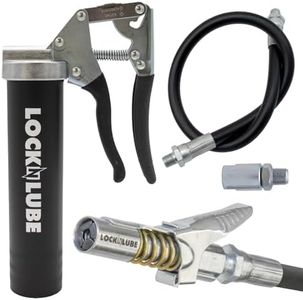
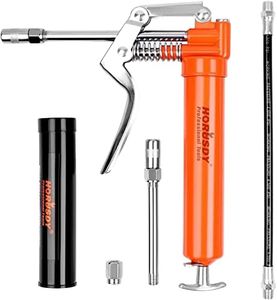
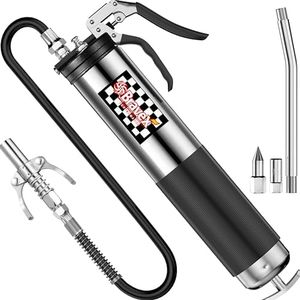
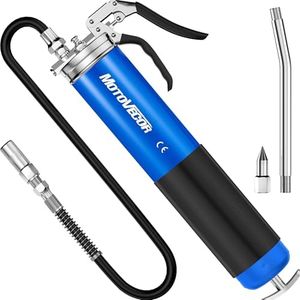
Buying Guide for the Best Pistol Grip Grease Guns
Choosing the right pistol-grip grease gun can make lubrication tasks much easier, more efficient, and less messy. Your main goal is to find a tool that matches the type and frequency of jobs you handle. It's important to understand the key features so you select a grease gun that balances performance, ease of use, and reliability. Carefully considering how you'll use the grease gun—in terms of speed, pressure, and comfort—will help you find your best match.Operating Pressure (PSI)Operating pressure, measured in PSI (pounds per square inch), indicates the force the grease gun can exert to push grease into fittings. This is crucial because some equipment has fittings that are difficult to lubricate and require high pressure, while others can be serviced with lower pressure. Grease guns can range from about 3,000 PSI to over 10,000 PSI. For general automotive and casual equipment use, something in the middle (around 4,000-6,000 PSI) is a good fit. Heavy machinery typically needs higher pressure, while too much pressure can damage seals in light-duty equipment. Choose the pressure range that matches the tightness and size of your lubrication points.
Grease Output per StrokeThis refers to how much grease is dispensed with each squeeze of the handle. More output per stroke means faster greasing, which is helpful for large fittings, but can make precise application difficult. Lower output offers more control and less mess when dealing with small or delicate components. Values can range from about 0.5 to over 1 gram per stroke. Select a grease gun that gives the level of control or speed you need—you may want higher output for big jobs or more precise control for small, delicate fittings.
Cartridge CapacityCartridge capacity indicates how much grease the gun can hold at once. Standard pistol-grip grease guns usually fit 14-ounce cartridges, though there are smaller and larger options. A larger capacity means less frequent refilling, which is convenient for big jobs, but can make the tool bulkier and heavier. Smaller capacity models are more compact and easier to handle in tight spaces but require more frequent reloads. Think about the size of your typical task and how much portability matters to you.
Priming MethodPriming is the process of getting grease flowing after installing a new cartridge or after the gun has been stored. Some pistol-grip grease guns offer features like automatic or air-bleed valves to make priming easier. Reliable priming is important to prevent air pockets and interruptions. If you expect to change cartridges often or use older grease, pick a model with easy priming features to avoid frustration and keep your workflow smooth.
Ergonomics and Grip ComfortSince pistol-grip grease guns rely on your hand strength, the design and comfort of the grip make a big difference. Features such as padded or non-slip handles reduce fatigue, especially for repeated use. Look for a shape that fits well in your hand and isn’t too hard to squeeze, taking into account your own grip strength and the time you’ll spend using it. If you have weaker hands or work long periods, ergonomics should be a high priority.
Hose or Rigid Tube LengthGrease guns come with hoses or rigid tubes of varying lengths. Long, flexible hoses help you reach tight or awkward spots, while shorter or rigid tubes provide more control and are less likely to bend or break. If your greasing tasks require reaching deep into machinery or at unusual angles, opt for a gun with a longer, flexible hose. For open and accessible fittings, a short tube gives better precision and durability.