10 Best Pool Backwash Hoses
From leading brands and best sellers available on the web.By clicking on a link to a third party's website, log data is shared with that third party.
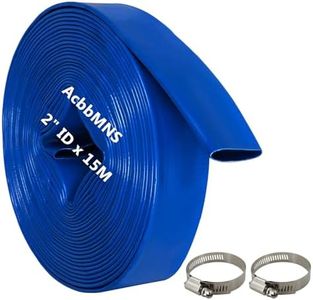
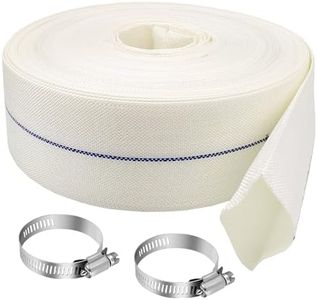
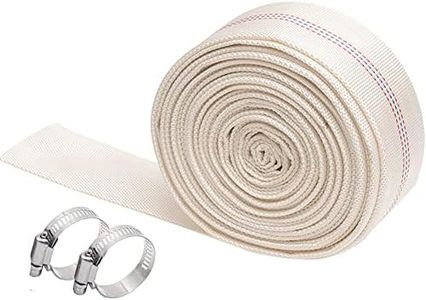
Related Products
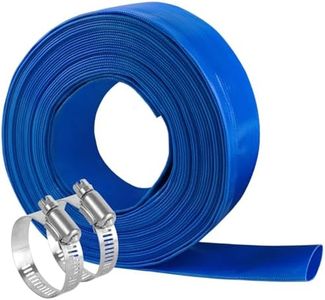
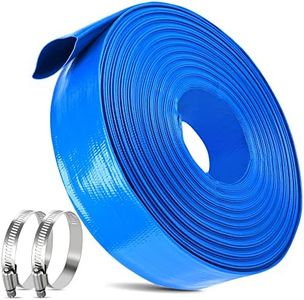
Buying Guide for the Best Pool Backwash Hoses
When choosing a pool backwash hose, it's important to ensure the hose you select fits your pool's filter system, can handle the water pressure, and is durable enough to last through repeated use. Backwash hoses are essential if you need to direct wastewater from your pool filter safely away from your pool area. By focusing on a few key specifications, you can find a hose that will make your pool maintenance much easier.Hose DiameterHose diameter refers to how wide the hose is, usually measured in inches. This specification determines how much water the hose can carry at a time—the larger the diameter, the more water flows through. The most common sizes are 1.5 inches and 2 inches. Smaller hoses (around 1.5 inches) are lighter and often easier to handle, ideal for smaller pools and residential use. Larger diameters (2 inches and above) are typically used for bigger pools where a higher water flow is needed. To pick the right size, check your pool filter's outlet size and match your hose diameter to it for a secure fit and best performance.
Hose LengthHose length tells you how far you can direct the water away from the pool. Hoses usually range from 25 feet to 100 feet. Shorter hoses (25-50 feet) are suitable when you only need to discharge water a short distance, such as into a nearby drain. Longer hoses (50-100 feet or more) are useful if you need to reach a distant sewer or want to avoid flooding your yard. Consider the distance from your pool to your chosen drain area to decide the right length for your setup.
Material & DurabilityThe material a backwash hose is made from determines how well it stands up to water pressure, outdoor exposure, and frequent rolling or unrolling. Most are made from flexible PVC, but thickness and quality can vary. Thicker, reinforced hoses are more resistant to splitting and UV damage, making them better for frequent use or harsher conditions. Lighter hoses are easier to store but might wear out faster. If you use your hose often or leave it exposed outside, pick a sturdier, UV-resistant option for better longevity.
Flexibility & StorageA hose's flexibility affects how easily you can move it around obstacles and coil it for storage. More flexible hoses are easier to handle, store, and are better for maneuvering in tight spaces around your pool equipment. Stiffer hoses might be harder to roll up and could crack if bent sharply. Think about your storage space and how often you'll need to move the hose—if you'll coil it up often, a flexible hose will be much more convenient.
Connection TypeConnection type refers to the way the hose attaches to your pool equipment, typically using clamps or couplings. Some hoses come with pre-attached connectors, while others need you to secure them with hose clamps. Make sure the hose you choose is compatible with your pool filter outlet and that you have (or buy) the right clamps or adapters. A secure connection prevents leaks and keeps the hose from slipping off during use.