10 Best Pool Cover Rollers
From leading brands and best sellers available on the web.By clicking on a link to a third party's website, log data is shared with that third party.
Related Products
Recommended lists

Top rated
Pool Covers
Buying Guide for the Best Pool Cover Rollers
When selecting a pool cover roller, it's important to focus on your pool's unique requirements and your ease of use. A pool cover roller (sometimes called a reel) makes it much easier to remove and put back your pool cover. The right roller helps extend the life of your cover and saves you both time and effort in daily use. Choosing the right roller depends on the size and shape of your pool, the type of cover you use, and where you'll store the cover when it's not in use. By understanding the key features of pool cover rollers, you'll be able to confidently pick the one that makes pool maintenance hassle-free and keeps your cover in great condition.Roller Length (or Width Range)This spec refers to how wide a pool cover roller can extend to match the width of your pool. It's essential because the roller needs to span the entire width of your pool to reel up the cover evenly. Rollers typically specify a minimum and maximum pool width they can handle. Small or narrow rollers are best suited for smaller pools or spas, while large adjustable models can cater to wide or even commercial-sized pools. To choose the right length, measure your pool at its widest point and make sure the roller can extend at least a little beyond that measurement to accommodate the cover's edges.
MaterialThe roller tube and frame may be made of materials like aluminum, stainless steel, or strong plastic. This is important because the right material ensures strength and longevity, especially in outdoor conditions. Aluminum is lightweight and resistant to rust, making it a popular choice for many, while stainless steel is heavier but can offer superior durability in harsh environments. Plastic is lighter and less expensive but may not last as long under intense sun. Consider how often you'll use the roller, where it will be stored, and how much wear it will face when choosing the best material for your needs.
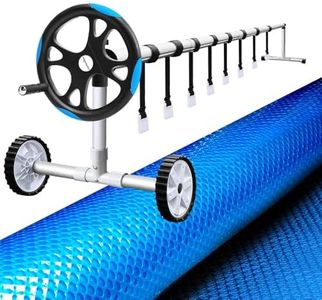
Mobility (Wheels or Stationary)Some pool cover rollers have wheels so you can move them around easily, while others are fixed in place. Mobility matters if you want to relocate the roller for storage or cleaning, or if your pool area makes it difficult to leave the roller in one spot. Models with sturdy wheels are handy for frequent movers, whereas stationary versions can work well if you plan to always keep the roller at the edge of the pool. Think about your routine and space—if you're limited on storage or like the option to roll the cover out of sight, wheels are a big plus.
Crank Mechanism (Manual vs. Assisted)This spec is about how you wind the cover onto the roller, usually either using a hand crank or an assisted system. Manual cranks require your effort, but are simple and effective for most people. Some premium rollers offer gear-assisted or even automatic winding mechanisms, which can make the job much easier, especially for larger or heavier covers. Choose a mechanism based on your physical strength, how often you’ll operate it, and the size of your cover. If you need less effort or are dealing with a bulky cover, assisted or powered options can be a helpful upgrade.
Cover CompatibilityNot every roller works with every type of pool cover, especially when comparing solar covers versus heavy-duty winter covers. This spec is essential to check, because using the wrong roller can damage both the roller and the cover. Lighter covers usually work with any standard roller, while heavier covers may need reinforced or specially designed rollers. Always match the roller to your specific pool cover's material and weight: check what your cover is made of and find a roller designed to support its thickness and dimensions.
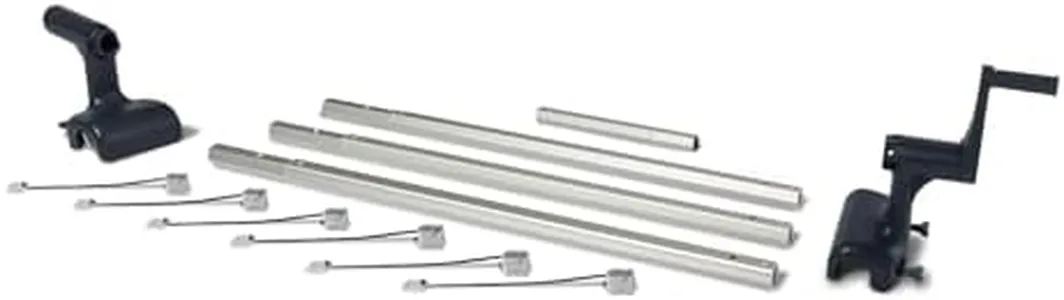
Ease of Assembly and InstallationThis refers to how easily you can set up the roller and mount your pool cover on it. Some rollers come nearly ready to use, while others require more assembly. If you’re not particularly handy, look for models described as “easy assembly” or “tool-free,” which will allow you to get started without much fuss. If you like DIY projects, a more complex roller might not be an issue. Think about your comfort with assembly tasks and how quickly you’d like to start using your roller when making your selection.