9 Best Portable Ping Pong Tables
From leading brands and best sellers available on the web.By clicking on a link to a third party's website, log data is shared with that third party.


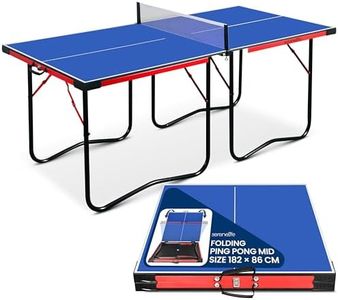
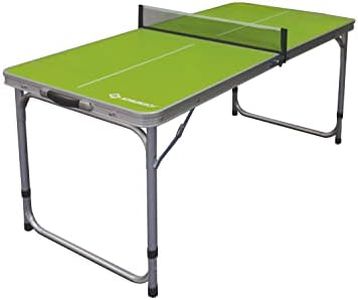
Buying Guide for the Best Portable Ping Pong Tables
Choosing a portable ping-pong table can be a fun process, but it's important to know what features will best suit your needs. Since portable tables are designed to be moved and set up easily, you'll want to weigh factors like size, ease of transportation, stability, and how they play compared to full-size, stationary tables. Consider where you'll be using it most often, who will play (such as kids or adults), and how much storage space you have. Understanding the key specifications will help you pick a table that's enjoyable, practical, and fits perfectly into your lifestyle.Table SizeTable size refers to the overall dimensions of the ping-pong table, including its length, width, and height. Full-size tables provide the classic playing experience found in competition, while smaller tables are easier to store and move. Standard tables are usually 9 feet long and 5 feet wide, but portable options often come in compact or 'midsize' forms. A full-size table is great if you want authentic play and have enough space, while a midsize or smaller table is easier to store and transport, perfect for smaller rooms or children! Think about your available space and who will use the table the most to decide what size is right for you.
Portability FeaturesPortability features include elements like folding mechanisms, wheels, and carrying handles that make the table easier to move and store. Some tables can be folded in half or in quarters, while others detach into even smaller sections. Wheels help with rolling the table between spaces, and handles make carrying less awkward. If you plan to move your table frequently or set it up in different locations (such as backyard, garage, or living room), look for options that fold compactly and have sturdy wheels or handles that make transport hassle-free.
WeightThe weight of a portable ping-pong table can greatly impact how easy it is to move and set up. Lighter tables (often under 50 pounds) are more manageable for one person and are best if you'll frequently relocate the table or if children will help move it. Heavier tables, while still portable, require more effort but can offer increased stability. Consider how often you'll move the table, who will be moving it, and if you value ease of portability over added sturdiness.
Stability and Frame ConstructionStability depends on the quality and design of the table's frame and legs. Tables with more robust, metal frames and leveling feet tend to sit firmer on the ground and wobble less during play, making the game more enjoyable. Simpler or cheaper frames can feel flimsy, especially on uneven surfaces. If you'll use the table intensely or on less-than-level floors, prioritize strong frames and look for models with adjustable or non-slip feet to prevent shaking during games.
Playing Surface ThicknessPlaying surface thickness (measured in millimeters or inches) influences how well the ball bounces. Thicker surfaces (around 15mm or more) offer a truer and more consistent bounce, closer to professional tables. Thinner surfaces may feel less predictable and can deaden the bounce, but these tables tend to weigh less and cost less. If you want the best playing quality, go for the thickest surface you can accommodate. For casual or young players, a thinner surface may be perfectly sufficient.
Assembly and SetupAssembly refers to how much work you need to do to get your table ready to play. Some portable tables come fully assembled and simply unfold, while others might require attaching legs or nets each time. If you prefer quick setup and takedown, prioritize tables that are ready to play out of the box or have a simple folding mechanism. For those who don't mind a little extra effort or want sturdier joints, slightly more complex assembly might be worth it.
Storage Space NeededHow much room the table takes up when not being used is important, especially if you have limited storage. Some tables fold very flat or even split into two halves, making them easier to tuck away in a closet or garage. Others might need to lean against a wall or stack with other items. Think about your available storage space and look for a table that can fold or collapse to fit in your home’s designated storage area.
Net SystemThe net system is the way the net attaches to the table and how easy it is to set up. Some tables come with a clamp-on net while others have clip-on or even retractable designs. A sturdy, easy-to-install net will save you time and frustration, especially if you plan to take the table down and set it up repeatedly. If convenience is important, opt for quick-attach or built-in nets.