10 Best Portable Soccer Goals
From leading brands and best sellers available on the web.By clicking on a link to a third party's website, log data is shared with that third party.
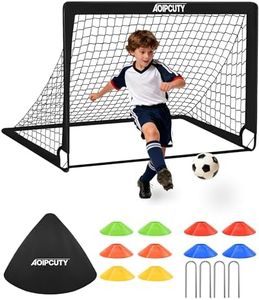
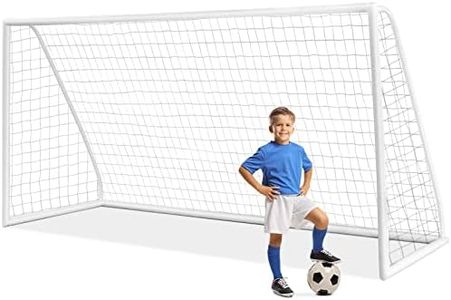
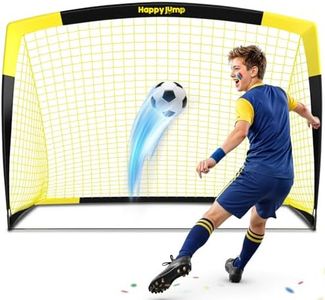
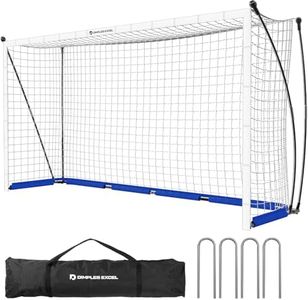
Related Products
Up to 33% off
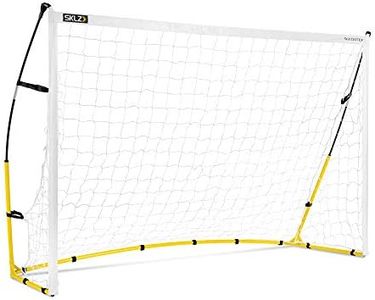
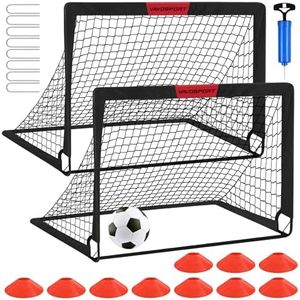
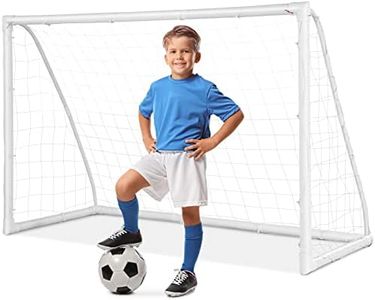
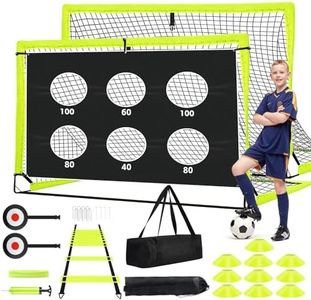


Buying Guide for the Best Portable Soccer Goals
When choosing portable soccer goals, it’s helpful to think about where, how often, and with whom you'll be playing. Portable soccer goals are a great addition for casual backyard games, training sessions, or travel leagues. The main idea is to find a goal that suits your space, skill level, and how easy you want setup and takedown to be. To make the best choice, understanding some key specifications will guide you towards a goal that matches your needs and offers safe, enjoyable play.SizeSize refers to the width and height of the goal. This is important because different ages, leagues, and purposes require different goal sizes. Smaller goals (around 3 to 6 feet wide) are great for young kids or quick shooting drills, medium goals (7 to 12 feet wide) are common for older kids and training, and full-size (official) goals (24 feet wide by 8 feet high) are used for adult matches or serious practice. To choose the right size, think about who will use the goals and where you'll be playing—smaller spaces or younger players need smaller goals, while bigger spaces or adult play may call for larger ones.
PortabilityPortability is about how easy it is to move, set up, and break down the goal. This matters if you plan to use the goal in different places or need to store it after each use. Some goals are very lightweight and can fold up or pop up in seconds, making them easy to carry in a bag, while others are a bit heavier and may need some assembly. For frequent moves and ease, go with the lightest and simplest to set up models; if the goal will stay mostly in one place, sturdier options are fine even if they're less portable.
Frame MaterialThe frame material affects the goal’s durability and weight. Common options include plastic, steel, and aluminum. Plastic frames are most lightweight and suited for young children and casual use. Steel frames are heavier and very sturdy, good for older kids or rougher play, but can be harder to carry. Aluminum frames balance strength and lighter weight, suitable for frequent use and easy transport. To decide, consider if you need something light for kids or frequent moving, or a heavier frame for stronger players and regular use.
Net MaterialThe net material determines how well the net stands up to use and weather. Most nets are made from nylon or polyester, which offer good resistance to tearing and the elements. Thicker, higher-grade material lasts longer but may be heavier. Pick a net that looks tough enough for the level of play and use – for backyard or light play, basic nets are fine; for more intense games or outdoor storage, choose nets with reinforced stitching and weather-resistant coating.
Stability FeaturesStability features include things like ground stakes, weighted bases, or anchoring systems that keep the goal from tipping or blowing away. This is important for safe and uninterrupted play, especially in windy conditions or on hard surfaces. More stable goals usually come with better anchoring; for grassy areas, stakes work well, but for hard surfaces, look for goals with built-in weights or sandbags. Choose a goal with the right stability for your playing surface, and if kids are involved, prioritize safety.
Ease of AssemblyEase of assembly is about how quickly you can put the goal together or take it apart. Some goals use a pop-up design that takes seconds, while others may require snapping or screwing pieces together. If your main use involves quick games, training, or travel, look for options that advertise tool-free or one-piece assembly. If the goal will stay up most of the time, a more complex setup might be acceptable.