10 Best Power Flooring Nailers
From leading brands and best sellers available on the web.By clicking on a link to a third party's website, log data is shared with that third party.
Related Products


Recommended lists
Top rated
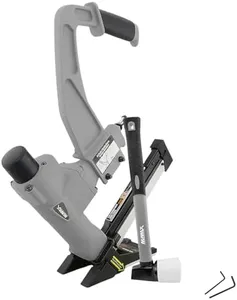
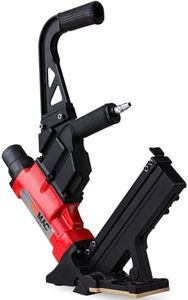
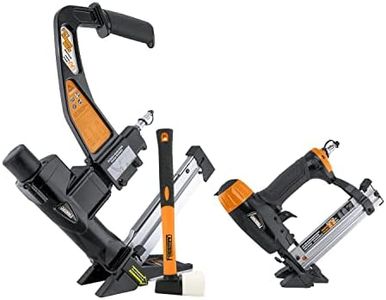
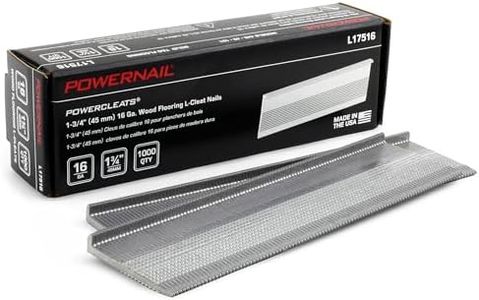
Flooring Air Nailers
Buying Guide for the Best Power Flooring Nailers
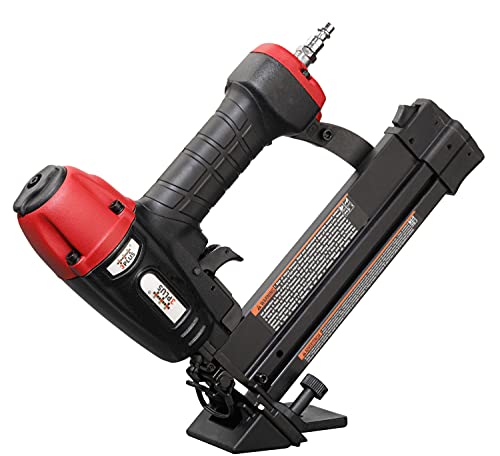
Choosing a power flooring nailer is all about finding the tool that matches your specific flooring project and work style. A flooring nailer, sometimes called a floor stapler, is designed to install tongue-and-groove flooring quickly and evenly. When shopping, you'll want to think about the types of flooring you’ll be working with, the amount of work you expect to do, and how comfortable and efficient the tool will be for extended use. Understanding the main specs will help you get a nailer that’s efficient, safe, and enjoyable to use.Power Source (Pneumatic vs. Manual vs. Electric)The power source defines how the nailer drives nails into hardwood or engineered flooring. Pneumatic nailers use compressed air for power, manual nailers require physical force, and electric nailers run on battery or plug into outlets. Pneumatic is favored for larger or more frequent jobs because it’s faster and requires less physical effort—however, you’ll need access to an air compressor. Manual nailers are better for small projects or spaces without electricity or air. Electric nailers land in between, offering mobility and convenience. To pick the right option, consider how big and frequent your projects are, and what resources (like air compressors or power outlets) you have available.
Nail Size and Type CompatibilityThis spec tells you the lengths and types of fasteners (cleats or staples) the nailer can use, which directly affects what flooring thickness and material it can handle. Shorter nails or staples are for thinner floors, while longer ones support thicker hardwoods. Some nailers can handle both staples and cleats; others are restricted to one type. Choosing a nailer that matches the fastener recommended by your flooring manufacturer helps avoid damage and ensures a solid installation. Always check if the nailer supports the sizes and types you need for your flooring.
Adjustable Base PlatesAn adjustable base plate allows you to set the tool at different heights to match various flooring thicknesses. This keeps nails or staples firing accurately into the tongue of the board without damaging the wood surface. Tools with easy or tool-free adjustments are quicker to set up between jobs with varying materials. If you plan on working with more than one flooring thickness, pick a nailer that features an adjustable base plate for more flexibility and better results.
Ergonomics and WeightErgonomics and weight have a direct impact on comfort and fatigue, especially when working on large jobs. Lightweight nailers are easier to move and less tiring to handle, while ergonomically shaped handles reduce strain during long use. If you expect to be working for hours or days on a project, or if you have less upper body strength, consider a lighter, more comfortable model.
Magazine CapacityThis refers to how many nails or staples the tool can hold at one time. Higher magazine capacity means you’ll spend less time refilling and more time working, which is especially helpful for larger floors. For occasional, small jobs, lower capacity is less of an issue. Choose a higher capacity if speed and uninterrupted workflow are important to you.
Jam-Clearing MechanismNailers can occasionally jam, especially after long periods of use or with imperfect fasteners. A good jam-clearing mechanism means you can get back to work quickly and safely. Some nailers make it easy to access the chamber without tools, while others require more effort. If you want to minimize downtime, especially on big projects, look for a model with a simple jam-clearing feature.