10 Best Pre Owned Golf Club Sets
From leading brands and best sellers available on the web.By clicking on a link to a third party's website, log data is shared with that third party.
Related Products
Up to 14% off

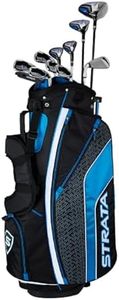
Buying Guide for the Best Pre Owned Golf Club Sets
Choosing a pre-owned golf club set can be a smart way to start or upgrade your golf game without spending a fortune. When shopping for used clubs, it's important to focus on the condition of the clubs, the types in the set, and how well they match your skills and physical characteristics. Checking these details helps you find clubs that are comfortable to use and help you perform better, whether you play occasionally or are working on your handicap.Club CompositionClub composition refers to what clubs are included in the set, such as drivers, irons, woods, wedges, and putters. This is important because each club serves a different purpose on the course. Full sets usually have 12-14 clubs, including drivers, fairway woods, hybrids, various irons, wedges, and a putter. Simplified sets may have fewer clubs, making them lighter and easier for beginners. Beginners or those who want simplicity might prefer a basic set, while more experienced players may want a full set for versatility.
Shaft Material and FlexThe shaft material is usually either steel or graphite, and the flex refers to how much the shaft bends during a swing. This matters because it affects how easy the club is to swing and control. Steel shafts are heavier and provide more control, making them popular with many players. Graphite is lighter and can help you swing faster, which is helpful for those with slower swings or less strength. Shaft flex typically ranges from ladies' and senior flex (more bendy) to regular, stiff, and extra stiff (less bendy). Choose a shaft material and flex that matches your strength and swing speed: slower swingers often do better with graphite and a softer flex, while faster swingers usually benefit from steel and stiffer flex.
Clubhead ConditionClubhead condition is about how much wear the heads of the clubs show, including scratches, dents, or worn grooves. This is crucial because worn clubfaces can affect how well you can hit and control the ball. Clubheads in 'like new' or 'excellent' condition will perform closest to new clubs, while 'good' or 'fair' condition may show wear but are still playable. Inspect photos or see the clubs in person when possible. If you're a beginner or not playing competitively, 'good' condition clubs can be a bargain, but avid players might want to look for the best possible condition they can find.
Grip ConditionThe grip is the part you hold onto, and its condition matters because it affects how securely and comfortably you can swing. Old, slick, or cracked grips can make the club difficult to hold and reduce accuracy. If grips are in excellent or good condition you can use them right away, but if they're worn, you may need to replace them after purchase. People who play often or sweat a lot may want to pay special attention to grip condition, so they don’t have to immediately add new ones.
Club Length and Lie AngleLength is how long each club is and lie angle is the angle between the club’s shaft and its clubhead when set on the ground. Both are determined by your height, arm length, and playing posture. Standard length clubs work well for most people, but if you are much taller or shorter than average, you might need clubs that are longer or shorter. The correct fit makes it easier to have a comfortable swing and more accurate shots. If possible, choose clubs that match your build, or be prepared to have them adjusted.