2 Best Propane Deep Fryers
From leading brands and best sellers available on the web.By clicking on a link to a third party's website, log data is shared with that third party.
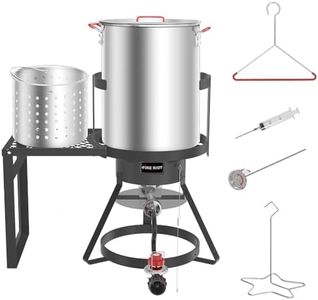
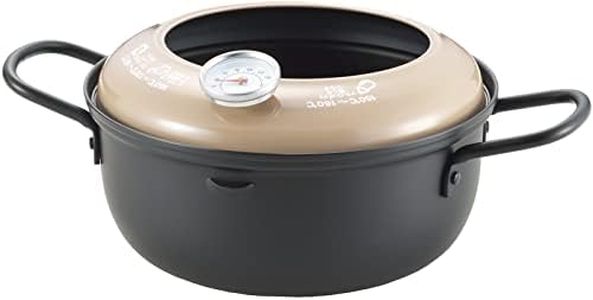
Buying Guide for the Best Propane Deep Fryers
Choosing the right propane deep fryer can make your outdoor cooking more efficient, enjoyable, and safe. It's important to look beyond brand names and shiny features and focus on the specifics that match your cooking needs, safety preferences, and how often you'll use the fryer. Understanding the main specifications helps ensure you get a fryer that heats evenly, holds enough food, is safe to use, and is easy to maintain. Spend some time considering where and how you’ll most often use your propane fryer—backyard gatherings, tailgating, or large family meals—so you pick a model that’s a perfect fit for you.BTU RatingThe BTU (British Thermal Units) rating measures how much heat a propane fryer can produce per hour. This directly affects how fast and efficiently you can heat the oil. Lower BTU fryers (below 40,000) work fine for smaller meals or lighter tasks, but may take longer to reach frying temperature and recover heat after adding food. Mid-range BTU fryers (40,000 to 70,000) offer a good balance for most family or party needs, heating oil quickly and keeping it stable. High BTU fryers (above 70,000) are meant for serious cooking and large quantities, providing rapid heating and recovery. For most users, a mid-range BTU fryer is ideal, offering strong performance without excessive fuel use.
Oil CapacityOil capacity tells you how much oil the fryer can hold, which affects both how much food you can cook at once and how long it takes to heat up. Small fryers (up to 3 gallons) work for snacks or meals for a few people, heat up quickly, and are easier to clean. Medium fryers (3 to 6 gallons) suit most household needs and allow for frying larger items like turkeys. Large fryers (over 6 gallons) are best for big batches and entertaining groups, but require more oil and take longer to heat. Choose a capacity that aligns with how much food you typically want to fry—think about the biggest crowd you’d cook for regularly.
Material and Build QualityMaterial and build quality play a major role in how durable, safe, and easy to clean your fryer is. Stainless steel is a top choice for its resistance to rust and ease of cleaning, making it great for frequent use or outdoor cooking. Aluminum fryers are lighter and heat up quickly, but may not last as long or be as sturdy. Look for sturdy construction, strong handles, and stable legs. If you plan to use your fryer outdoors year-round or want it to last several seasons, high-quality materials are worth it.
Safety FeaturesSafety features are critical when dealing with hot oil and propane. Look for fryers with features like flame guards, built-in thermometers, lid covers, and stable burner bases. Some models include automatic shut-off or timers. If you’re new to deep frying or will use the fryer around kids or pets, these features add peace of mind and reduce the risk of accidents. Always choose a fryer with clear safety instructions and reliable controls.
Portability and SizeThe overall size and portability of a propane fryer impact where you can use and store it. Compact, lightweight models are easy to transport for camping or tailgating, but may have smaller capacities. Larger, heavy-duty fryers tend to be less mobile but offer more cooking power. Consider how much space you have for storage, and whether you’ll need to move the fryer frequently. If you plan to use it mainly at home, a larger stationary model may be a better investment.
Ease of CleaningClean-up is an important but often overlooked aspect of deep fryers. Look for fryers with removable oil tanks, drain valves, and dishwasher-safe baskets for easier oil disposal and cleaning. Complex fryers with multiple parts can take longer to clean. If you’re likely to use the fryer often, choosing one that simplifies the cleaning process will save you time and encourage more frequent use.