10 Best Quietest Robot Vacuums
From leading brands and best sellers available on the web.By clicking on a link to a third party's website, log data is shared with that third party.
Related Products
Up to 55% off
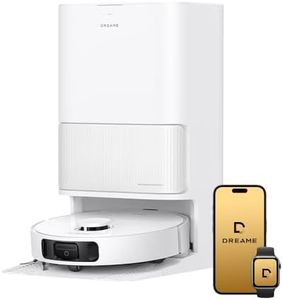
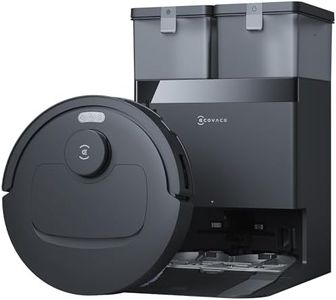
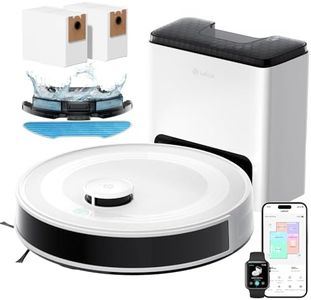
Buying Guide for the Best Quietest Robot Vacuums
Choosing a robot vacuum can seem overwhelming, especially when you are concerned about how loud it will be during operation. To find a quiet robot vacuum, you should pay attention to certain specifications and features that affect noise levels and overall performance. It’s also crucial to consider how you’ll use the vacuum—do you want it running while you’re at home, during the night, or while you’re out? Define your key needs first, and let these guide you when comparing different models.Noise Level (dB)Noise level, measured in decibels (dB), tells you how loud the vacuum will be while it's running. This is especially important if you plan to use your robot vacuum while you're at home, during the night, or in a smaller living space. Generally, robot vacuums range from about 55dB, which is about as quiet as a normal conversation, up to 70dB, which is similar to the sound of a typical dishwasher. If a very quiet operation is a top priority, look for vacuums at the lower end of this range. If you can run the vacuum while you’re not home, a slightly higher noise level may be acceptable.
Suction PowerSuction power is how strongly the vacuum can pick up dirt, dust, and debris from your floors. While stronger suction might mean better cleaning, it can also mean more noise. Suction power is often given in Pascals (Pa), with lower power around 1000–1500Pa (quieter but may be less effective on carpets), and higher power above 2000Pa (better cleaning, but noisier). Consider what kind of floors you have: for mostly hard floors, lighter suction (and lower noise) will usually be enough, while deep carpets might need more powerful (and potentially louder) suction.
Cleaning ModesMost robot vacuums come with different cleaning modes—such as quiet, normal, turbo, or max. The quiet mode usually reduces suction to minimize noise, which can be great for use at night or when you’re at home. Normal or max modes are noisier but clean more thoroughly. If being quiet is essential, check that the vacuum has a 'quiet' or 'eco' mode, and see how well it still cleans in this mode. Choose a vacuum where the lowest noise settings meet your cleaning needs.
Brush Type and DesignThe type of brushes under the vacuum, and their design, can also affect noise. Rubber brushes and soft rollers tend to be quieter than hard bristles. Fewer moving parts can reduce rattling sounds. If you have pets or long hair in your home, you’ll want brushes that handle this well without excessive noise. If you have mostly hard floors, soft or rubber rollers will keep sound to a minimum.
Floor Type CompatibilitySome vacuums are quieter on certain floor types. For example, many models are quieter on hard floors than on carpets because there’s less resistance. Think about where you’ll use your robot vacuum most often. If you mainly have hard floors, you’ll likely find quieter operation than you would on thick carpets.
Scheduling and App ControlsMany robot vacuums allow you to schedule cleanings or control them via an app. With this feature, you can set the vacuum to run when you’re not home, so noise becomes less of an issue. If your main concern is being disturbed, scheduling is a great way to minimize the impact of any noise, even if the vacuum isn’t the very quietest.