10 Best resins
From leading brands and best sellers available on the web.By clicking on a link to a third party's website, log data is shared with that third party.
Related Products
Up to 10% off
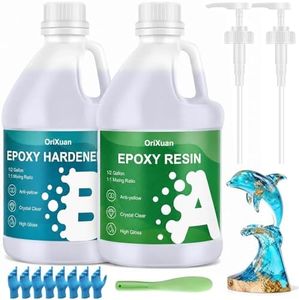
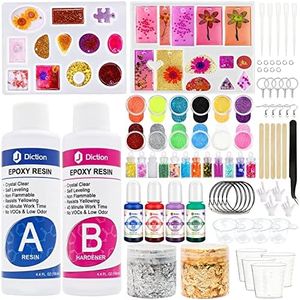
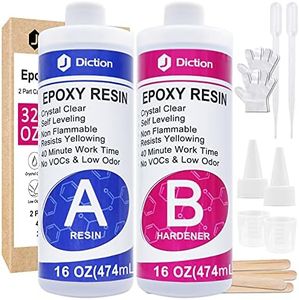
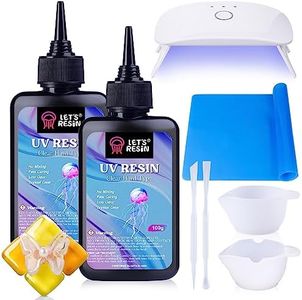
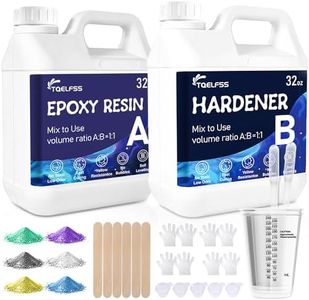
Buying Guide for the Best resins
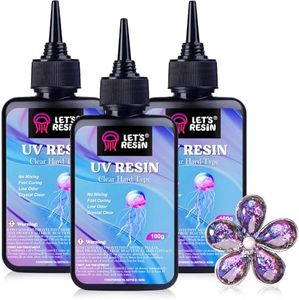
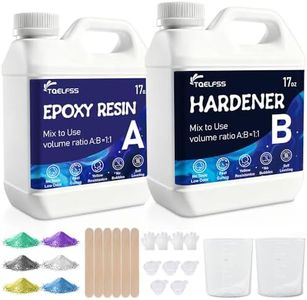
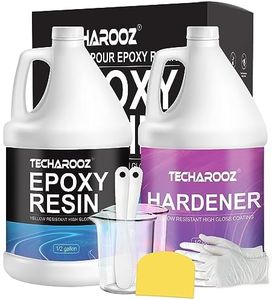
Choosing the right resin is all about understanding what you’ll use it for. Resins are used in crafting, art, jewelry, casting, and even for protective coatings. Each kind of resin has different properties that make it better suited for particular projects. To make the best decision, think about how you’ll work with it, what appearance you want in your finished product, and how durable it needs to be. Getting to know the main differences in resin types and key features can help you avoid common issues like sticky surfaces, yellowing over time, or brittleness.Type of ResinThere are several main types of resin, such as epoxy, polyester, polyurethane, and UV resin. The type matters because each has unique strengths. Epoxy is great for beginners and most crafts due to its ease of use and clear finish. Polyester is often used for fiberglass and larger molds, but can smell strong and be trickier to handle. Polyurethane is flexible and cures fast, making it good for flexible molds or quick projects, though it can be sensitive to moisture. UV resin hardens quickly under UV light and is best for small, thin crafts. To choose right, consider your project’s size, desired finish, and curing preferences.
Curing TimeCuring time is how long the resin takes to harden completely. This is important because some projects benefit from a quick hardening process, while others require a longer working time for more detailed work. Fast-curing resins (a few minutes to an hour) are great for quick jobs and when layering thin pieces. Slow-curing resins (several hours to overnight) allow for more precise adjustments and are ideal when pouring in deep layers or creating detailed art. Decide based on how much time you want to spend on each piece and how fast you need to finish your project.
ViscosityViscosity is how thick or runny the resin is. High-viscosity resins are thicker and better for making items with more volume or texture, as they don’t spread out too much. Lower-viscosity resins are runnier, making them ideal for filling complex molds, coating objects, and creating smooth, glass-like finishes. Choose thick resin if you want to build things up or prevent leaks, or thin resin for coating surfaces and filling tight spots.
Clarity and Color StabilityClarity determines how clear the cured resin is, while color stability addresses how well it resists yellowing over time. If you want a glass-clear finish, look for resins marketed as crystal clear or those with UV resistance. Some resins can yellow if exposed to sunlight, so UV stability is important for items that will be displayed in light. For colored or tinted projects, clarity is less critical, but you’ll still want a resin that keeps its true color as it ages. Let your project’s display location and your need for optical clarity guide you here.
Mix Ratio and Ease of UseThe mix ratio is how you combine the resin with its hardener, like 1:1 or 2:1. Simpler ratios are usually easier for beginners since there’s less chance of messing up the mixture, which can make the resin tacky or weak. Some resins even come premixed, especially UV types. If you’re new to resin, opt for easy mix ratios, but if you’re experienced, precise ratios can offer more customization for advanced needs.
Toxicity and SafetySome resins release strong fumes or can irritate skin. Always check if the resin requires special safety precautions like gloves, masks, or good ventilation. Low-odor, non-toxic resins are better suited for indoor and family-friendly projects. If you're sensitive or working in a small, enclosed area, prioritize products labeled as safe and non-toxic.