10 Best Robot Vacuums And Mops
From leading brands and best sellers available on the web.By clicking on a link to a third party's website, log data is shared with that third party.
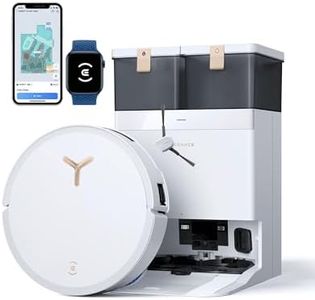
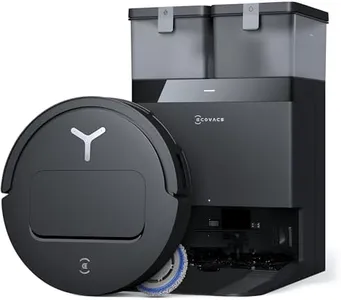
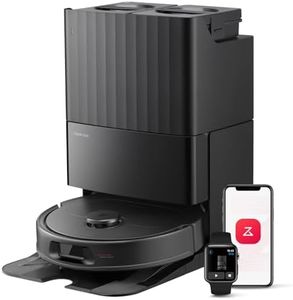
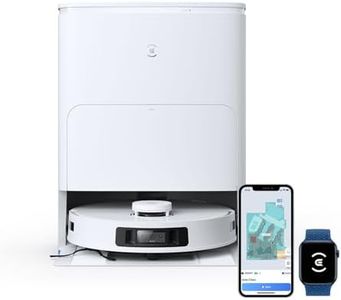
Related Products
Up to 50% off
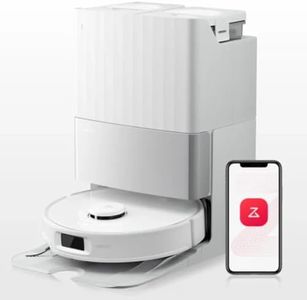

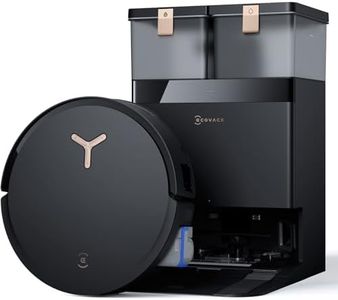

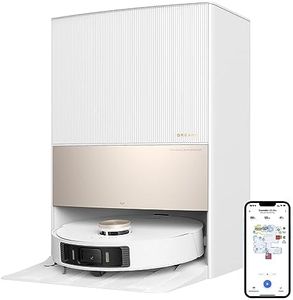

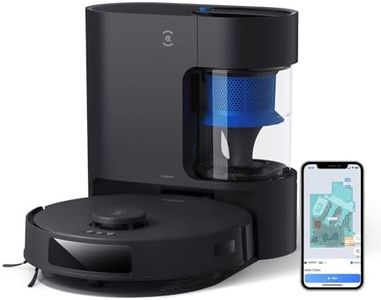
Buying Guide for the Best Robot Vacuums And Mops
Choosing a robot vacuum and mop can really simplify your cleaning routine, but finding the best fit depends on understanding the key features and how they align with your home's needs. Before buying, think about your home's floor types, the size of the space, how often you want to clean, and your comfort with using apps or setting schedules. The secret is to match what the robot can do with how and where you expect to use it.Suction PowerSuction power indicates how strongly the robot can pull in dirt and debris from your floors. Stronger suction is essential for homes with carpet or pets, while smooth floors like tile or wood usually need less. Suction is often measured in Pascals (Pa), with lower numbers (up to 1500 Pa) suitable for hard floors, mid-range (1500-2500 Pa) working for most mixed surfaces, and high (2500 Pa or higher) being best if you have high-pile carpets or lots of pet hair. Think about your flooring and dirt level to find the right balance; more suction can mean more noise and battery drain, so only go high if you truly need it.
Navigation TechnologyNavigation technology determines how smartly the robot moves around your home. Basic models use random movement, which works best for small or clutter-free spaces, while those with mapping (using lasers or cameras) can clean larger or more complicated rooms more thoroughly by following a set path and remembering your layout. If you want the robot to avoid getting stuck or to cover every corner, look for advanced mapping. Simpler navigation does the job in basic areas, but for bigger homes with lots of furniture, smarter navigation is more efficient and less frustrating.
Mopping SystemThe mopping function adds wet cleaning on top of vacuuming. Some only drag a damp cloth, which is suitable for light dirt and occasional touch-ups, while others have electronic water control or vibrating pads for more thorough cleaning. Consider how dirty your floors get and what kinds of spills you regularly face. If you only need quick dust removal, basic mopping is fine, but for sticky messes, go for a robot with a more advanced mopping system.
Battery Life and Coverage AreaBattery life tells you how much space the robot can clean on a single charge. Short battery life (up to 90 minutes) is often enough for apartments or one room at a time, while longer (120-180 minutes or more) is necessary for bigger homes, especially those with many rooms. Some robots will resume cleaning after charging, but if you prefer one-and-done cleaning, make sure the battery can handle your entire floor in one go. Match the battery to your home's size for the best results.
Dustbin and Water Tank CapacityThe dustbin and water tank sizes dictate how much dirt and liquid the robot can hold before you need to empty or refill it. Smaller bins and tanks need frequent attention, which can be fine for light, daily cleanups, but if you want less maintenance or have pets, choose a robot with larger capacities. High-capacity models are ideal if you want to set-and-forget for a few cycles, while compact ones suit smaller living areas and lighter dust loads.
Smart Features and App IntegrationSmart features let you control and schedule cleaning through your phone or voice assistant, see cleaning maps, or set no-go zones. Basic robots may use simple remote controls or on-device buttons, while more advanced ones connect to Wi-Fi for rich features. If you like detailed control or want to manage cleaning while away from home, go for a model with strong app integration. If you prefer simplicity, you can skip the fancy controls for a straightforward user experience.
Obstacle Avoidance & SafetyObstacle avoidance helps the robot recognize and go around items on your floor, like shoes, wires, or even pet messes. Basic robots just bump and turn, which works in cleaner or more open spaces, while advanced sensors or cameras help avoid tight spots or potential hazards. If you have lots of things scattered on the floor, pets, or fragile objects, focus on this feature; otherwise, standard avoidance may be all you need.