10 Best Rock Hammers
From leading brands and best sellers available on the web.By clicking on a link to a third party's website, log data is shared with that third party.


Related Products
Up to 40% off
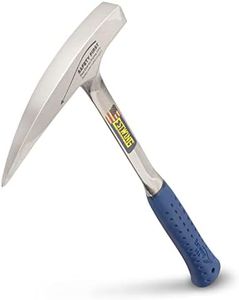
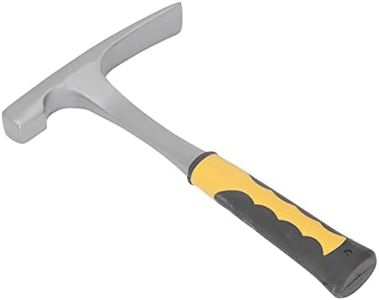


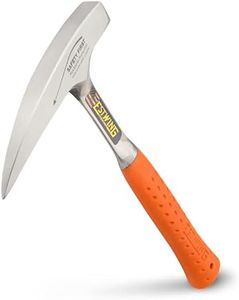


Buying Guide for the Best Rock Hammers
Choosing a rock hammer is all about matching the tool to the kind of rocks you'll be working with and the type of activities you'll be doing. Rock hammers, sometimes called geologist's hammers or rock picks, are essential tools for anyone interested in geology, paleontology, or rock collecting. The right hammer will make your work easier, safer, and more effective. Start by thinking about whether you'll mostly be breaking hard rocks, chipping at softer rocks, or looking for fossils. Your own comfort and safety are also key factors, so be honest about your physical strength and experience.Head WeightHead weight refers to how heavy the main metal part of the hammer is, usually measured in ounces or grams. This spec is important because a heavier head delivers more force but can be tiring if you use it for a long time. Light heads (around 12-18 ounces) are best for beginners, children, or those working with soft rocks, as they are easier to swing and control. Medium weights (18-22 ounces) offer a balance and are great for general fieldwork and various rock types. Heavier heads (over 22 ounces) are for breaking tough, hard rocks like quartzite or basalt but require more strength and endurance. Always choose a weight you can handle comfortably for the duration of your activity.
Handle MaterialThe handle material can be steel, fiberglass, or wood, each affecting how the hammer feels and absorbs shock. Steel handles are very durable but transmit more vibration to your hand, which can be tiring over long periods. Fiberglass handles reduce vibration and are generally lighter, making them comfortable for extended use. Wood handles also dampen shock well but may not be as strong as steel or fiberglass. If you have joint sensitivity or plan on hammering for a long time, look for options that prioritize comfort, such as fiberglass or wood.
Head TypeThere are two main head types: pointed tip (also called a pick or chisel tip) and flat tip (or square tip). Pointed tips are useful for prying rocks apart, extracting crystals, or splitting layered rocks, while flat tips are for breaking rocks open or trimming pieces down. Some hammers are double-ended, with a point on one end and a flat head on the other, offering versatility. The choice depends on your main activity—select a pointed tip for extracting specimens or a flat tip for breaking larger rocks.
LengthHammer length generally ranges from about 11 to 16 inches. A longer hammer provides more leverage and reaches hard spots, but it's also heavier and may be harder to carry. Shorter hammers are more compact, lighter, and easier to control, especially for beginners or kids. Consider where and how you'll be using your hammer—longer ones for heavy-duty work in open areas, shorter ones for light or precise work, or if you need portability.
Grip DesignGrip design concerns the material and shape of the handle that you hold. Good grip is crucial for comfort and safety, as it reduces slippage and blisters. Some hammers have non-slip rubber grips or textured patterns for extra hold, which is especially helpful in wet or muddy conditions. If you'll be using gloves or working in challenging weather, look for a hammer with a comfortable, secure grip to prevent accidents.