10 Best Rods And Reels For Beginners
From leading brands and best sellers available on the web.By clicking on a link to a third party's website, log data is shared with that third party.
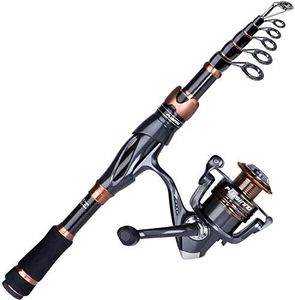
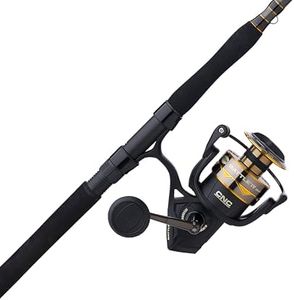

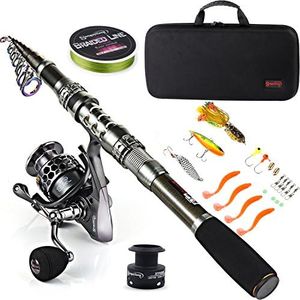
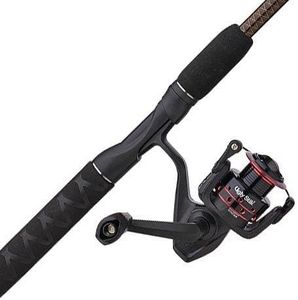
Related Products
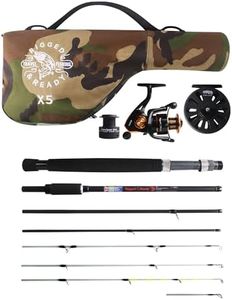
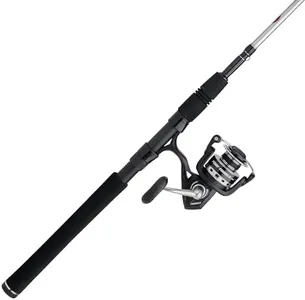

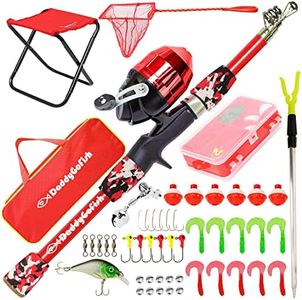
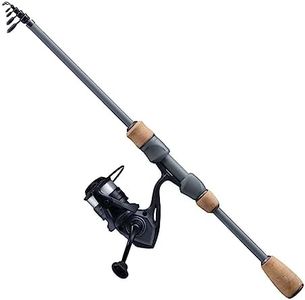
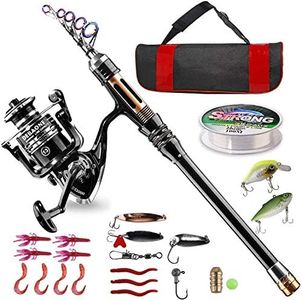
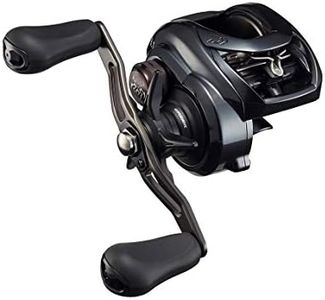
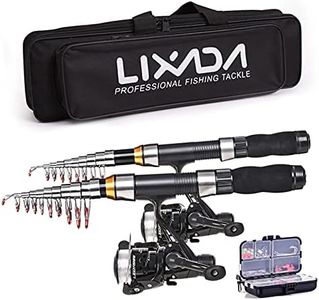
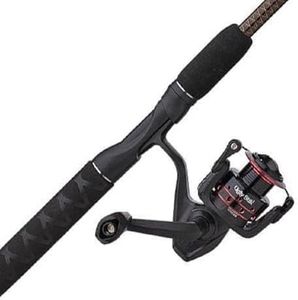

Buying Guide for the Best Rods And Reels For Beginners
Choosing your first fishing rod and reel can seem overwhelming, but it’s all about matching the gear to how and where you plan to fish. Think about whether you'll be fishing in freshwater or saltwater, from the shore or a boat, and what size fish you want to catch. A good beginner setup should be easy to use, reliable, and comfortable to handle. Pay attention to the key features so you get gear that helps you learn and enjoy fishing without frustration.Rod LengthRod length is simply how long the fishing rod is, measured from end to end. This is important because the length affects casting distance, leverage, and control. Shorter rods, usually between 5 to 6.5 feet, are easy to manage and great for fishing in tight spaces or targeting smaller fish, making them ideal for young anglers or smaller bodies of water. Medium rods, in the 6.5 to 7.5 foot range, offer a balance of casting distance and control, and are the most versatile choice for beginners. Longer rods, over 7.5 feet, help cast farther and are better when fishing from the shore or for larger fish, but can be harder for beginners to handle. Think about where you’ll fish most often and choose a rod length that matches those typical conditions.
Rod PowerRod power describes how much force it takes to bend the rod. This affects what kind of fish you can catch and what type of lures or baits you use. Ultra-light and light power rods are best for small fish like panfish and trout. Medium and medium-heavy rods are versatile, letting you go after bass, walleye, or catfish, and work well with a range of lures. Heavy rods are built for big fish or heavy lines, such as those used in saltwater or for large freshwater species. For beginners, a medium or medium-light power rod gives the most flexibility for different styles and species.
Rod ActionRod action refers to how quickly and where along the blank the rod bends when pressure is applied. Fast action rods bend mostly at the tip, making them sensitive and good for quick hook sets. Moderate action rods bend more towards the middle, providing a good mix of sensitivity and flexibility—easier to handle for beginners. Slow action rods bend almost all the way down, ideal for casting light lures but not common for novice needs. Most beginners will find a moderate or moderate-fast action rod easiest to use and most forgiving when learning.
Reel TypeThere are three main types of reels: spincast, spinning, and baitcasting. Spincast reels are the simplest, with a push-button design that’s great for kids or complete beginners, but they have limited performance as you progress. Spinning reels are easy to use and very versatile, suitable for most beginners and a wide range of fish. Baitcasting reels offer more control but have a steeper learning curve, so they’re really for more experienced anglers. For most beginners, spinning reels provide the best combination of ease, reliability, and adaptability.
Rod MaterialRods are usually made from either fiberglass, graphite, or a composite of both. Fiberglass rods are strong, bend easily, and are generally more durable—making them a good choice for rough handling or younger anglers. Graphite rods are lighter and more sensitive, so you can feel bites better, but they can be more brittle. Composites combine the best of both, offering strength and sensitivity. For beginners, fiberglass or composite rods often provide the right mix of toughness and user-friendliness.
Reel SizeReel size refers to how much fishing line the reel can hold and its overall size, usually measured numerically (such as 1000, 2500, 4000). Smaller reels are suitable for light lines and small fish, while larger reels are meant for heavier lines and bigger fish. For most beginners targeting average freshwater species, a smaller or mid-sized spinning reel (in the 2000 to 3000 range) is a good starting point, balancing capacity with easy handling.