10 Best Rugged Smartwatches
From leading brands and best sellers available on the web.By clicking on a link to a third party's website, log data is shared with that third party.

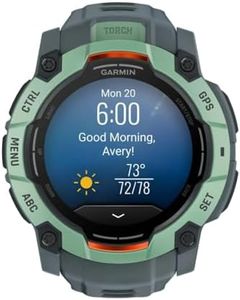
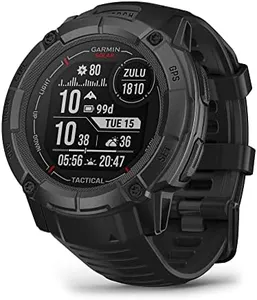
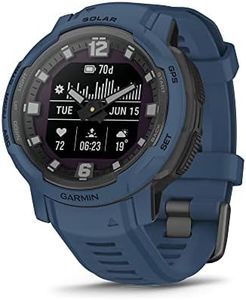
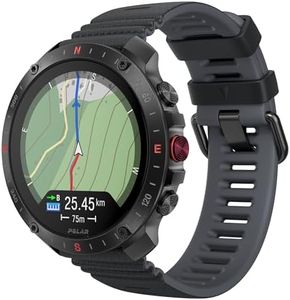
Related Products
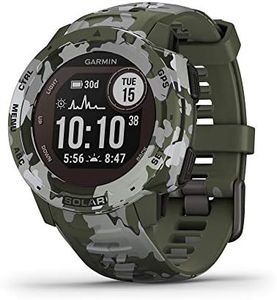
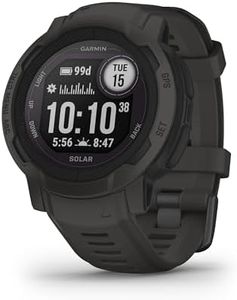
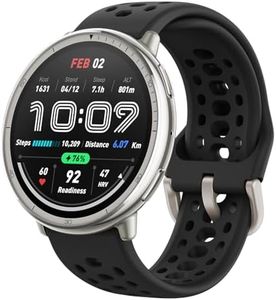
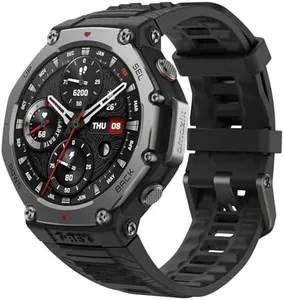
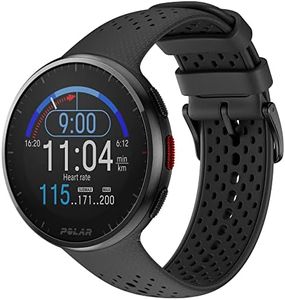
Buying Guide for the Best Rugged Smartwatches
When shopping for a rugged smartwatch, you're looking for a device that can withstand tough conditions, whether you're hiking up mountains, working on a construction site, or just looking for a durable everyday companion. The goal is to find a watch that balances toughness with the features you actually need—think about your lifestyle, the types of environments you'll wear it in, and which functions are most important for your daily activities. This way, you avoid paying for extras you won't use or missing out on essentials.Durability Ratings (IP & MIL-STD Certification)Durability ratings like IP (Ingress Protection) and MIL-STD (Military Standard) certifications describe how well a smartwatch can resist damage from dust, water, drops, and extreme temperatures. IP ratings are usually written as IP68 or IP67, where the first number shows dust protection and the second shows water resistance. MIL-STD-810G or -810H means the watch meets military tests for various environmental conditions. Look for higher numbers for more challenging conditions—IP68 is tougher than IP67. If you plan on swimming, hiking, or working in rough environments, higher ratings are better. If your activities are mostly indoors or less intense, a standard rating should suffice.
Battery LifeBattery life tells you how long the smartwatch will run before you need to charge it. This can range from a day or two, common on feature-rich watches, to several weeks on those with more basic screens and functions. If you spend time far from outlets, like camping trips or long work shifts, look for watches with long battery claims or battery-saving modes. On the other hand, if you charge devices daily and want more smart features, short battery life may be less of an issue.
Build MaterialsThe materials used for the case and screen determine how well the smartwatch can take a beating. Common materials include stainless steel, titanium, reinforced plastic, and Gorilla Glass or sapphire crystal for the display. Stronger materials protect better against scratches, shocks, and impacts. Choose tougher materials if you often bump into things, do heavy-duty work, or spend time outdoors, but if you’re mostly indoors or want a lighter device, standard materials may do the trick.
Display TypeThe type of display affects visibility and durability. Some rugged watches use simple LCD, MIP (memory-in-pixel), or monochrome screens to stay readable in bright sunlight and save power, while others use colorful AMOLED or OLED displays. Outdoor users who want to see stats in direct sun might prefer simpler, always-on screens. If you care about vivid graphics and touchscreen gestures, you might pick an AMOLED but need to be careful about scratches and consider brightness levels.
Fitness and Outdoor FeaturesThese are the tools that make your smartwatch useful for outdoor adventures or fitness routines. This could include GPS tracking, altimeter, barometer, heart rate sensor, and even mapping features. For all-weather adventurers or fitness fans, make sure the watch supports accurate GPS, elevation tracking, heart rate monitoring, and has the metrics you care about. If you mostly want basic notifications and timekeeping, high-end outdoor features may not be as necessary.
Glove and Wet Touch SupportThis is the watch's ability to be operated when your hands are wet or while wearing gloves. Not all touchscreens respond well under these conditions, which is important for hikers, skiers, or certain workers. If you'll often be wearing gloves or have wet hands, look for a model with physical buttons or special wet touch modes so you’re not left frustrated when you need to interact quickly.
Connectivity OptionsRugged smartwatches can connect via Bluetooth, Wi-Fi, and sometimes even cellular networks for standalone operation. Extra features like NFC for payments or satellite messaging may come in some models. Decide if you’ll need to leave your phone behind and still want calls or messages; if so, a model with LTE or satellite support could be useful. For regular everyday use, basic Bluetooth and Wi-Fi may be enough.