10 Best Rv Hot Water Heaters
From leading brands and best sellers available on the web.By clicking on a link to a third party's website, log data is shared with that third party.
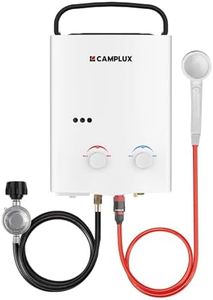
Related Products
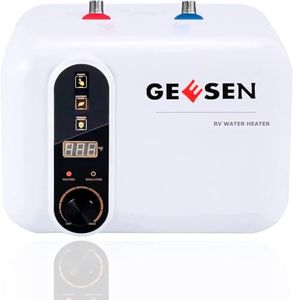
Buying Guide for the Best Rv Hot Water Heaters
Choosing the right RV hot water heater can make your camping or travel experience much more comfortable. When thinking about which hot water heater to get, consider how often you use your RV, how many people will be using hot water at the same time, and the type of travel you do. Understanding a few key features will help you select a model that matches your needs for convenience, efficiency, and performance.Type (Tank vs. Tankless)RV hot water heaters come in two main types: tank and tankless. A tank heater stores a certain amount of hot water, so you have a ready supply, but you might run out if several people use it one after another. Tankless heaters heat the water as you use it, giving continuous hot water but usually at a lower flow rate. If you regularly take long showers or have several people needing hot water, tankless might be better, but if your usage is more occasional and you want quick access, a tank model may suit you.
Fuel SourceThe fuel source for RV water heaters is usually propane, electricity, or a combination of both. Propane heaters are great for off-grid camping since you don’t need shore power, and they tend to heat water quickly. Electric models are useful when you are connected to campground power and want to save propane. Dual models give you flexibility, allowing you to switch between propane and electricity as needed. Pick the fuel source based on how and where you most often camp.
Capacity (for Tank Models)Capacity refers to how much water the heater tank can hold, typically measured in gallons (often 6 or 10 gallons in RVs). Larger tanks provide more hot water before refilling, which is useful for families or longer showers, but take up more space and require more energy to heat. Smaller tanks heat up quickly and fit well in compact RVs. Choose capacity based on the number of people using the RV and your typical hot water usage.
Recovery Rate (for Tank Models)Recovery rate is the amount of hot water the heater can produce in a set time, often given in gallons per hour. A higher recovery rate means the heater can provide more hot water quickly after the initial supply runs out. If you expect several people to use hot water in a short period, look for a higher recovery rate. If your hot water usage is spaced out, a lower rate may be just fine.
Ignition TypeIgnition type determines how the water heater is started. Manual ignition requires you to light a pilot flame by hand, while direct spark or electronic ignition can be started with a button or switch. Electronic options are more convenient and safer because you don’t have to open the heater panel or handle a flame. If you want ease-of-use, look for automatic or electronic ignition.
Size and InstallationThe size of the water heater affects whether it will fit in your RV’s designated space. Measure your available area and make sure the heater’s dimensions match, also considering access for installation and maintenance. Smaller models are easier to fit, but may provide less hot water. Always check size requirements before buying to avoid costly modifications.
Energy EfficiencyEnergy efficiency tells you how well the heater uses its fuel or electricity to heat water. More efficient models save energy and reduce fuel or power consumption. Some RV water heaters include extra insulation or technology that helps them maintain temperature with less energy. If you want to save on energy use and minimize waste, consider the efficiency ratings when choosing.