10 Best Rv Tire Pressure Monitoring Systems
From leading brands and best sellers available on the web.By clicking on a link to a third party's website, log data is shared with that third party.
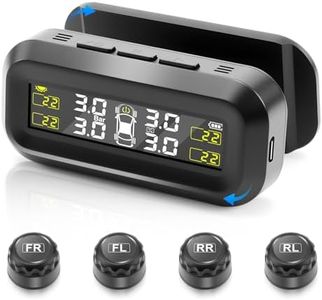
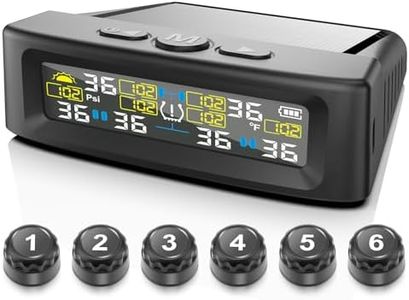
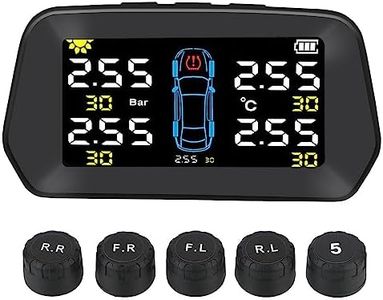
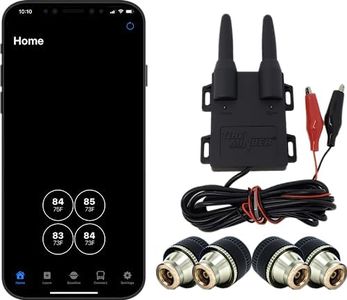
Related Products
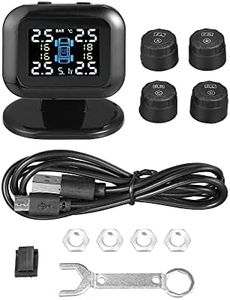
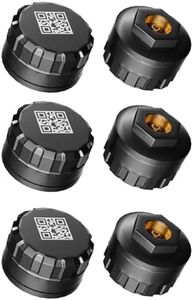
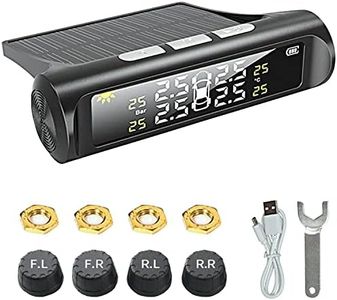
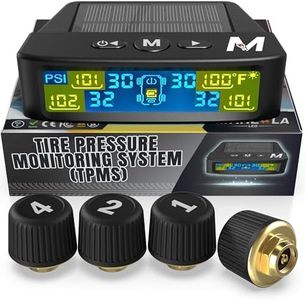

Buying Guide for the Best Rv Tire Pressure Monitoring Systems
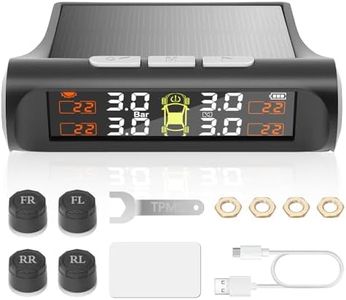
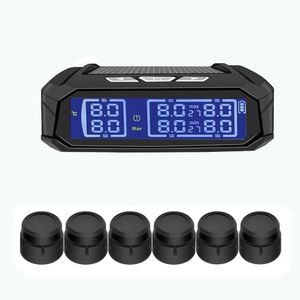
Choosing an RV tire pressure monitoring system (TPMS) is crucial for safe travels. These systems help you keep an eye on the air pressure and temperature of your RV tires, alerting you to potential issues before they become serious problems. A good TPMS provides peace of mind, reduces the risk of blowouts, extends tire life, and can even improve fuel efficiency. When picking one, it’s important to assess how easy the system is to use, how accurate it is, and whether it fits the specific needs of your RV setup. By understanding the main features and how they match your travel habits, you can find the system that best supports your adventures.Number of SensorsThis refers to how many individual tires the system can monitor at once. This matters because RVs can have many tires, and you want to make sure all of them are covered. Basic systems may cover four tires, suitable for small trailers, while more advanced options offer eight, ten, or even more sensors, useful for larger RVs or motorhomes with extra wheels. To decide, count your RV’s tires, including spares or any towed vehicles, and pick a system that covers at least as many as you need. Getting a few extra sensors can be beneficial if you upgrade vehicles or add to your RV setup in the future.
Sensor TypeThere are two main types: cap sensors that screw directly onto the tire valve stems, and internal sensors that are mounted inside the tire. Cap sensors are easy to install and don't require removing the tire, making them suitable for most users. Internal sensors are more protected and provide great accuracy, but require professional installation, which may not be practical for everyone. If you want quick setup and flexibility, cap sensors are best; if you value longevity and are willing to get professional help, internal sensors may suit you better.
Display UnitThe display unit shows the tire readings and alerts you to any problems. Display types include standalone screens that you mount in your vehicle or receivers that connect to your smartphone via Bluetooth. Dedicated screens are constantly visible and usually very reliable, while phone-based units are more discreet but depend on your mobile device being charged and within reach. Consider your preference—if you want always-on monitoring without fuss, go for a system with a built-in display; if you like everything on your phone and want fewer gadgets on your dashboard, a Bluetooth option might fit better.
Pressure and Temperature RangeEach TPMS is designed to measure a specific range of pressure (pounds per square inch, or PSI) and temperatures (Fahrenheit or Celsius). This is important because the system needs to match the requirements of your RV’s tires. Smaller trailers might use tires with a lower PSI, while motorhomes often need higher ranges. Check the recommended PSI for your RV tires and pick a TPMS that can monitor pressures slightly above and below that range to ensure accurate warnings. Make sure it also covers extreme temperature variations if you travel in areas with severe weather.
Alert SystemThe alert system is how the TPMS notifies you about problems, such as low pressure, high pressure, or high temperature. Alerts can be audio tones, visual lights, or notifications on your phone. A good system will have clear, unmistakable alerts that grab your attention while driving. Think about your driving habits and environments—if you often drive in noisy or distracting conditions, pick a system with loud or highly visible warning signals to make sure you don’t miss a critical alert.
Battery Life and Power SourceSensors either come with replaceable batteries or are sealed units with built-in, long-life batteries. The display unit may plug into your vehicle’s power outlet, use USB, or run on internal batteries. Replaceable batteries give you control to swap them out as needed, while sealed sensors offer simplicity but will need to be replaced when the battery runs out. If you go on long trips, pick a system with easily changeable batteries or a reliable power source to avoid losing monitoring capability mid-journey.
Ease of Installation and UseSome systems are designed for quick setup, requiring little more than screwing sensors onto tire valves and turning on the display, while others may involve more effort or professional help. The easier a system is to install and manage, the less likely you are to skip using it. If you're new to RV equipment or prefer things straightforward, look for a user-friendly system with clear instructions. Those comfortable with DIY projects or who want a more permanent solution can opt for systems that are more involved to set up.
Signal Range and RepeaterSignal range is how far the sensor’s signal can travel to your display unit. On longer RVs or those towing trailers, weak signal can be a problem. Some TPMS kits include a signal booster, also known as a repeater, to strengthen the connection from back tires to the monitor. If your RV configuration is long or you’ve had trouble with signal dropouts on other wireless devices, make sure the system includes or allows addition of a repeater so you always get accurate readings.