10 Best Salt Water Metal Detector
From leading brands and best sellers available on the web.By clicking on a link to a third party's website, log data is shared with that third party.
Related Products

Recommended lists


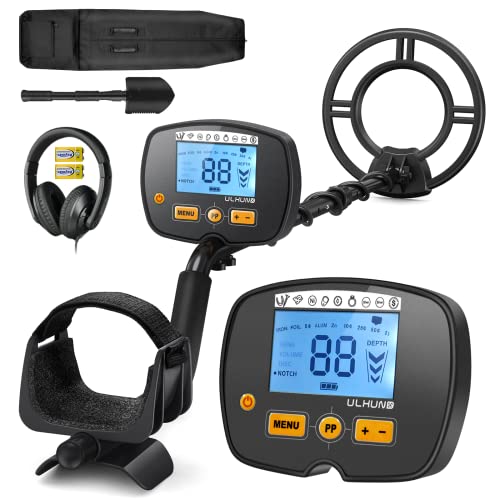
Buying Guide for the Best Salt Water Metal Detector
Choosing a salt-water metal detector can be exciting, especially if you imagine the treasures waiting for you under the waves. The ocean environment is tough on electronics, so you need a detector designed to handle saltwater, wet sand, and all the challenges you’ll meet on the beach. Understanding the key features helps you pick the right tool, whether you plan to hunt in shallow surf or deeper waters. Focus on what kind of detecting you’ll do most often, your experience level, and how much time you want to spend adjusting settings.Waterproof RatingThe waterproof rating tells you how well the detector can handle being submerged in water, as well as its ability to resist damage from fresh and salt water. This is important because many detectors are only water-resistant, not truly waterproof. Values are usually in terms of water depth they can handle, such as splash-proof, submersible up to a meter, or suitable for fully underwater use. Think about where you’ll spend most of your time: If you only want to scan wet sand or shallow water, a model rated for those depths is fine, but if you want to snorkel or dive, choose one with a higher waterproof rating to ensure it survives those conditions.
Operating FrequencyOperating frequency refers to how quickly the detector sends and receives signals. This affects how well it can detect different kinds of metals and ignore interference caused by salt in the water. Lower frequencies penetrate deeper into the ground and are good for larger, highly conductive targets like coins, but can miss smaller items like jewelry. Higher frequencies are better for small, low-conductive targets but don’t go as deep. For saltwater, consider models with either a mid-range frequency or those labeled as having multi-frequency or pulse induction, as they balance depth, sensitivity, and saltwater interference.
Technology Type (VLF vs Pulse Induction)Metal detectors mainly work on two technologies: Very Low Frequency (VLF) and Pulse Induction (PI). VLF machines are generally more affordable and better at distinguishing different metals but can struggle with the mineralization (salts and minerals) found at the beach. Pulse Induction detectors excel in saltwater environments and ignore most mineral interference, making them good for beaches and surf, but they might not tell you much about the type of metal detected. Choose VLF if discrimination is very important to you and you're mainly working in dry sand; pick PI if you’ll hunt mostly in wet sand, surf, or underwater and want strong performance with minimal false signals.
Ground BalanceGround balance is a detector’s ability to tune out minerals in the soil or sand, especially important in saltwater environments where minerals can cause lots of false signals. Detectors can have fixed, automatic, or manual ground balance settings. Fixed ground balance means you can't adjust it for changing conditions, which can be limiting on the beach. Automatic ground balance is easier and adjusts itself as you move, good for beginners or those moving between different sands. Manual ground balance gives you the most control and is best for experienced users who want to fine-tune performance for maximizing depth and sensitivity. Think about how much time you want to spend adjusting your detector and how varied your search locations will be.
Weight and ErgonomicsWeight and ergonomics refer to how comfortable it is to carry and use the detector, which matters a lot when you’re spending hours on the beach. Heavier detectors can be tiring, especially when working in surf or underwater, but might be sturdier. Lighter models are easier for long hunts or frequent travel, but sometimes trade off durability. Consider your own strength, how long you want to hunt at a time, and whether you need to pack your detector for trips.
Discrimination and Target IDDiscrimination and Target ID allow the detector to help you distinguish between valuable items like coins and jewelry and less interesting targets like bottle caps or nails. In saltwater, discrimination can be trickier due to interfering minerals, but having adjustable settings helps you ignore junk. Detectors may offer audio tones, visual displays, or both. If you want to spend less time digging up trash, this is an important feature; just note that very aggressive discrimination can cause you to miss small or unusual treasures.