10 Best Scuba Diving Regulator
From leading brands and best sellers available on the web.By clicking on a link to a third party's website, log data is shared with that third party.


Related Products



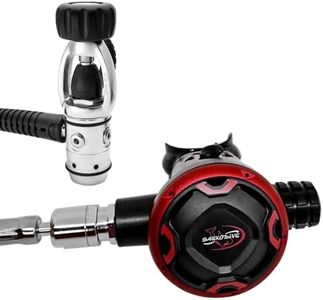
Recommended lists
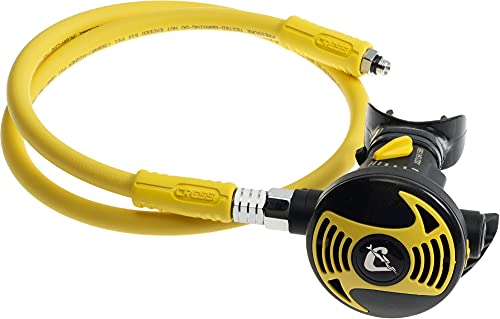
Top rated
Diving Regulators
Buying Guide for the Best Scuba Diving Regulator
Choosing the right scuba diving regulator is crucial for safe and enjoyable diving experiences. A regulator is the device that delivers breathable air from your tank and must perform reliably in different underwater conditions. When picking one, you need to consider factors such as your intended diving environment, frequency of use, and comfort preferences. Understanding the key specifications will help you choose a regulator that matches your diving needs, whether you enjoy recreational dives in warm waters or plan on tackling cold, deeper environments.First Stage TypeThe first stage is the part of the regulator that attaches to your tank and reduces the high-pressure air to an intermediate pressure. There are two main types: balanced and unbalanced. Balanced first stages provide consistent airflow regardless of tank pressure or depth, making them ideal for divers who want reliable performance in a variety of settings. Unbalanced models may deliver slightly less airflow as tank pressure drops, but they are generally less expensive and simpler. Choose balanced if you plan on deeper or cold-water dives, or unbalanced for simpler, shallow recreational dives.
Second Stage TypeThe second stage is the mouthpiece where you breathe from, and it further reduces pressure to be breathable. There are adjustable and non-adjustable types. Adjustable second stages allow you to control the airflow, which can be useful for managing breathing ease at different depths, while non-adjustable versions have a fixed air delivery. If you want more control or will dive often, adjustable is good; if simplicity and reliability are your priorities, a non-adjustable might suit you.
Number of PortsRegulators have low- and high-pressure ports for attaching your hoses and accessories like gauges, octopus (alternate air source), and inflators. A higher number of ports gives you more flexibility in setup, letting you customize your gear for comfort and function. If you use multiple accessories, look for a model with plenty of ports; for minimalist setups, fewer ports might be sufficient.
Environmentally SealedAn environmentally sealed regulator prevents water, salt, and contaminants from entering the first stage. This is especially important for cold-water diving, as it reduces the risk of freezing, but can also increase longevity in saltwater environments. If you mostly dive in cold or dirty water, or want less maintenance, go for an environmentally sealed model; if you dive only in clean, warm water, an unsealed version can suffice.
Breathing ResistanceBreathing resistance refers to how much effort is required to draw air through the regulator. Lower resistance means easier breathing, which is important for reducing fatigue underwater. Regulators often allow adjustment of resistance—pick one that allows you to change it if you want to tweak breathing comfort, or choose a model known for low, consistent effort if you value easy breathing on long dives or in demanding environments.
Weight and SizeThe overall weight and size of a regulator affect ease of travel and comfort, especially if you dive frequently or plan to take your gear on trips. Lightweight, compact models are easier to travel with and reduce jaw fatigue, while heavier-duty designs may offer increased durability. Consider a lighter regulator for travel or if you want added comfort, and a sturdier option for more rugged, frequent use.
Compatibility with NitroxIf you plan on diving with enriched air (Nitrox), ensure your regulator is rated for Nitrox use. Regulators compatible with Nitrox are made with materials and lubricants that safely handle higher oxygen concentrations. If Nitrox is in your diving plans now or in the future, look for a regulator labelled as Nitrox-compatible to ensure safety.