2 Best Septic Pumps
From leading brands and best sellers available on the web.By clicking on a link to a third party's website, log data is shared with that third party.
Recommended lists

Top rated
Sump Pumps
Buying Guide for the Best Septic Pumps
Choosing the right septic pump is important to ensure your septic system works efficiently and without problems. Septic pumps move wastewater from your home into your septic tank or from the tank to a drain field. Picking the best fit depends on your home's setup and how much water you typically use. To make a good choice, it’s key to understand the main specifications.Pump TypeThere are two main types: effluent pumps and sewage pumps. Effluent pumps handle mostly liquid with small solids and are often used for moving water between septic tanks or to a drain field. Sewage pumps are meant for raw sewage with larger solids. Choose based on whether your system handles just water or needs to move solids as well.
Horsepower (HP)Horsepower measures how powerful the pump is. Lower horsepower (like 1/3 or 1/2 HP) is good for small homes with low or average water use. Higher horsepower (like 1 HP or more) is for larger homes, higher water use, or longer distances to pump. Pick the horsepower by considering how many people live in your house and the height or distance the water needs to be pumped.
Flow Rate (GPH or GPM)Flow rate tells you how much water the pump can move in an hour or minute (gallons per hour or per minute). A higher flow rate is better for bigger households or when quick water removal is important. Smaller flow rates suit single homes with normal use. Match the flow rate to your household size and how quickly you need water handled.
Maximum Head (Lift Height)This spec shows the maximum height the pump can push water. If your septic tank or drain field is uphill or far away, you need a pump with a higher head. If the distance is short or level, a lower head is fine. Check your house layout and measure the distance and vertical lift needed before deciding.
Solids Handling SizeThis tells you the largest size of solid waste the pump can handle. Sewage pumps must handle bigger solids, while effluent pumps are designed for small particles. If your pump needs to move larger waste, pick one with a larger handling size. For clear water, this spec is less important.
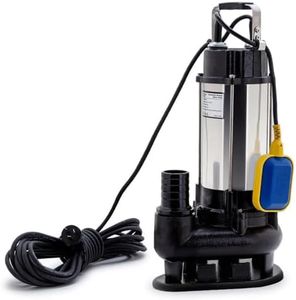
Switch Type (Manual vs. Automatic)Some pumps turn on and off by themselves (automatic) using a float switch, while manual pumps need you to turn them on and off. Automatic pumps are more convenient for daily use, as they prevent overflow and save effort. Manual pumps might suit infrequent use or backup systems. Think about how you want to operate the pump and how often it will be used.
Material ConstructionPumps may be made of plastic, cast iron, or stainless steel. Heavy-duty metal pumps last longer and handle tough conditions, while plastic is lighter and can be cheaper but might not last as long. If your pump will run often or needs to handle tough wastewater, choose stronger materials. For lighter needs, plastic might be enough.