6 Best Side By Side Double Stroller
From leading brands and best sellers available on the web.By clicking on a link to a third party's website, log data is shared with that third party.
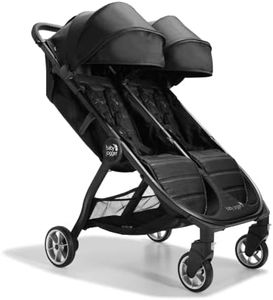
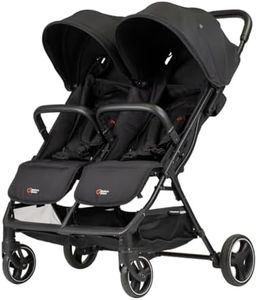
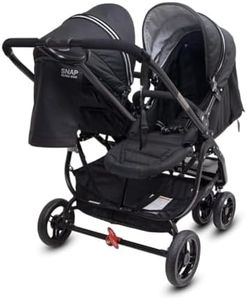
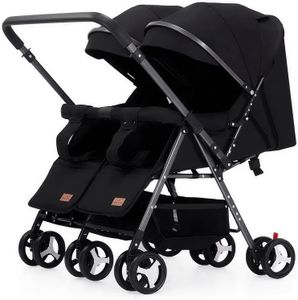
Recommended lists
Top rated
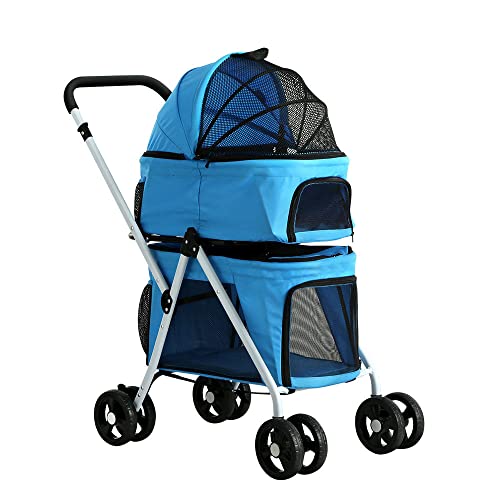
Double Pet Stroller
Buying Guide for the Best Side By Side Double Stroller
Choosing the right side-by-side double stroller can make life much more convenient and comfortable for both you and your children. While side-by-side models are popular for families with twins or children of similar ages, they can also be used with siblings of different ages. The key is to focus on your family’s specific needs—such as where you’ll use the stroller, how often, and what features would make outings smoother. By understanding the main features and specifications of double strollers, you’ll be able to select a model that provides the right balance of comfort, convenience, and practicality for your lifestyle.Stroller WidthStroller width refers to how wide the stroller is from side to side; this is particularly important for side-by-side models because you want to ensure your stroller can fit through standard doorways, aisles, and urban sidewalks. Typical side-by-side double strollers range from about 28 to 32 inches wide. Narrower strollers are easier to maneuver indoors and in tight spaces but may have less roomy seats, while wider strollers provide more space but can be harder to fit through doors and crowded places. If you’ll often be navigating busy city streets or using public transport, consider a narrower width. If you plan to use the stroller mostly outdoors or in open areas, a slightly wider model might be fine.
Seat Recline and AdjustabilityThis spec describes how much the seats can tilt or recline, which affects your children’s comfort, especially for naps on the go. Some strollers offer independent recline for each seat, allowing one child to lie back while the other sits upright. Look for models that go nearly flat if you have infants or napping toddlers. If both children are older and tend to sit upright, full recline might be less important. Consider your children’s ages and needs—newborns require greater recline for safety, while older kids may prefer a more upright position.
Weight and FoldabilityThe stroller’s weight and how easily it can be folded affects how convenient it is to store, transport, and lift in and out of a car. Lightweight strollers (under 25 pounds) are easier to carry but might feel less sturdy, while heavier models often offer more features and stability. Some strollers fold with one hand or collapse into a more compact size, which is useful for families on the go or those with limited storage space. If you travel frequently or handle the stroller alone, prioritize a lighter weight and simpler folding mechanism; otherwise, added sturdiness might be a better fit.
Harness and Safety FeaturesSafety should always be a priority, and the harness is what keeps your children secure. Most double strollers come with either a three-point or a five-point harness—the latter being safer as it secures both the shoulders and hips. Check for other safety features like wheel locks, a sturdy frame, and certification labels. If you have very young children or plan to use the stroller on uneven terrain, opt for a five-point harness and robust safety mechanisms.
Canopy Size and CoverageThe canopy of a stroller shields your kids from sun, wind, and light rain. Canopies range from small (offering minimal shade) to extra-large (providing full coverage). Some models have adjustable or even separate canopies for each seat. If you expect to spend a lot of time outdoors, prioritize larger canopies with good adjustability and UPF protection. For mainly indoor use, canopy size may be less crucial.
Storage SpaceStorage space refers to baskets and pockets for carrying essentials like diapers, snacks, and personal items. Larger baskets are helpful if you’re out for longer trips or need to carry a lot of gear, while smaller or higher-placed baskets may make access easier but hold less. If you expect to carry groceries, toys, or lots of extras, look for a stroller with ample and accessible storage. For shorter outings with minimal stuff, a basic basket might be enough.
Wheel Type and SuspensionWheels and suspension affect how smoothly the stroller rolls and how well it handles uneven surfaces. Strollers with larger air-filled tires and good suspension are best for jogging or rough terrain, whereas smaller plastic wheels work fine on flat sidewalks or in malls. If you’ll be walking on bumpy paths or want a jogger-stroller, choose larger wheels with good shock absorption. For city life or smooth surfaces, basic wheels are usually sufficient.